

People who walk more or walk faster live longer, study finds

For sleep apnea, a dental device may be as effective as CPAP

Rosacea treatments: What works?

Carb cycling: What is it, and does it work?

Understanding orthorexia: Have your healthy eating goals gone too far?

Salmonella, E. coli, Cyclospora, and other germs that cause food poisoning: What you need to know

Melatonin or magnesium: Can either supplement help you sleep?

Naturally gluten-free foods

Shingrix shingles vaccine linked with lower heart disease risks

Harvard study: Healthier fats linked to longer life after prostate cancer diagnosis
Medications and treatments Archive
Articles

Have heart problems? Harvard researchers caution against marijuana use
News briefs
Smoking tobacco is a major cause of high blood pressure, heart disease, heart attack, and stroke. But did you know that smoking marijuana may also be associated with the same problems? A Harvard research review published Jan. 28, 2020, in the Journal of the American College of Cardiology found that more than two million U.S. adults with cardiovascular disease are smoking pot despite the risks, although they may not be aware of the potential link to heart problems. Studies on marijuana use have been limited, primarily because the substance has been illegal for decades. Scientists are calling for more research, since medical marijuana use is now legal in more than 30 states, and recreational use is legal in 11 states and the District of Columbia. "Until we have more answers about the connection between using marijuana and heart problems, you should consider avoiding smoking any form of pot if you have known heart disease or a high risk for a heart attack or stroke," suggests Dr. Deepak L. Bhatt, a study author and editor in chief of the Harvard Heart Letter.
Image: © Alexandrum79/Getty Images

Doctors’ pain pill prescribing habits at odds with current guidelines
Research we're watching
Doctors have been overprescribing opioids for chronic musculoskeletal pain, according to a December 2019 study in The Journal of Pain. Researchers looking at data from a survey conducted between 2007 and 2015 found that doctors more often prescribed pills, either non-opioid or opioid, rather than physical therapy, counseling, or other nondrug interventions — a practice that is directly at odds with what experts now recommend, including those in the CDC Guideline for Prescribing Opioids for Chronic Pain. At their first visit with the doctor, people were most often prescribed non-opioid painkillers (40.2%) or opioids (21.5%), followed by counseling, nonpharmacological treatments, and physical therapy. Study authors say this shows there is room for improvement through education. However, it's worth noting that the time period studied (2007 through 2015) preceded much of the recent work and advocacy aimed at reducing prescriptions of opioids.
Image: © robeo/Getty Images

Experimental drug lowers lipoprotein(a), a suspect in heart attacks
Research we're watching
A new kind of drug given by injection can lower blood levels of lipoprotein(a), or Lp(a), a fatty particle linked to a heightened risk of heart attack and narrowing of the aortic valve, according to a study published January 1 in the New England Journal of Medicine.
Up to one in five people has a very high level of Lp(a), which is nearly completely determined by a person's genes. Lp(a) particles are similar to the better-known LDL cholesterol particles but with an extra protein coiled around each particle.

Can a slow heartbeat be dangerous?
Ask the doctor
Q. I'm in my 70s, and I get breathless when I climb stairs. Maybe that's normal at my age, but my doctor says the cause may be my slow heartbeat. Can a slow heartbeat be dangerous?
A. Yes, it could be. To explain why, let's begin with the basics. Your heart beats in order to pump blood around the body. The circulating blood brings the nutrition that every cell in your body needs, and it removes cellular waste material: blood brings the food and takes away the garbage. The effectiveness of the circulation depends on how much blood your heart pumps with each heartbeat and how many times per minute it beats. Even if each heartbeat pumps a lot of blood, if your heart doesn't pump often enough, your body won't get the blood it needs. And when you exert yourself, the body needs more blood.

Can alternative treatments help with painful fibroids?
Ask the doctors
Q. I have uterine fibroids and am experiencing some pain and discomfort from them. Are there any alternative treatments that I can use to help manage my symptoms?
A. If you are experiencing anemia, severe pain, or difficulty with urinating that may be due to fibroids, it's important to seek the advice of a doctor. However, there are some pain management options other than medications or surgery that may help relieve symptoms related to fibroids. These strategies haven't been proven to relieve pain from fibroids, but The National Center for Complementary and Integrative Health, in a 2017 review of complementary approaches to chronic pain, found they have some promise in helping other types of chronic pain, specifically lower back pain. These include acupuncture, an alternative medicine treatment that uses small needles applied at specific sites on the body to relieve chronic pain; yoga, a type of low-impact exercise that includes a series of postures and breathing techniques; relaxation techniques, such as deep breathing and mindfulness (a practice that encourages staying focused on the present moment); tai chi, originally practiced as a form of self-defense, which incorporates slow, deliberate movements and deep breathing exercises; and massage performed by a massage therapist.
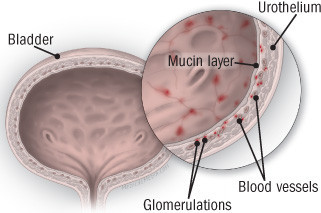
Diagnosing and treating interstitial cystitis
Also called painful bladder syndrome, this frustrating disorder disproportionately affects women.
Interstitial cystitis is a chronic bladder condition that causes recurring bouts of pain and pressure in the bladder and pelvic area, often accompanied by an urgent and frequent need to urinate — sometimes as often as 40, 50, or 60 times a day, around the clock. Discomfort associated with interstitial cystitis can be so excruciating that, according to surveys, only about half of people with the disorder work full-time. Because symptoms are so variable, experts today describe interstitial cystitis as a member of a group of disorders collectively referred to as interstitial cystitis/painful bladder syndrome. (In this article, we'll call it interstitial cystitis, or IC.)
Among the one to two million Americans with IC, women outnumber men by as much as eight to one, and most are diagnosed in their early 40s. Several other disorders are associated with IC, including allergies, migraine, irritable bowel syndrome, fibromyalgia (a condition causing muscle pain), chronic fatigue syndrome, and vulvodynia (pain or burning in the vulvar area that isn't caused by infection or skin disease).

What’s the best time of day to take your medication?
Timing may improve potency and help you cope with side effects.
We all want our medicines to be as effective as possible, and that requires effort on our part. It may be necessary to avoid taking pills with certain foods or drinks, and to check that medications won't interfere with each other.
And in some cases, it may be important to take a drug at a particular time of day. This approach, known as chronotherapy, is gaining attention as research suggests a relationship between when we take medications and how well they work.

Should I take blood pressure medications at night?
Ask the doctor
Q. I've taken blood pressure medicines every morning for many years, and they keep my pressure under control. Recently, my doctor recommended taking them at bedtime, instead. Does that make sense?
A. It actually does make sense — based on recent research. For many years, there have been at least three theoretical reasons for taking blood pressure medicines before bedtime. First, a body system that strongly affects blood pressure, called the renin-angiotensin system, has its peak activity during sleep. Second, circadian rhythms cause differences in the body chemistry at night compared with daytime. Third, most heart attacks occur in the morning, before medicines taken in the morning have a chance to "kick in."

Bargain or beware? Tips to buy gently used medical equipment
Do a thorough assessment to make sure equipment is safe.
Your doctor or an occupational therapist may recommend that you use some kind of medical equipment, such as a walker, electric scooter, cane, lift chair, or shower chair. Such equipment can help you maintain your independence or continue living at home. But what if your insurance won't pay for an item or if you need a spare? For many people, the solution is gently used equipment.
Bargain hunting
You'll find used medical equipment in consignment shops and thrift stores, and through online classified ad sites (such as Craigslist). The deals are substantial: you may find a used electric wheelchair (that retails for $2,500 new) for a few hundred dollars, or a used power lift chair ($500 new) for just $75.

Giving steroid injections a shot
They can offer temporary pain relief, but are they right for you?
If you're battling with a flare-up of arthritis, bursitis, or tendinitis, you may find relief from an injection of cortisone (a type of steroid).
"People turn to injections when conservative treatments like over-the-counter and prescription pain medication or physical therapy no longer work, and their pain begins to interfere with quality of life," says Dr. Rob Shmerling, clinical chief of rheumatology at Harvard-affiliated Beth Israel Deaconess Medical Center.
People who walk more or walk faster live longer, study finds
For sleep apnea, a dental device may be as effective as CPAP
Rosacea treatments: What works?
Carb cycling: What is it, and does it work?
Understanding orthorexia: Have your healthy eating goals gone too far?
Salmonella, E. coli, Cyclospora, and other germs that cause food poisoning: What you need to know
Melatonin or magnesium: Can either supplement help you sleep?
Naturally gluten-free foods
Shingrix shingles vaccine linked with lower heart disease risks
Harvard study: Healthier fats linked to longer life after prostate cancer diagnosis
Free Healthbeat Signup
Get the latest in health news delivered to your inbox!
Sign Up
