










Surgery for a torn meniscus appears to offer no benefit
News briefs
- Reviewed by Robert H. Shmerling, MD, Senior Faculty Editor, Harvard Health Publishing; Editorial Advisory Board Member, Harvard Health Publishing
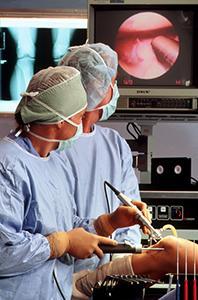 A surgical procedure for degenerative meniscal tears, a knee condition that becomes common as people age, might not deliver the desired effects.
Menisci are semicircular shock-absorbing discs made of tough cartilage that sit between the thighbone (femur) and shin bone (tibia). Over time, they can fray and develop tears (degenerative meniscal tears), which can cause pain and other symptoms in the knee. When conservative treatment proves inadequate, surgeons often perform arthroscopic partial meniscectomy: surgery to remove the torn parts of the meniscus through a small incision.
A study in Finland examined the effectiveness of this procedure in 146 adults ages 35 to 65 with degenerative meniscal tears. All the participants underwent diagnostic arthroscopy. During that procedure, half of them were given partial meniscectomy, while in the others, the meniscus was left alone. Over the next five years, the researchers found no significant differences between the two groups in physical function, quality of life, or knee pain after exercise. A further evaluation after 10 years, published April 30, 2026, in The New England Journal of Medicine, reached the same conclusion. In addition, participants who underwent the surgery fared worse on several measures, including a higher rate of new or worsening knee osteoarthritis and a higher risk of needing additional surgery, such as total knee replacement.
“While this study discourages using arthroscopic partial meniscectomy for degenerative meniscus tears, there are situations where it has a place,” says Dr. Miho Jean Tanaka, an orthopedic surgeon at Harvard-affiliated Massachusetts General Hospital. For example, if a fragment of cartilage causes a knee to lock, arthroscopy can restore motion and function. Such cases were not included in this study. Nor did the study address other surgical procedures for meniscal tears.
Nonsurgical measures for degenerative meniscal tears include physical therapy, anti-inflammatory pain medication, knee braces, and corticosteroid injections.
Image: © Ted Horowitz Photography/Getty Images
About the Author

Lynne Christensen, Staff Writer
About the Reviewer

Robert H. Shmerling, MD, Senior Faculty Editor, Harvard Health Publishing; Editorial Advisory Board Member, Harvard Health Publishing
Disclaimer:
As a service to our readers, Harvard Health Publishing provides access to our library of archived content. Please note the date of last review or update on all articles.
No content on this site, regardless of date, should ever be used as a substitute for direct medical advice from your doctor or other qualified clinician.


