COPD symptoms: How to spot them early
Chronic obstructive pulmonary disease often creeps up gradually. Learn the signs.
- Reviewed by Jessica McCannon, MD, Contributor
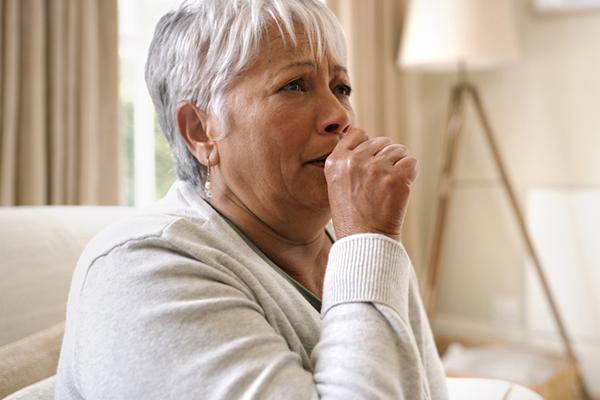
Darcy, a former smoker, blamed her chronic cough on a lingering cold. She noticed she was getting winded just climbing stairs and started cutting back on everyday activities without even realizing why.
The 65-year-old was normalizing symptoms of chronic obstructive pulmonary disease, or COPD. That’s easy to do, says a Harvard expert, since early symptoms of COPD can be subtle and develop slowly, hindering diagnosis.
“Sometimes people wonder, ‘Am I getting older? Deconditioned? Is it something weather-related? Is my immune system not right, since I’m getting sick all the time?’ Those are common ways they try to explain away their symptoms,” says Dr. Jessica McCannon, a pulmonary critical care specialist at Harvard-affiliated Massachusetts General Hospital.
“But any shortness of breath with exertion that’s new or changing over time — and that you might attribute to other things — could be COPD, if you have a risk factor associated with it,” she says.
What is COPD?
A chronic lung disease that limits airflow and makes breathing difficult, COPD affects at least 11 million Americans, according to the American Lung Association. It is characterized by abnormalities in the airways and alveoli (tiny air sacs in the lungs). Emphysema and chronic bronchitis are the two most common types of the condition, which is the fourth leading cause of death worldwide.
Early COPD symptoms to watch for
On top of shortness of breath, chronic cough, and fatigue, other easy-to-overlook symptoms of COPD include
- increased mucus or phlegm
- intermittent wheezing or chest tightness
- taking longer to recover from respiratory infections
- needing to pause to catch your breath in the middle of a task.
If any of those symptoms worsens occasionally, then gets better, Dr. McCannon says she might also suspect COPD. The condition can flare (called an exacerbation) and retreat — though not always, she notes.
Look-alike conditions
Early COPD symptoms can also resemble those of other conditions or circumstances, such as
- gastroesophageal reflux disease (GERD)
- heart failure or other forms of heart disease
- asthma
- bronchiectasis, a lung condition associated with damaged airways
- interstitial lung disease, another chronic lung condition
- allergies
- medication side effects, such as those from ACE inhibitors prescribed for high blood pressure, heart failure, or chronic kidney disease.
How COPD is diagnosed
COPD diagnosis is often straightforward: doctors use a simple test called spirometry, which measures how much — and how quickly — you can exhale. Ideally, spirometry testing is done both before and after you inhale a medication called a bronchodilator. “Unless you’ve had this test, you can’t be absolutely sure what you have is COPD,” Dr. McCannon says.
Although the disease is incurable, catching early symptoms of COPD matters, Dr. McCannon says. Treating it promptly — which typically involves using one or more inhaled medications — can improve breathing, minimize flare-ups, and slow the condition’s progression, which can vary in each person. Stopping smoking, undergoing pulmonary rehabilitation (a structured program to improve breathing), and staying on top of needed vaccinations are other important nondrug aspects of treatment.
Some cases of COPD worsen quickly, but others never do, she says. “Effective treatment is all about managing symptoms and reducing the risk of flare-ups, which will reduce progression as well.”
COPD can strike nonsmokers, tooWhile current or former smokers constitute the vast majority of people with chronic obstructive pulmonary disease (COPD), other people can also be vulnerable to the condition because of substances they’ve been exposed to. These include people who have regularly encountered air pollution, breathed in dust or chemicals due to their job or hobby, or been subjected to secondhand smoke over many years. Indeed, exposure to tobacco smoke during childhood — and even in the womb before birth — significantly increases the risk of developing COPD as an adult, according to a study involving 412,000 people published in the June 2026 issue of Nicotine and Tobacco Research. Another increasingly recognized risk factor for developing COPD is long-term exposure to biomass fuel — any plants, crops, wood, or animal waste that’s used to produce energy, says Dr. Jessica McCannon, a pulmonary critical care specialist at Massachusetts General Hospital. Such exposure isn’t as unlikely as it may seem. “We often see people in our clinic who grew up in another country, maybe in a rural area, and were exposed to wood smoke or burning coal,” Dr. McCannon says. “It’s a big risk factor for COPD, independent of smoking. But if a smoker was also exposed to biomass fuel, that really increases the risk of COPD.” |
Image: © Alexander Ford/Getty Images
About the Author

Maureen Salamon, Executive Editor, Harvard Women's Health Watch
About the Reviewer

Jessica McCannon, MD, Contributor
Disclaimer:
As a service to our readers, Harvard Health Publishing provides access to our library of archived content. Please note the date of last review or update on all articles.
No content on this site, regardless of date, should ever be used as a substitute for direct medical advice from your doctor or other qualified clinician.