










Bird dog exercise for your core: How to do it safely
Improve your core strength and spine stability with this joint-friendly move.
- Reviewed by Mary Kate Miller, PT, DPT, MBA, OCS, Contributor
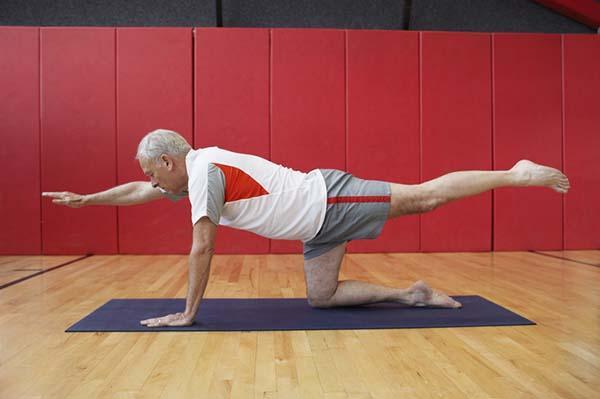
You might know full well what a bird dog is, but have never heard of the bird dog exercise. If so, count yourself in good company.
So named because the position resembles a hunting dog pointing toward its prey, the bird dog seems pretty straightforward. Also called an “opposite arm and leg raise,” it’s performed on the hands and knees and involves extending one arm and the opposite leg simultaneously.
But despite its simplicity, the bird dog workout packs a powerful punch. Indeed, it’s one of the most effective exercises for improving the stability of our core — the large group of muscles in the abdomen, back, pelvis, and hips that serve to stabilize the spine, says Mary Kate Miller, clinical supervisor of physical therapy at Harvard-affiliated Spaulding Rehabilitation Outpatient Center Malden.
“Many people haven’t done the bird dog exercise unless they’ve worked with a physical therapist or personal trainer,” she says. “It’s usually not a go-to exercise, unless someone told you to do it in the past.”
Bird dog exercise benefits
A strong core improves balance, posture, and everyday movement while helping ease back strain. It makes activities like bending, lifting, and carrying more efficient and stable.
By improving core stability, the bird dog also helps the body resist unwanted movement — those small twists, bends, or wobbles that can throw us off balance or strain our joints. It’s especially valuable for older adults — who face higher fall risks — because it’s low-impact and builds strength and balance without requiring special equipment.
The bird dog can fortify us in ways other core exercises might fall short — building core strength but also activating the glutes and arm muscles. “I wish the bird dog had the same curb appeal as the plank or sit-up, but it just doesn’t — even though it’s much more beneficial,” Miller says.
Common bird dog form mistakes
While the bird dog exercise seems relatively simple, it’s easy to do it wrong — which can raise the risks for injuring your back or neck. Miller cautions people to avoid
- arching the back
- looking upward
- rotating the hips
- lifting your arm or leg higher than the trunk
- focusing on speed instead of control.
She offers these tips to help you execute bird dog exercise form safely:
- Don’t feel you must do the whole movement right away. Beginners can start by extending just their arms or legs.
- Place a small pillow on your back as a cue to avoid arching it or moving it from side to side.
- Position yourself in front of a mirror, if possible, to get visual feedback on your form.
And if you’re still hesitant to try the bird dog, additional tweaks can help.
“People who don’t feel comfortable getting down on the floor think it’s out of their comfort zone, but getting on your hands and knees in bed is a great place to start,” Miller says.
Bird dog
To make it harder, move your extended arm and leg on a diagonal (think of a clock: instead of noon and 6, move them to 2 and 8, or 10 and 4, depending on which arm and leg are in action) and then back to center before lowering. Exercise photos by Thomas MacDonald; video © Alona Khylia/Getty Images |
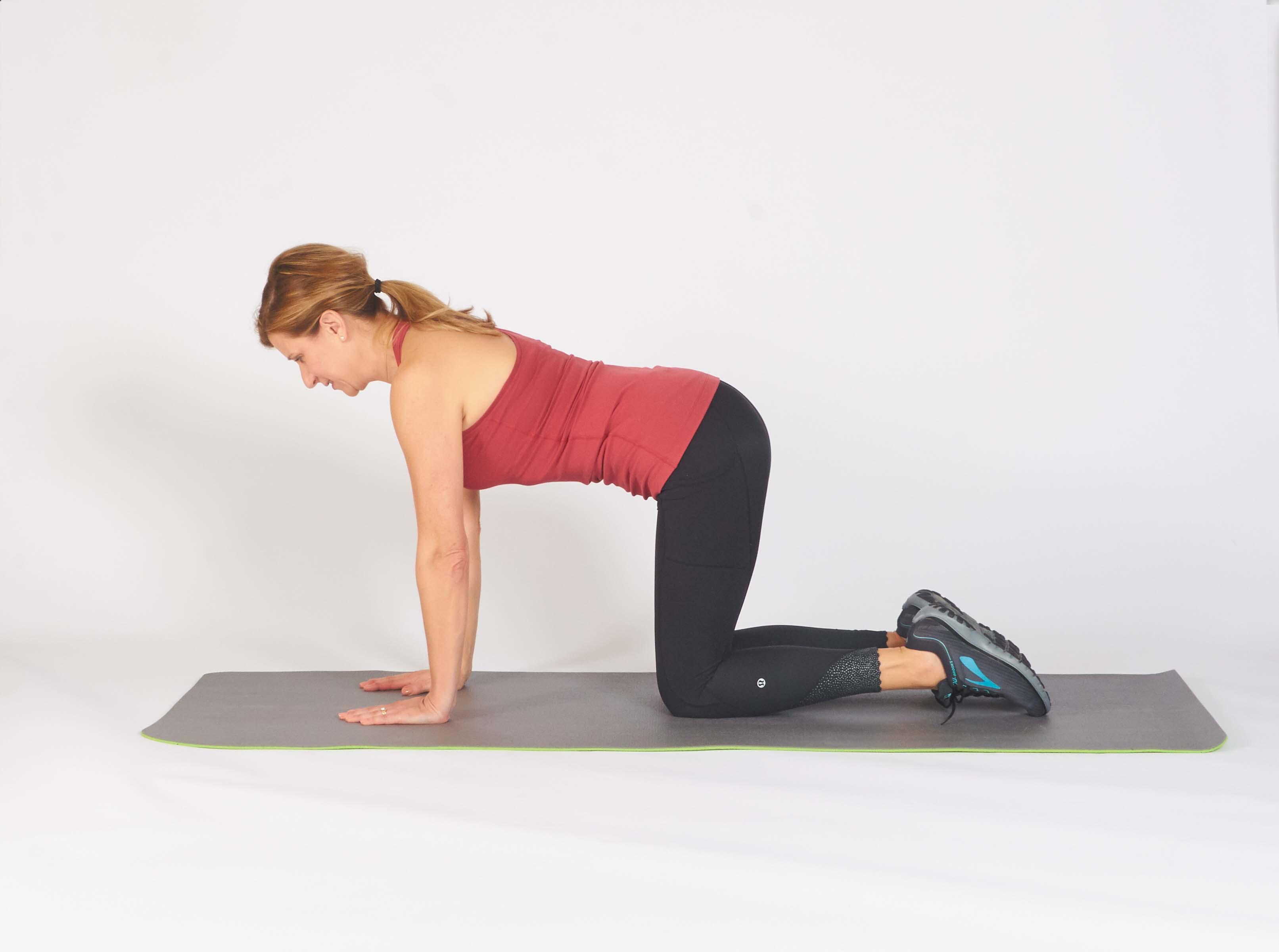
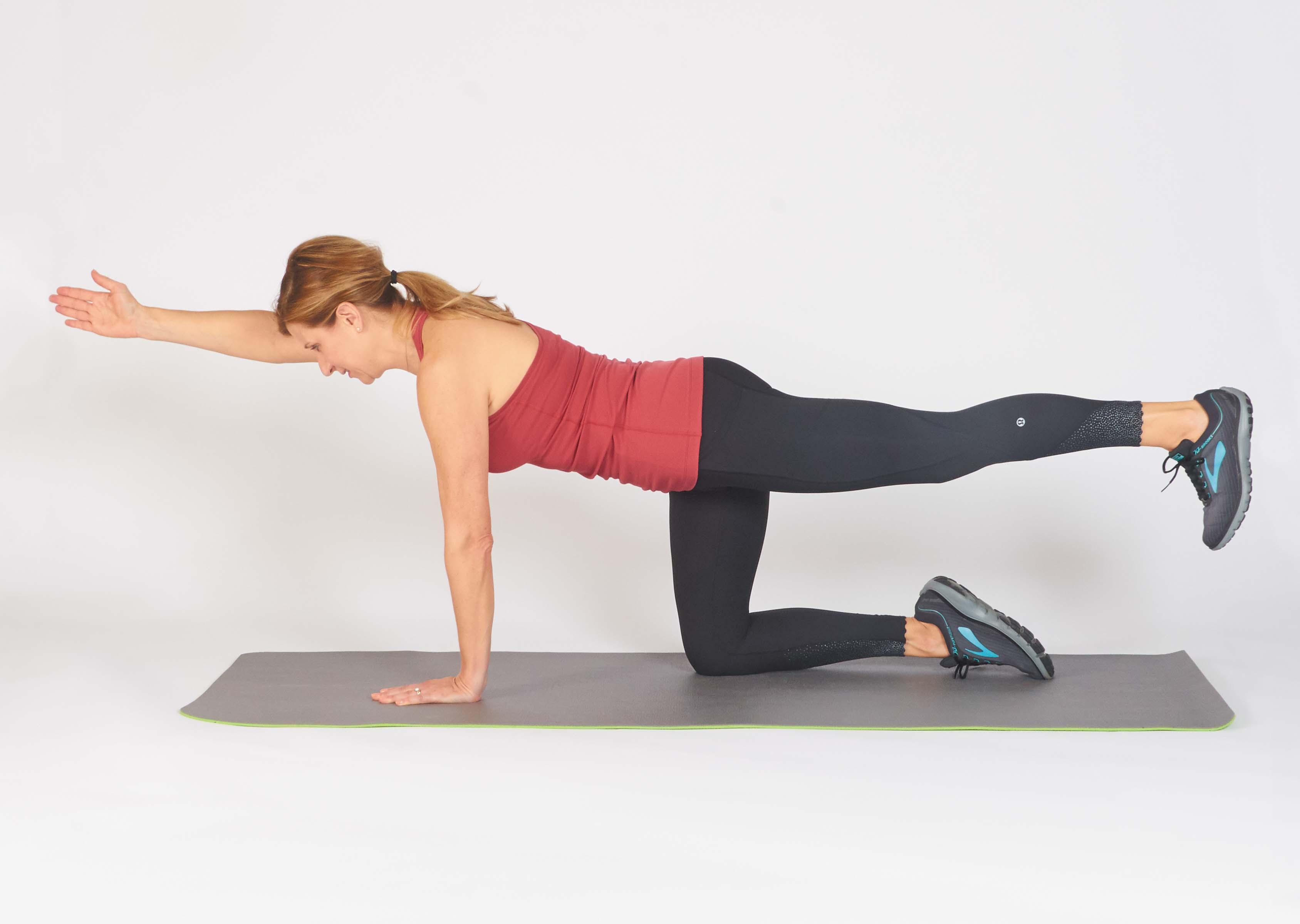
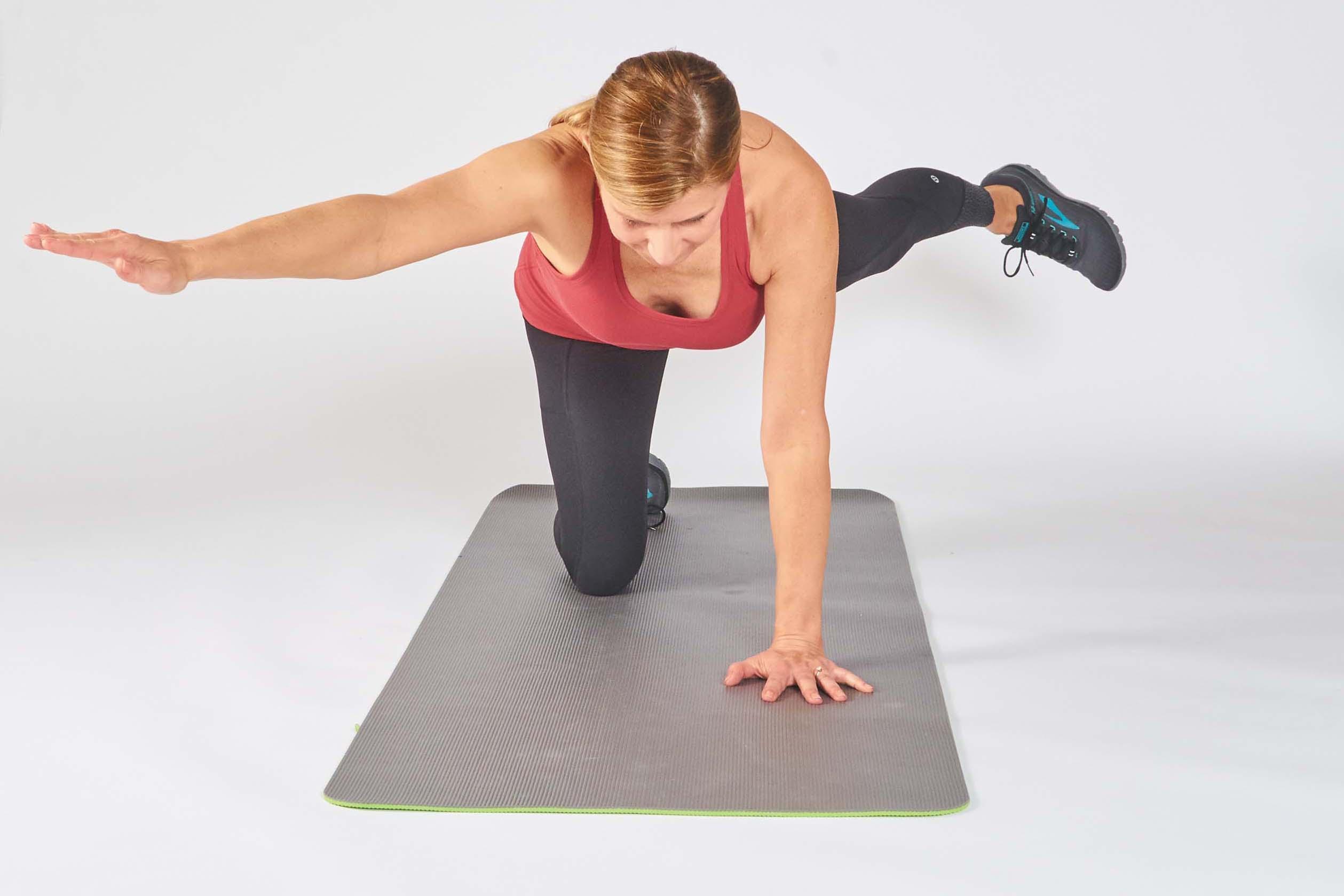
Image: © Charles Gullung/Getty Images
About the Author

Maureen Salamon, Executive Editor, Harvard Women's Health Watch
About the Reviewer

Mary Kate Miller, PT, DPT, MBA, OCS, Contributor
Disclaimer:
As a service to our readers, Harvard Health Publishing provides access to our library of archived content. Please note the date of last review or update on all articles.
No content on this site, regardless of date, should ever be used as a substitute for direct medical advice from your doctor or other qualified clinician.


