

Light exposure at night may raise risk for heart disease

Whole grains may improve several heart risk factors at once

A lumbar belt may help ease low back pain

Children of centenarians may stay healthier and live longer too, study finds

Signs of pneumonia: Sometimes vague and unexpected

The surprising link between ovarian cancer and the fallopian tubes

Using a vibration plate: What it can — and can't — do for your body

People who walk more or walk faster live longer, study finds

For sleep apnea, a dental device may be as effective as CPAP

Rosacea treatments: What works?
Breast Cancer Archive
Articles


An obstetrician (who is also a feminist) weighs in on the CDC’s “no birth control, no drinking” recommendation
The CDC recently advised all sexually active women of childbearing age, and who aren’t on birth control, to avoid alcohol completely because of potential harmful effects to an unborn child. The science behind the recommendation is sound, but the way it was delivered has raised quite a few eyebrows. In this piece, Dr. Ricciotti examines where the message fell short and describes how she emphasizes shared decision-making and autonomy when she counsels her patients.
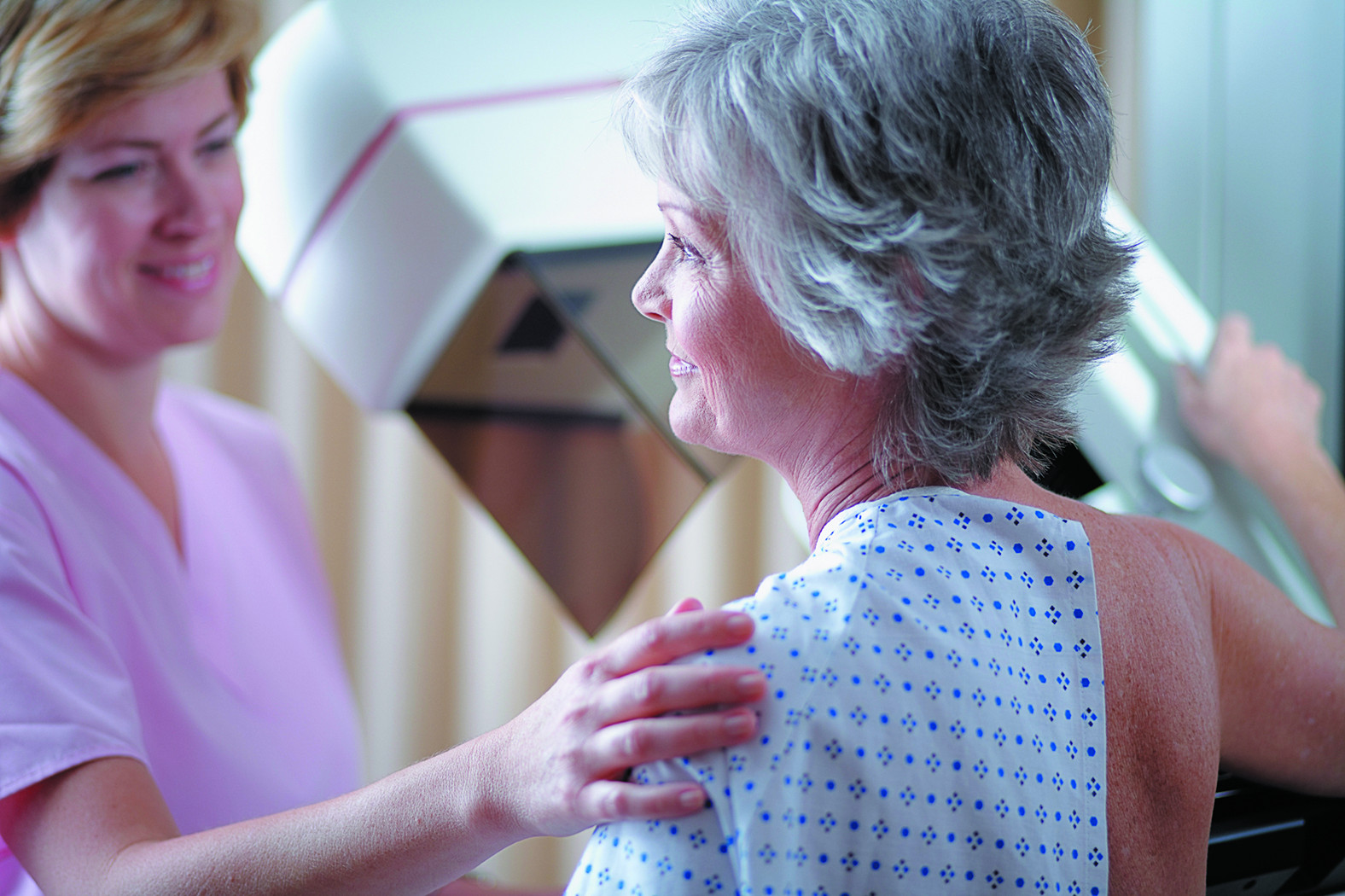
Do you really need that cancer screening?
Image: Thinkstock
A research letter published online Jan. 21, 2016, in JAMA Oncology suggests that many older adults are getting unnecessary cancer screenings. Researchers looked at questionnaire answers from about 150,000 seniors (ages 65 or older) across the country, and found that about half had received prostate-specific antigen (PSA) testing or mammography in the past year. But a third of those screened did not have a 10-year life expectancy, a major guideline for screening. Unnecessary screening rates varied by state—for example, 11% in Colorado and about 20% in Georgia. "Undergoing a screening test may actually cause more harm than good, especially with older patients or those with significant medical conditions," says Dr. Marc Garnick, an oncologist at Beth Israel Deaconess Medical Center and editor in chief of Harvard's Annual Report on Prostate Diseases. So talk to your doctor about the guidelines. Both the American Cancer Society (ACS) and the U.S. Preventive Services Task Force (USPSTF) recommend routine mammograms every two years for women ages 55 to 74. The ACS does not recommend mammograms in this age group if a woman has a life expectancy of less than 10 years.
For all men, the USPSTF recommends against routine PSA testing. The ACS suggests that men 50 or older (at average risk for prostate cancer) make the decision about screening with their doctor, but only if they have a life expectancy of at least 10 years, and only if they have been advised about the uncertainties, risks, and potential benefits of prostate cancer screening.

Cancer survivors may face cardiovascular complications
Even the newer, targeted cancer therapies may harm the heart.
Image: Bigstock
About 14 million people in the United States are living with cancer, a number that reflects the steady rise in cancer survivorship in recent decades. In 1980, only about half of people with cancer lived five years after diagnosis. Today, five-year cancer survival rates are greater than 70%.
Unfortunately, many cancer-suppressing treatments can have undesirable effects on the heart and blood vessels. The increasing awareness of these effects—coupled with the surge of older people being diagnosed with and surviving cancer—has spurred a new specialty known as cardio-oncology. Experts in this burgeoning field focus on promoting heart health in people with cancer, both during and after their treatment.

Men's hearts age differently from women's
Here is one more way men and women are different: research published online Oct. 20, 2015 in Radiology found that male and female hearts do not age the same way.
For the study, researchers reviewed MRI heart scans performed on almost 3,000 older adults, ages 54 to 94, without existing heart disease. (Scans were given 10 years apart.) The scans showed that in both sexes, the main heart chamber—the left ventricle, which fills with and then forces out blood—gets smaller with time. As a result, less blood enters the heart, and less gets pumped out to the rest of the body.
How can I tell if I'm sleeping enough?
Ask the doctor
Q: I have always had difficulty sleeping. Since I have taken to heart the advice for good sleep habits, I think I'm sleeping better, but I'm not sure. I'm in bed about 8.5 hours, but am often restless and get up to go to the bathroom a couple of times during the night. Is there a way to compute how much sleep I'm actually getting?
A: Adequate sleep is an important part of health. While the exact amount needed to maximize health and wellness is not totally clear, many experts recommend around seven to nine hours per night. Adequate sleep is associated with memory, improved mood, better weight control, improved diabetes control, greater resistance to colds, and fewer accidents.

Breast cancer: The good news
Personalizing breast cancer diagnosis and treatment has resulted in therapies that are more effective and less toxic than in the past.
Image: Thinkstock
The federal government's "Cancer Moonshot," with the expressed goal of curing cancer, is getting a lot of press lately. While the initiative's stated goal may be overly ambitious because cancer is actually 200 or more individual diseases, it promises to increase research funding and speed the availability of new treatments.
Amid the excitement, it's easy to overlook the fact that there has already been great progress in treating many cancers. Patients are enduring fewer side effects and living longer. Breast cancer is a prime example. "There's no question that breast cancer treatment is improving," says Dr. Ann Partridge, senior physician at the Susan F. Smith Center for Women's Cancers at Harvard-affiliated Dana-Farber Cancer Institute.
Atrial fibrillation carries a greater risk of stroke and death for women
Men are more likely than women to develop atrial fibrillation (afib)—a rapid, erratic beat in which the heart's upper chamber doesn't contract forcefully, allowing blood to pool and increasing the risk of clotting. However, some—but not all—studies have indicated that afib poses a greater stroke risk in women than in men. To settle the question, an international team of researchers looked at 30 studies with 4.4 million participants. They found that compared with men who have afib, women with afib have a 12% higher risk of death from all causes and almost double the risk of having a stroke or dying from one. The results were published online Jan. 20, 2016, by the journal BMJ.
Women notoriously neglect the symptoms of afib—feeling weak, breathless, or unusually fatigued. If you have afib symptoms, get medical attention, even if you think it's only a virus. There are several successful treatments for afib as well as for preventing stroke in women who have afib.

Getting out of the chair boosts metabolism in postmenopausal women
There's mounting evidence that sitting for long periods can have health risks. However, little is known about how the effects of sitting can be countered by standing occasionally. A team of researchers from the United Kingdom and Australia designed a two-day study involving 22 overweight or obese postmenopausal women with high blood sugar who were at risk for diabetes. On the first day, the women were assigned to one of three groups. One group sat for 7.5 hours straight. The other two sat over a 7.5-hour period, but one group was told to stand in place for five minutes every half-hour, and the other was told to walk for five minutes every half-hour. The second day, all the groups sat for 7.5 hours straight.
On both days, the researchers tested each participant's blood levels of glucose, insulin, fatty acids, and triglycerides—all indicators of metabolism. They found that both walking and standing reduced glucose, insulin, and fatty acids—signs of a higher metabolic rate—in women who either stood or walked compared with those who sat the entire time. Moreover, in the two active groups, some of the beneficial effects persisted into the next day, when everyone sat for the entire session.
How long should you take a bisphosphonate for osteoporosis?
Millions of postmenopausal women are taking a bisphosphonate like oral alendronate (Fosamax) or intravenous (IV) zoledronic acid (Reclast) to increase bone density. But because long-term use of these drugs has been associated with an increased risk of bone death in the jaw and unusual thighbone fractures, experts have debated how long women should stay on the drugs to minimize the risk of hip or vertebral fractures without raising their risk for these rare but serious complications.
After considering major randomized controlled clinical trials, a task force of the American Society for Bone and Mineral Research has released guidelines on the optimal duration of bisphosphonate therapy for osteoporosis. The guidelines, published in the January 2016 issue of the Journal of Bone and Mineral Research, recommend reassessing a woman's fracture risk after five years of oral bisphosphonates or three years of IV therapy. They advise that women whose risk is still high should continue to take oral bisphosphonates for up to 10 years or IV therapy for up to six years. However, fracture risk should be reassessed every two to three years during extended therapy.
Light exposure at night may raise risk for heart disease
Whole grains may improve several heart risk factors at once
A lumbar belt may help ease low back pain
Children of centenarians may stay healthier and live longer too, study finds
Signs of pneumonia: Sometimes vague and unexpected
The surprising link between ovarian cancer and the fallopian tubes
Using a vibration plate: What it can — and can't — do for your body
People who walk more or walk faster live longer, study finds
For sleep apnea, a dental device may be as effective as CPAP
Rosacea treatments: What works?
Free Healthbeat Signup
Get the latest in health news delivered to your inbox!
Sign Up
