Is food sequencing worth a try?
If you're watching your carbs or calories, changing the order in which you eat foods can be a useful hack.
- Reviewed by Nancy Oliveira, MS, RD, LDN, CDCES, Contributor; Editorial Advisory Board Member, Harvard Health Publishing
What if eating your salad first and saving the pasta for last could help you keep your blood sugar steadier and leave you feeling fuller? That’s the idea behind food sequencing, a strategy gaining attention from health experts and social media influencers alike.
Also called “meal sequencing” or “carbohydrate-last eating,” the approach focuses on the order in which you eat different types of food at a meal. The general formula: start with nonstarchy vegetables for fiber, or with protein and healthy fats to boost satiety, but make carbohydrates the last course.
Proponents say this simple shift in eating order may help manage blood sugar and control appetite, especially for people with diabetes, prediabetes, or gestational (pregnancy-related) diabetes. “It’s definitely a hack, but it’s worth trying, and it could be a helpful tool to add to existing strategies for managing blood sugar,” explains Nancy Oliveira, a registered dietitian and manager of the Nutrition and Wellness Service at Harvard-affiliated Brigham and Women’s Hospital.
The science behind the sequence
How does food sequencing work? Here are a few possible mechanisms.
When you eat vegetables first, the fiber they contain can help slow the absorption of carbohydrates you eat later. That means blood sugar rises more gradually after a meal, rather than spiking sharply. A steadier rise in blood sugar could also reduce energy crashes and cravings later in the day, potentially helping with appetite control and weight management.
Eating protein first, sometimes called protein pre-loading, can have similar effects. Protein, along with fat, takes longer to digest than carbohydrates, so eating it earlier in the meal could naturally help blunt blood sugar spikes from carbs that follow. However, keep in mind that eating a large portion of refined carbs, like white rice or pasta, may reduce the benefit.
Starting the meal with protein may also help curb your appetite for the rest of the meal, as research suggests protein is especially effective at suppressing the hunger-stimulating hormone ghrelin, says Oliveira. Compared with carbohydrates and fats, protein can also trigger slightly higher levels of satiety hormones such as GLP-1 and PYY, which send “I’m getting full” signals to the brain and, perhaps, reduce how long (and thus how much) you eat. It takes about 20 minutes for that message to reach your brain, so delaying the carbs to the last part of the meal also means that by the time you feel like you’ve had enough, it’s carbs you’ll be leaving on the table — a plus if you’re trying to cut down on carbs specifically.
While research is still preliminary and limited to a handful of short-term studies, the findings are intriguing, says Oliveira. “They show fairly consistently that when carbohydrates are eaten last, blood sugar rises tend to be more moderate within 30 to 90 minutes after a meal.”
Making meal sequencing work for you
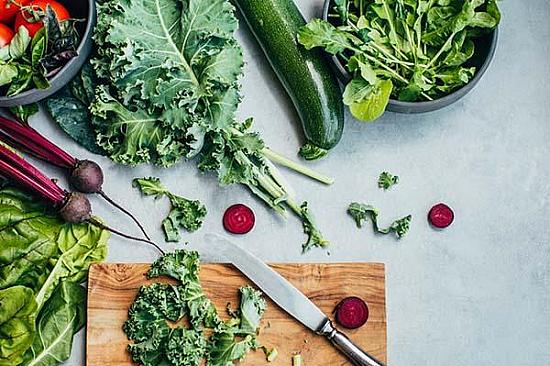
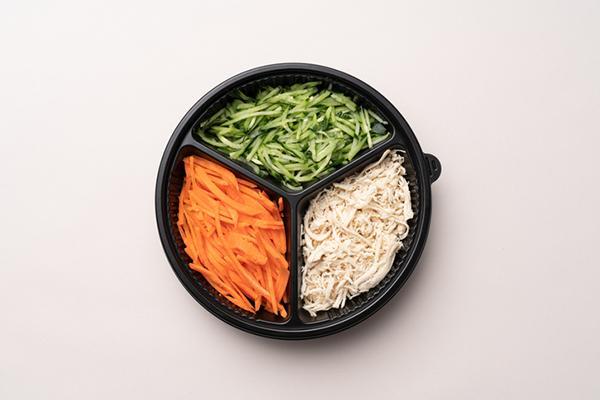
Applying food sequencing at mealtimes doesn’t require overhauling your diet — just rethinking the order in which you eat the foods you’ve chosen. At a typical dinner, you might start with a green salad or steamed vegetables, then move on to your main protein (say, chicken, fish, tofu, or beans), and finish with the starchier component, like a serving of pasta, rice, or a baked potato.
Combination dishes like stews and stir-fries are trickier, but the principle still applies. You could eat a side salad or munch on some baby carrots before digging into the stew — or eat the rice or noodle part of the stir-fry toward the end of the meal.
But don’t worry about making every meal fit the pattern, says Oliveira. “Try to eat vegetables first — it might help tame your appetite if you’re really hungry — and focus on eating slowly, chewing thoroughly, and not overeating,” she recommends. “Anything that slows you down when you’re eating is a plus.”
For many, food sequencing is an approachable strategy, and it requires no special foods or strict calorie counting. That said, it works best as one tool within a broader healthy eating plan. The foundation of good nutrition remains “a balanced plate,” says Oliveira: plenty of fiber-rich vegetables and fruits, lean protein, and whole grains at most meals. “But food sequencing is easy to remember and easy to do — so why not try it?”
Image: © MirageC/Getty Images
About the Author

Joyce Hendley, Staff Writer
About the Reviewer

Nancy Oliveira, MS, RD, LDN, CDCES, Contributor; Editorial Advisory Board Member, Harvard Health Publishing
Disclaimer:
As a service to our readers, Harvard Health Publishing provides access to our library of archived content. Please note the date of last review or update on all articles.
No content on this site, regardless of date, should ever be used as a substitute for direct medical advice from your doctor or other qualified clinician.