

Light exposure at night may raise risk for heart disease

Whole grains may improve several heart risk factors at once

A lumbar belt may help ease low back pain

Children of centenarians may stay healthier and live longer too, study finds

Signs of pneumonia: Sometimes vague and unexpected

The surprising link between ovarian cancer and the fallopian tubes

Using a vibration plate: What it can — and can't — do for your body

People who walk more or walk faster live longer, study finds
For sleep apnea, a dental device may be as effective as CPAP

Rosacea treatments: What works?
Stroke Archive
Articles

A little-known factor that boosts heart attack risk
About one in five people has high levels of lipoprotein(a), a fatty particle linked to premature heart disease.
Most people probably haven't heard of lipoprotein(a), although that's not surprising. Cardiologists have known for years that having high levels of these fatty particles circulating in the bloodstream poses a risk to the cardiovascular system. But there wasn't much they could offer in terms of therapy, so widespread testing for lipoprotein(a) — also known as Lp(a) — didn't make sense.
Recent progress means the landscape may soon be shifting. Earlier research showed that injectable cholesterol-lowering drugs known as PCSK9 inhibitors, such as evolocumab (Repatha) or alirocumab (Praluent), may lower Lp(a) by up to 25%. Until last year, however, it wasn't clear whether that reduction actually helped people with high Lp(a).

Why won't some health care workers get vaccinated?


Avoiding the pain of kidney stones
If you've had a stone, the problem is likely to recur — but it doesn't have to. Use these strategies for prevention.
The pain associated with kidney stones has been described by some as more excruciating than childbirth. Kidney stones are small, hard stones, formed when high levels of minerals in your urine start to crystallize in your kidneys, forming a pebble-like mass. The pain comes when these stones migrate from your kidneys through the ureters, which are the narrow tubes that carry urine from your kidneys into your bladder.
"Kidney stone pain is not subtle," says Dr. Gary Curhan, a professor of epidemiology at the Harvard T.H. Chan School of Public Health. It typically starts in the flank, at the side of the lower back. Sometimes if the stone moves, the pain migrates to the front of the body.

Is fibromyalgia real?
Ask the doctors
Q. My friend was recently diagnosed with fibromyalgia, but it seems like she might be imagining her symptoms. Is fibromyalgia a real condition?
A. The short answer to your question is yes. Fibromyalgia is a real condition that affects some four million Americans. It's a chronic pain syndrome that experts believe may be caused by a malfunctioning nervous system. Researchers using magnetic resonance imaging to examine the brains of people with fibromyalgia have found abnormalities in the part of the brain that processes pain signals from the body. It appears that this part of the brain is essentially boosting the intensity of normal pain signals, potentially causing the body to feel pain without a physical cause.
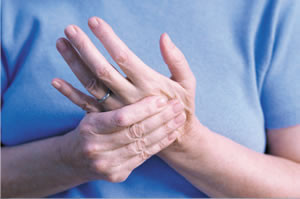
On call: What causes shaky hands?
Q . I've started to notice a slight shakiness in my writing hand. Is this just normal aging or should I get my shaky hands checked out?
A. If the shakiness is sudden or recent, you should talk to a doctor. It may be nothing serious—for example, just a reversible side effect from a medication or from too much caffeine. However, tremors could be an early sign of a more serious condition, like Parkinson's disease. In that case, you could benefit from early diagnosis and starting treatment.

How do you avoid kidney stone attacks?
On call
Q. I want to avoid another kidney stone attack. What's your advice about diet, coffee, tea, and alcohol?
A. The foods you eat and the amount of fluid you drink can contribute to some types of kidney stones. Certainly, you can help prevent recurrent kidney stones by paying attention to your fluid and food intake.

Fruit of the month: Bananas
Bananas are one of the most popular fruits in the United States, perhaps because they're affordable (about 58 cents per pound, on average) and available year-round.
Among all fruits, bananas are one of best sources of potassium, with about 450 milligrams (mg) per banana. Healthy adults not on certain medications should aim for 4,700 mg of potassium daily, although few Americans meet this goal. A high potassium intake may help reduce high blood pressure and has also been linked to a lower risk of stroke and possibly heart disease.

The major problem of ministrokes
A transient ischemic attack is a warning of a potential full stroke. Don't ignore it.
An estimated 795,000 people get a first-time stroke every year, and there is a good chance they were warned. Transient ischemic attacks (TIAs), also known as ministrokes, share many of the typical stroke symptoms. Yet they often are mild and brief, which is why they routinely get missed or ignored.
"A TIA is your body sounding a loud alarm that you're at high risk for a full stroke, and you need to listen," says Dr. Erica Camargo Faye, a stroke neurologist at Harvard-affiliated Massachusetts General Hospital.
Light exposure at night may raise risk for heart disease
Whole grains may improve several heart risk factors at once
A lumbar belt may help ease low back pain
Children of centenarians may stay healthier and live longer too, study finds
Signs of pneumonia: Sometimes vague and unexpected
The surprising link between ovarian cancer and the fallopian tubes
Using a vibration plate: What it can — and can't — do for your body
People who walk more or walk faster live longer, study finds
For sleep apnea, a dental device may be as effective as CPAP
Rosacea treatments: What works?
Free Healthbeat Signup
Get the latest in health news delivered to your inbox!
Sign Up
