

Even a little exercise linked with lower stroke risk in people with afib

Testosterone therapy without evidence of deficiency may boost heart risk

Weight-loss drug may lower risk of heart attacks and infections

What to eat on the DASH diet

Migraine: How it's diagnosed and what that means

Tricep workouts you can do at home

Mindfulness practices to reduce stress and improve focus

Antihistamines may not offer meaningful relief from eczema symptoms

Overweight and taking blood pressure medications: Study finds it's a trend that's working

FDA approves first mRNA-based flu vaccine
Mind & Mood Archive
Articles
Uncovering the link between emotional stress and heart disease
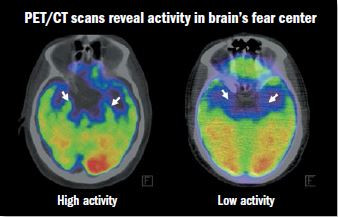
The brain's fear center may trigger inflammation and lead to a heart attack. But stress reduction techniques can break the chain.
Image: © Cardiology Division, Massachusetts General Hospital
A small, almond-shaped area deep inside the brain called the amygdala is involved in processing intense emotions, such as anxiety, fear, and stress. Now, a new brain-imaging study reveals how heightened activity in the amygdala may trigger a series of events throughout the body that raises heart attack risk.
"This study identifies a mechanism that links stress, artery inflammation, and subsequent risk of a heart attack," says study leader Dr. Ahmed Tawakol, an associate professor of medicine at Harvard Medical School. Earlier animal studies have shown that stress activates bone marrow to make white blood cells. These infection-fighting cells trigger inflammation, a process that encourages the buildup of fatty plaque inside artery walls. "But what we didn't know was, does this happen in humans? And what is the role of the brain?" he says.

Tired of being fatigued
Don't accept regular fatigue as part of aging.
Image: © seb_ra/Thinkstock
Weariness, tiredness, lack of energy. There are many ways to describe those times when you are so fatigued you can't do anything. Often you bounce back after a quick rest or a good night's sleep, but if fatigue is occurring more often and lasting longer, it could be a sign of something more serious.
"Men may chalk up fatigue to aging, but there is no reason you should battle ongoing fatigue," says Dr. Suzanne Salamon, a geriatric physician with Harvard-affiliated Beth Israel Deaconess Medical Center. "Everyone gets tired sometimes, and your endurance may decline with age — you may not move as fast and sometimes tire quicker — but you should never be too fatigued to enjoy an active lifestyle."

Long-term use of opioids may depend on the doctor who prescribes them
Some doctors are more likely to prescribe opioids to their patients, and those patients are more likely to end up taking them long-term. It's crucial for consumers to educate themselves about the risks of taking opiates, and to consider alternatives if possible.

Teen drug use is down: Better parenting, or more smartphones?
Data from an annual survey show that use of illicit drugs among teenagers is in decline, and has been for some time. It’s possible that this can be partially attributed to the popularity of smartphones.

Dealing with the symptoms of menopause
You could argue that the physical and mental changes that occur during menopause aren't really "symptoms." The term is usually associated with a disease, which menopause is not. Also, it is often hard to say which changes are a direct result of a drop in hormone levels and which are natural consequences of aging. Some of the symptoms overlap or have a cascade effect. For example, vaginal dryness may contribute to a lower sex drive, and frequent nighttime hot flashes may be a factor in insomnia.
Hot flashes and vaginal dryness are the two symptoms most frequently linked with menopause. Other symptoms associated with menopause include sleep disturbances, urinary complaints, sexual dysfunction, mood changes, and quality of life. However, these symptoms don't consistently correlate with the hormone changes seen with menopause transition.
Depression during pregnancy and after
For too many women, joyfully anticipated pregnancy and motherhood bring depression as an unexpected accompaniment. Children as well as mothers suffer. Depression during pregnancy may result in poor prenatal care, premature delivery, low birth weight, and, just possibly, depression in the child. Depression after childbirth (postpartum depression) can lead to child neglect, family breakdown, and suicide. A depressed mother may fail to bond emotionally with her newborn, raising the child's risk of later cognitive delays and emotional and behavior problems. Fortunately, if the depression is detected soon enough, help is available for mother and child.
Depression During Pregnancy
Depression in pregnant women is often overlooked, partly because of a widespread misconception that pregnancy somehow provides protection against mood disorders. In reality, almost 25% of cases of postpartum depression in womem start during pregnancy, and depression may peak at that time, according to a study published in the British Medical Journal.
Depression and pain
Hurting bodies and suffering minds often require the same treatment.
Pain, especially chronic pain, is an emotional condition as well as a physical sensation. It is a complex experience that affects thought, mood, and behavior and can lead to isolation, immobility, and drug dependence.
In those ways, it resembles depression, and the relationship is intimate. Pain is depressing, and depression causes and intensifies pain. People with chronic pain have three times the average risk of developing psychiatric symptoms — usually mood or anxiety disorders — and depressed patients have three times the average risk of developing chronic pain.

Time spent in “green” places linked with longer life in women
Greenery might do more than just cheer us up. A recent study shows it lowers the mortality rate in women. Green spaces decrease levels of depression and pollution while increasing levels of social engagement and physical activity. If you are lucky enough to be surrounded greenery, get out there and enjoy it more. Even urban areas can increase their greenery by planting more trees and shrubs. See if you can get your community to plant more plants. It will help everyone out in the long run.


Parents: As more states legalize marijuana, here’s what you need to know and do
As marijuana becomes legal or is decriminalized in more states, teens are less likely to view its use as risky, so parents need to talk with their children about safety, especially if they use it themselves.
Even a little exercise linked with lower stroke risk in people with afib
Testosterone therapy without evidence of deficiency may boost heart risk
Weight-loss drug may lower risk of heart attacks and infections
What to eat on the DASH diet
Migraine: How it's diagnosed and what that means
Tricep workouts you can do at home
Mindfulness practices to reduce stress and improve focus
Antihistamines may not offer meaningful relief from eczema symptoms
Overweight and taking blood pressure medications: Study finds it's a trend that's working
FDA approves first mRNA-based flu vaccine
Free Healthbeat Signup
Get the latest in health news delivered to your inbox!
Sign Up
