

CoQ10: Should you take this popular supplement if you're on a statin?

Oat vs. dairy milk: Nutrition, benefits, and downsides

Microplastics: A hidden health threat?

Healing after food poisoning

What is tempeh? Benefits, nutrition, and how to use it

Light exposure at night may raise risk for heart disease

Whole grains may improve several heart risk factors at once

A lumbar belt may help ease low back pain

Children of centenarians may stay healthier and live longer too, study finds

Signs of pneumonia: Sometimes vague and unexpected
Healthy aging and longevity Archive
Articles

Keep moving when knee or hip pain strikes
Mobility relies on the body's two largest joints, the hips and knees. We ask a lot of both these joints: they must bear our full weight and coordinate movement over a lifetime of standing, walking, running, dancing, and sports. Not surprisingly, hip and knee pain are common complaints, and nearly everyone who lives into old age can expect some trouble with these joints. But taking care of your hips and knees and managing any pain that arises will help you avoid losing mobility as you age.
Try these self-help measures when knee or hip pain strikes:

Ask the doctor: I'm 75. Do I need a geriatrician?
Q. My doctor, an internist, just retired, and my health plan is asking me to designate a new primary care physician. I'm 75. Would there be advantages to choosing a geriatrician as my new doctor?
A. First, a disclaimer: I am a geriatrician. So my short answer is, "Yes, of course!" But my reasoned, unbiased answer would be, "It depends." If you are a generally healthy 75-year-old woman, a family physician or internist will be able to take excellent care of you. Geriatricians are trained to care for older adults with complex illnesses and are expert in managing the care of people who are frail. Improving your ability to function, and the quality of your life, are the guiding principles of geriatric medicine. We are expert at managing complexity and uncertainty, working with families, and caring for people with serious illnesses who are approaching the end of life. A geriatrician would be a good choice if you have physical or cognitive impairment, if you take a lot of medications, or if your friends and family are involved in your medical care. For people who have several medical problems, we emphasize the role of patient and family preference in making medical decisions, with the patient's goals as our primary focus.

Neck pain: Core exercises can help
Neck aches are often the result of wear and tear, poor posture, and weak core muscles. Image: Thinkstock |
Better support for your spine is key in avoiding neck ache.
Full bladder wakes women more often than thought
Two in three women over age 40 wake up at least once each night because of a full bladder, and nearly half make two or more nighttime trips to the bathroom. But only a quarter of women who get up to urinate during the night say they are bothered by having to do so.
That's the finding from a survey of more than 2,000 northern California women ages 40 and older. Factors that increased the likelihood that a woman woke at night to urinate included older age, past hysterectomy, hot flashes, and use of vaginal estrogen. However, the late-night bathroom breaks weren't caused by an overactive bladder or stress incontinence. The results were published in the January 2015 issue of the journal Obstetrics and Gynecology.
Feeling younger may mean living longer
Claiming to feel younger than your age isn't just whistling into the wind. It can also mean you have more years ahead than some of your former classmates. According to a report in the Dec. 15, 2014, issue of JAMA Internal Medicine, older people who felt three or more years younger than their chronological age had a lower death rate compared with those who felt their age or older.
Two researchers at University College London looked at the responses of about 6,500 men and women with an average age of 65 who answered the question, "How old do you feel you are?" About 70% reported that they felt three or more years younger than their years, while 25% felt close to their age, and 5% felt more than one year older than they were.

iPad can disrupt sleep, study suggests
Image: Thinkstock |
Using an iPad or other backlit electronic tablet in the hours before bedtime not only prevents you from falling asleep, it may also affect your alertness the next day, according to a report published in the Proceedings of the National Academy of Sciences, Dec. 22, 2014. Researchers at Harvard-affiliated Brigham and Women's Hospital found that the light emitted by the devices reset the body's circadian clock, which synchronizes the daily rhythm of sleep to daylight. As a result, people reading e-books took longer to fall asleep and were less alert the next morning than when they read print books instead.
During the two-week study, 12 men and women read digital books on an iPad for four hours before bedtime each night for five consecutive nights. They also followed the same routine using printed books. When they read the iPad, participants were less sleepy before bedtime but were less alert the following morning, even after eight hours of sleep.

Protect your vision to protect your independence
Getting a comprehensive eye exam can help catch and treat potential problems that may otherwise rob you of your eyesight and independence. Images: Thinkstock |
Comprehensive exams and preventive care are the keys to eye health.

Ask the doctor: Any health benefits in dessert drinks?
It appears that moderate |
Q. Do the protective effects of alcohol extend to dessert wines and liqueurs, or do those have too much sugar?
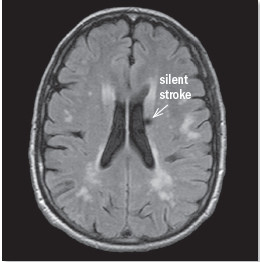
Reduce your risk of silent strokes
As seen on this MRI scan, a silent stroke |
Exercise, eat a healthy diet, and manage blood pressure and cholesterol to lower your odds.

Boost the power of your breakfast cereal
Image: Thinkstock One serving each of whole-grain cereal, low-fat milk, and fruit meet the requirements for a healthy breakfast. |
Learn which ingredients will give your day a healthy start.
Grocery store shelves are filled with dozens of breakfast cereals all promising important health benefits. But how do you know if you're getting what you need? "Labels and marketing promises on boxes can be confusing. It's best to go cereal shopping with a plan," says Kathy McManus, director of the Department of Nutrition at Harvard-affiliated Brigham and Women's Hospital. She advises that you complement cereal with milk for protein and calcium and with fresh fruit for natural sweetness and some fiber. Don't worry if the cereal is organic or not. But do read ingredient lists carefully, and aim for the following markers of good nutrition.
CoQ10: Should you take this popular supplement if you're on a statin?
Oat vs. dairy milk: Nutrition, benefits, and downsides
Microplastics: A hidden health threat?
Healing after food poisoning
What is tempeh? Benefits, nutrition, and how to use it
Light exposure at night may raise risk for heart disease
Whole grains may improve several heart risk factors at once
A lumbar belt may help ease low back pain
Children of centenarians may stay healthier and live longer too, study finds
Signs of pneumonia: Sometimes vague and unexpected
Free Healthbeat Signup
Get the latest in health news delivered to your inbox!
Sign Up
