

Whole grains may improve several heart risk factors at once

Light exposure at night may raise risk for heart disease

Children of centenarians may stay healthier and live longer too, study finds

A lumbar belt may help ease low back pain

Signs of pneumonia: Sometimes vague and unexpected

Using a vibration plate: What it can — and can't — do for your body

The surprising link between ovarian cancer and the fallopian tubes

People who walk more or walk faster live longer, study finds

Rosacea treatments: What works?

For sleep apnea, a dental device may be as effective as CPAP
Diet and nutrition Archive
Articles

Heart disease and cancer risk may be linked
In the journals
People with heart disease also have a higher risk of developing cancer, according to research presented at the American Heart Association's Scientific Sessions in November 2019.
Researchers evaluated data from 12,712 people from the Framingham Heart Study who did not have heart disease or cancer at the study's launch. They used a risk estimator that predicts a person's chance for getting heart disease within 10 years.

What is inflammation, and why is it dangerous?
Ask the doctors
Q. I've heard a lot recently about inflammation being a health risk, but I'm not sure I really understand what it is. Can you explain?
A. When people talk about inflammation, they're actually talking about your immune system's response to a perceived injury or infection. When you're injured, this inflammation is actually a good thing. The area you injured will become red and swell as an army of beneficial white blood cells flow in to fight infection and help you heal. The same response occurs in other parts of your body when you encounter a virus or infection. But sometimes this immune response occurs when it shouldn't. It can be triggered, for example, when you are exposed to toxins, and by other causes such as chronic stress, obesity, and autoimmune disorders. In these cases, instead of moving in, healing the problem, and then returning to normal, the inflammation persists over time. It's thought that this chronic state of inflammation can lead to numerous health problems, including heart disease, arthritis, depression, Alzheimer's disease, and even cancer.

Plant milk or cow’s milk: Which is better for you?
As long as the nutrient profile is the same, choosing one or the other is really about preference.
Plant-based milks line the shelves in the refrigerator section of most supermarkets these days: soy milk, almond milk, cashew milk, even milk made from rice, oats, or peas. Choosing a plant-based product seems like it would be a healthy option. But is it always? And is it better for you than drinking cow's milk?
We asked Vasanti Malik, adjunct assistant professor of nutrition at the Harvard T.H. Chan School of Public Health, for some advice on how to choose the best product.

Home cooking with less salt
Your salt shaker usually isn't the worst culprit. Instead, check your condiments, sauces, and spice blends, many of which are high in sodium.
For decades, health experts — especially cardiologists — have been telling people to eat less sodium, one of the main components of salt. Most Americans still consume far too much of this mineral, which raises blood pressure and the risk of heart disease.
Despite these warnings, the average sodium intake in this country is around 3,200 milligrams (mg) per day. That's about 30% more than is recommended by the federal dietary guidelines, which advise people to limit their daily sodium to 2,300 mg. And it's more than twice the target suggested by the American Heart Association of 1,500 mg per day.

Seed of the month: Flaxseeds
These shiny, reddish or golden-brown seeds are the richest natural source of alpha linolenic acid (ALA), an omega-3 fatty acid that's also found in soybean oil, canola oil, and walnuts. Because our bodies can't make omega-3 fats, we must get them from food. The other main omega-3s, eicosapentaenoic acid (EPA) and docosahexaenoic acid (DHA), are found mainly in fatty fish. Nutrition experts recommend getting at least one rich source of omega-3 fats daily. So if you don't eat fish, flaxseeds are a good option.
Flaxseeds, which have a slightly nutty taste, contain other healthful nutrients, including protein, fiber, and lignans (plant chemicals with antioxidant effects). Small studies suggest that consuming whole or ground flaxseeds may lower cholesterol levels and blood pressure.

Chili peppers: The spice of a longer life?
Research we're watching
People who eat chili peppers on a regular basis appear to lower their risk of dying from heart disease, a new study finds.
Researchers analyzed the diets and health records of more than 22,000 people living in southern Italy and followed them for a median of just over eight years. People who ate chili peppers more than four times a week were about one-third less likely to die of heart disease than those who rarely or never ate the spicy-hot peppers. This protective benefit was evident regardless of whether people followed a Mediterranean-style diet (which is often recommended for heart health) or a less healthful diet.

What’s new with the Nutrition Facts label?
The Nutrition Facts label that appears on packaged foods has been updated to provide consumers with more thorough information, and also to more accurately reflect typical consumption habits.

Controlling your weight is key to lowering stroke risk
There is a lot you can do to lower your chances of having a stroke. Even if you've already had a stroke or TIA ("mini-stroke"), you can take steps to prevent another.
Controlling your weight is an important way to lower stroke risk. Excess pounds strain the entire circulatory system and can lead to other health conditions, including high blood pressure, diabetes, high cholesterol, and obstructive sleep apnea. But losing as little as 5% to 10% of your starting weight can lower your blood pressure and other stroke risk factors.
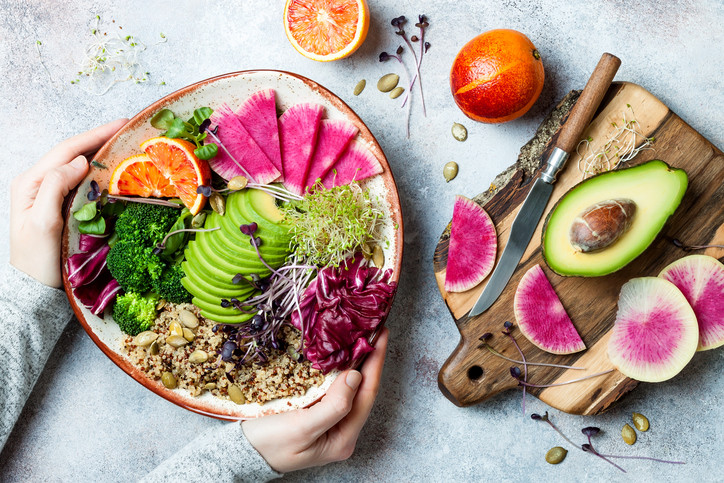
With a little planning, vegan diets can be a healthful choice
There is ample evidence to support the healthfulness of a vegan diet. However, those who choose vegan eating may not get enough of some nutrients unless they pay careful attention to their food intake, or choose to take supplements.

Grain or seed of the month: Wheat
One of the first cultivated grains, wheat is now ubiquitous in the average American diet. In the United States, about 75% of all grain products (such as bread, pasta, tortillas, cakes, and pastries) are made with wheat. Unfortunately, most of these commonly consumed foods are made with white flour: wheat kernels that have been stripped of their outer bran and inner germ layers and milled into a fine powder. White flour is fortified with some of the vitamins and minerals removed during this refining process. But most of the fiber and other healthful plant-based chemicals found in intact whole grains are missing.
Eating more whole grains is linked to a lower risk of heart disease and cancer, which is why the federal dietary guidelines say to "make half your grains whole." But most people aren't even close to that goal. According to the CDC, whole grains account for only about 16% of the total grain-based food adults eat on any given day.
Whole grains may improve several heart risk factors at once
Light exposure at night may raise risk for heart disease
Children of centenarians may stay healthier and live longer too, study finds
A lumbar belt may help ease low back pain
Signs of pneumonia: Sometimes vague and unexpected
Using a vibration plate: What it can — and can't — do for your body
The surprising link between ovarian cancer and the fallopian tubes
People who walk more or walk faster live longer, study finds
Rosacea treatments: What works?
For sleep apnea, a dental device may be as effective as CPAP
Free Healthbeat Signup
Get the latest in health news delivered to your inbox!
Sign Up
