

CoQ10: Should you take this popular supplement if you're on a statin?

Microplastics: A hidden health threat?

Oat vs. dairy milk: Nutrition, benefits, and downsides

What is tempeh? Benefits, nutrition, and how to use it

Healing after food poisoning

Children of centenarians may stay healthier and live longer too, study finds

Light exposure at night may raise risk for heart disease

Whole grains may improve several heart risk factors at once

A lumbar belt may help ease low back pain

Signs of pneumonia: Sometimes vague and unexpected
Contraception and birth control Archive
Articles

Exercise works even better after menopause, study indicates
Research we're watching
A study reported at the 2015 annual meeting of the North American Menopause Society shows that some types of physical activity have a greater impact on body composition in postmenopausal women than in premenopausal ones.
Researchers at the University of Massachusetts asked 630 premenopausal and 274 postmenopausal women to wear accelerometers (motion trackers) to estimate the amount of time they spent doing physical activity. Although the postmenopausal women, on average, logged fewer active hours and more sedentary time than the premenopausal women, they gained more from the time they did spend in motion. Increased activity was associated with greater reductions in body mass index, waist size, and percentage of body fat in postmenopausal women than in their premenopausal counterparts.

Women's hearts age differently than men's do
Image: iStock
Research we're watching
A long-term study from researchers at Johns Hopkins University School of Medicine has found that men's hearts typically grow with age, while women's shrink. The researchers used magnetic resonance imaging (MRI) to study the left ventricle—the main pumping chamber of the heart—in around 3,000 men and women who were enrolled in the Multi-Ethnic Study of Atherosclerosis. All of the participants—who ranged in age from 54 to 94—were free of cardiovascular disease when they entered the study. They had heart scans at the start and 10 years later.
Comparing the MRI scans of men and women, the researchers found that both had declines in left ventricular volume (the amount of blood the chamber holds) over the decade. However, the mass of the ventricle itself increased in men, while it decreased slightly in women. And having a bigger heart seemed to be a disadvantage. It was associated with higher blood pressure and body mass index and lower levels of HDL (good) cholesterol. The study was published online October 20, 2015, by the journal Radiology.
Which mammogram guidelines should I follow?
Ask the doctor
Q. I'm a 48-year-old woman, and I've never had a mammogram. Different guidelines seem to say different things. What do you recommend?
A. You're right, there are several different guidelines. Probably the two most often consulted by doctors are those of the U.S. Preventive Services Task Force (USPSTF) and the American Cancer Society (ACS). Recent changes by the ACS bring its recommendations nearer to those of USPSTF. They disagree slightly about you. ACS says you should have a mammogram (because you are over 45), but USPSTF says to begin at age 50. Both expert committees stress that these recommendations apply only to women who are not at extra risk of breast cancer (extra risk includes, for example, having a parent, sibling, or child who's had breast cancer). If a woman is at extra risk, she should start getting mammograms earlier.
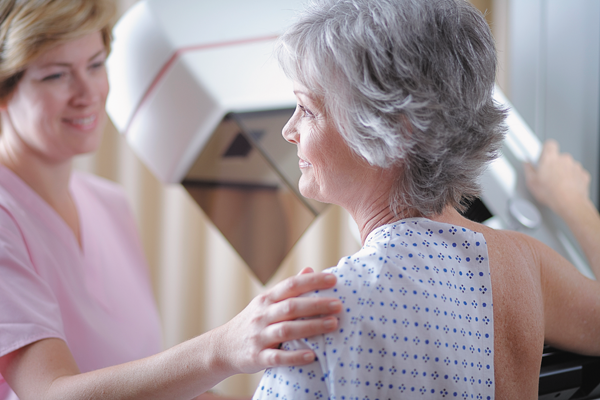
Changes to mammogram screening recommendations
Image: Thinkstock
News briefs
The guidelines for routine breast cancer screenings are changing again. The American Cancer Society (ACS) published its new recommendations Oct. 20, 2015, in The Journal of the American Medical Association, suggesting that women at average risk for breast cancer now wait until age 45 to begin getting yearly mammograms (it had been age 40) and then get yearly mammograms until age 54. After that, the ACS now recommends that average-risk women ages 55 to 74 transition to screening every other year (instead of annually). It's a big shift for the ACS, and the recommendations are now more in line with the guidelines that came from the U.S. Preventive Services Task Force (USPSTF) in 2009, which recommended mammograms every two years for average-risk women ages 50 to 74 and advise against routine screening before age 50 in these women. The USPSTF guidelines have been controversial since they came out. But no one is saying that women at increased risk for breast cancer should wait to get a mammogram; it's a decision that must be made by a woman and her doctor, based on her risk factors. One other big change to the ACS guidelines: that women continue screening mammography only if they have a life expectancy of 10 years or longer.

Heart attacks in younger women: Less treatment, more deaths
Image: Thinkstock
Research we're watching
Women who have heart attacks before age 60 may be less likely to receive a lifesaving procedure to restore blood flow to the heart (an angioplasty plus a stent) than men in that age group, according to a study in the Oct. 26, 2015, Journal of the American College of Cardiology. (Stents are tiny mesh tubes that help keep arteries open.)
Data for the study came from a nationwide sample of more than 630,000 people ages 18 to 59 who had heart attacks. Younger women also were more likely to die in the hospital compared with younger men (4.5% versus 3%, respectively). However, men may be more likely to die before reaching the hospital than women, which may partly explain that difference, the researchers say.
Ask the doctor: Does folic acid improve immunity?
Q. What do you know about taking extra folic acid to boost the immune system?
A. Folic acid is the synthetic form of folate, a B vitamin that occurs naturally in some foods, including vegetables, fruits, and dried beans and peas — and is essential for health. Folate is vital for the production and maintenance of our bodies' cells, especially during rapid periods of growth, such as pregnancy and infancy. It's needed to make DNA and RNA, the genetic material that dictates cell functions, and it helps prevent changes to DNA that may lead to cancer.
Vasectomy and prostate cancer
Image: iStock
Ask the Doctor
Q. I had a vasectomy many years ago, at age 45. I recently read that this increases my risk of prostate cancer. Should I be concerned?
A. Despite the reports you've heard about the connection between vasectomy and prostate cancer, the evidence is weak for a cause-and-effect relationship. Right now, this hypothetical risk should not cause you undue concern.

Not satisfied with your sex life?
Image: Thinkstock
Erectile dysfunction is common, but it's not always the problem. A doctor can help you get to the bottom of it.
Erectile dysfunction (ED) is difficulty either getting or maintaining an erection firm and lasting enough for a satisfying sexual encounter. The most common cause is inadequate blood supply to the spongy tissues in the penis that provide rigidity. That's a straightforward "plumbing problem" that can usually be treated with medication. But there are other possible causes, too.
Will Prozac help my premenstrual depression?
Ask the doctor
Q. I've had some severe bouts of depression before my periods. I have done my own research and I am willing to try an antidepressant. What dosage of Sarafem or Prozac is usually given to treat this?
A. Selective serotonin reuptake inhibitors (SSRIs) are an excellent option for treating premenstrual syndrome (PMS) and premenstrual dysphoric disorder (PMDD). In fact, most physicians now consider them first-line therapy. Many different SSRIs have been studied, including the one you asked about—fluoxetine (Prozac or Sarafem)—and they all appear to be equally effective.

Does the way I urinate make me more prone to UTIs?
Image: Thinkstock
Ask the doctor
Q. Your recent article on recurrent urinary tract infections (UTIs) didn't mention much about urination. One of my friends told me that it could influence my chance of getting a UTI. Is that true?
A. Actually, your urination habits are a good place to start if you're trying to prevent UTIs. When sitting on the toilet, make yourself as comfortable as possible in a relaxed seated position—not a squat. Start the stream of urine by relaxing your pelvic floor muscles, rather than straining to urinate. Allow enough time for your bladder to empty completely.
CoQ10: Should you take this popular supplement if you're on a statin?
Microplastics: A hidden health threat?
Oat vs. dairy milk: Nutrition, benefits, and downsides
What is tempeh? Benefits, nutrition, and how to use it
Healing after food poisoning
Children of centenarians may stay healthier and live longer too, study finds
Light exposure at night may raise risk for heart disease
Whole grains may improve several heart risk factors at once
A lumbar belt may help ease low back pain
Signs of pneumonia: Sometimes vague and unexpected
Free Healthbeat Signup
Get the latest in health news delivered to your inbox!
Sign Up
