

CoQ10: Should you take this popular supplement if you're on a statin?

Microplastics: A hidden health threat?

Oat vs. dairy milk: Nutrition, benefits, and downsides

What is tempeh? Benefits, nutrition, and how to use it

Healing after food poisoning

Children of centenarians may stay healthier and live longer too, study finds

Light exposure at night may raise risk for heart disease

Whole grains may improve several heart risk factors at once

A lumbar belt may help ease low back pain

Signs of pneumonia: Sometimes vague and unexpected
Contraception and birth control Archive
Articles
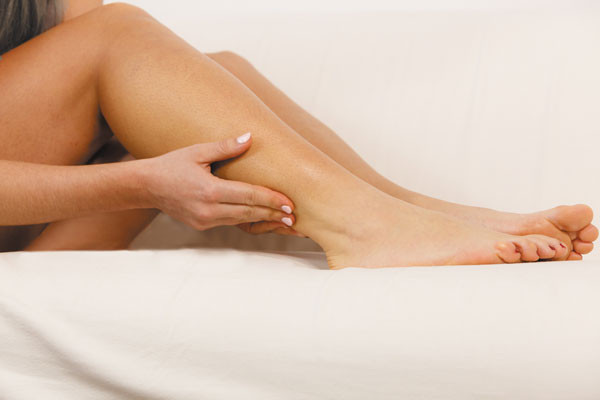
Is there hope for leg cramp sufferers?
Despite the lack of a universally recognized therapy for nighttime leg cramps, a few approaches may be worth trying.
Image: Monkey Business Images/Thinkstock
Few things are more jarring to a night's sleep than shooting calf pains. If you have nocturnal leg cramps, you have lots of company. Although they can strike people at any time of life, they become more common with age. Among people over 60, almost half report having leg cramps, a third say they are awakened by cramps at night, and 15% report weekly episodes.
What causes leg cramps?
Preventing cramps
There are no FDA-approved medications for leg cramps, and the U.S. Preventive Services Task Force hasn't issued guidelines for treating them. However, the American Academy of Neurology (AAN) has issued the following advice on common therapies, based on scientific evidence of effectiveness.
Stretching exercises. The AAN says that there are not enough data to say for sure that stretching helps reduce the frequency of muscle cramps. That doesn't mean that the exercises are ineffective or harmful, and doing them can help contribute to the flexibility of your legs.
Quinine. There is solid evidence that quinine and quinine derivatives are effective in reducing the frequency of muscle cramps, although the magnitude of benefit is small. However, quinine is out-of-bounds for most people. The FDA has issued repeated warnings against using quinine (which is approved only to treat certain types of malaria) to prevent or treat leg cramps because it may cause serious side effects, including bleeding and kidney damage. Although doctors can still prescribe quinine, it is recommended only when cramps are disabling and when the person can be carefully monitored for side effects.
Vitamin B complex. There is some evidence that taking a daily capsule containing eight B vitamins—B1 (thiamine), B2 (riboflavin), B3 (niacin), B5 (pantothenic acid), B6, B7 (biotin), B9 (folate), and B12—may prevent cramps.
Calcium-channel blockers. Evidence indicates that one calcium-channel blocker—diltiazem (Cardizem, Dilacor XR)—is possibly effective.
Ineffective therapies. The AAN found enough evidence to indicate that magnesium supplements and gabapentin (Neurontin) aren't likely to help.
Other remediesIn situations like nighttime leg cramps, where there are no widely accepted treatments, unproven remedies may be worth a try. The following are low-risk and have enthusiastic proponents.
|

Look on the bright side and maybe even live longer
Studies suggest that adopting a sunnier outlook may improve your health and even extend your life.
Image: © lzf /Thinkstock
In these turbulent times, it's sometimes a struggle to maintain a glass-half-full view of life. But if you can, it may serve you well. A growing body of research links optimism—a sense that all will be well—to a lower risk for mental or physical health issues and to better odds of a longer life.
One of the largest such studies was led by researchers Dr. Kaitlin Hagan and Dr. Eric Kim at Harvard's T.H. Chan School of Public Health. Their team analyzed data from 70,000 women in the Nurses' Health Study who, in 2004, had answered questions about how they viewed their futures

Many preventive mastectomies may be unnecessary
Women with early cancer in one breast may opt to remove the other, healthy breast because they overestimate their risk of a second cancer.
Incontinence may reflect body fat, not just weight
The risk of developing stress incontinence or urge incontinence increases along with BMI and body fat percentage. Stress incontinence is also associated with declines in grip strength.

White wine linked to higher risk of certain melanomas
Data from more than 200,000 people indicates that the risk of developing melanoma increases by 13% for every glass of white wine consumed per day. Drinking beer, red wine, or liquor was not associated with increased risk.
Emergencies and First Aid - Emergency Checklist
This list describes your priorities in an emergency situation. Follow these steps:
- Evaluate the scene to protect yourself and others from injury or danger.
- Be calm and reassuring.
- Do not move the person unless he or she is in imminent danger or unless you cannot provide assistance without moving the person.
- Get help. Call out for someone to phone 911 or, if the person does not need immediate assistance, make the call yourself.
- If the situation is a choking emergency, perform the Heimlich maneuver (see Choking).
- Look, listen, and feel for breathing (see Breathing Difficulties).
- Feel for a pulse to determine if the heart is beating.
- Control bleeding with direct pressure.
- Treat for shock.
- If the person is unconscious, move him or her into the recovery position.

Emergencies and First Aid - Recovery Position
Adult Recovery Position
This position helps a semiconscious or unconscious person breathe and permits fluids to drain from the nose and throat so they are not breathed in. If the person is unconscious or semiconscious after you have done everything on the Emergency Checklist, move the person into the recovery position while waiting for help to arrive.
Do not use the recovery position if the person has a major injury, such as a back or neck injury

Emergencies and First Aid - Removing a Stuck Ring
Removing a Stuck Ring
| ||||
Emergencies and First Aid - Choking
Choking
A person who is choking will instinctively grab at the throat. The person also may panic, gasp for breath, turn blue, or be unconscious. If the person can cough or speak, he or she is getting air. Nothing should be done.
Immediate care
If the person cannot cough or speak, begin the Heimlich maneuver immediately to dislodge the object blocking the windpipe. The Heimlich maneuver creates an artificial cough by forcing the diaphragm up toward the lungs.
Emergencies and First Aid - Cardiopulmonary Resuscitation
When you are alone and have to perform cardiopulmonary resuscitation (CPR), your primary effort should be compressing the chest to help the person's heart pump blood. If there is a second person helping, providing breaths can be done at the same time as compressions are performed.
The brief review of CPR on the following pages can help you in an emergency; however, this information should not take the place of a certified course in CPR.
CoQ10: Should you take this popular supplement if you're on a statin?
Microplastics: A hidden health threat?
Oat vs. dairy milk: Nutrition, benefits, and downsides
What is tempeh? Benefits, nutrition, and how to use it
Healing after food poisoning
Children of centenarians may stay healthier and live longer too, study finds
Light exposure at night may raise risk for heart disease
Whole grains may improve several heart risk factors at once
A lumbar belt may help ease low back pain
Signs of pneumonia: Sometimes vague and unexpected
Free Healthbeat Signup
Get the latest in health news delivered to your inbox!
Sign Up
