

Healing after food poisoning

What is tempeh? Benefits, nutrition, and how to use it

Light exposure at night may raise risk for heart disease

Whole grains may improve several heart risk factors at once

A lumbar belt may help ease low back pain

Children of centenarians may stay healthier and live longer too, study finds

Signs of pneumonia: Sometimes vague and unexpected

The surprising link between ovarian cancer and the fallopian tubes

Using a vibration plate: What it can — and can't — do for your body

People who walk more or walk faster live longer, study finds
Breast Cancer Archive
Articles


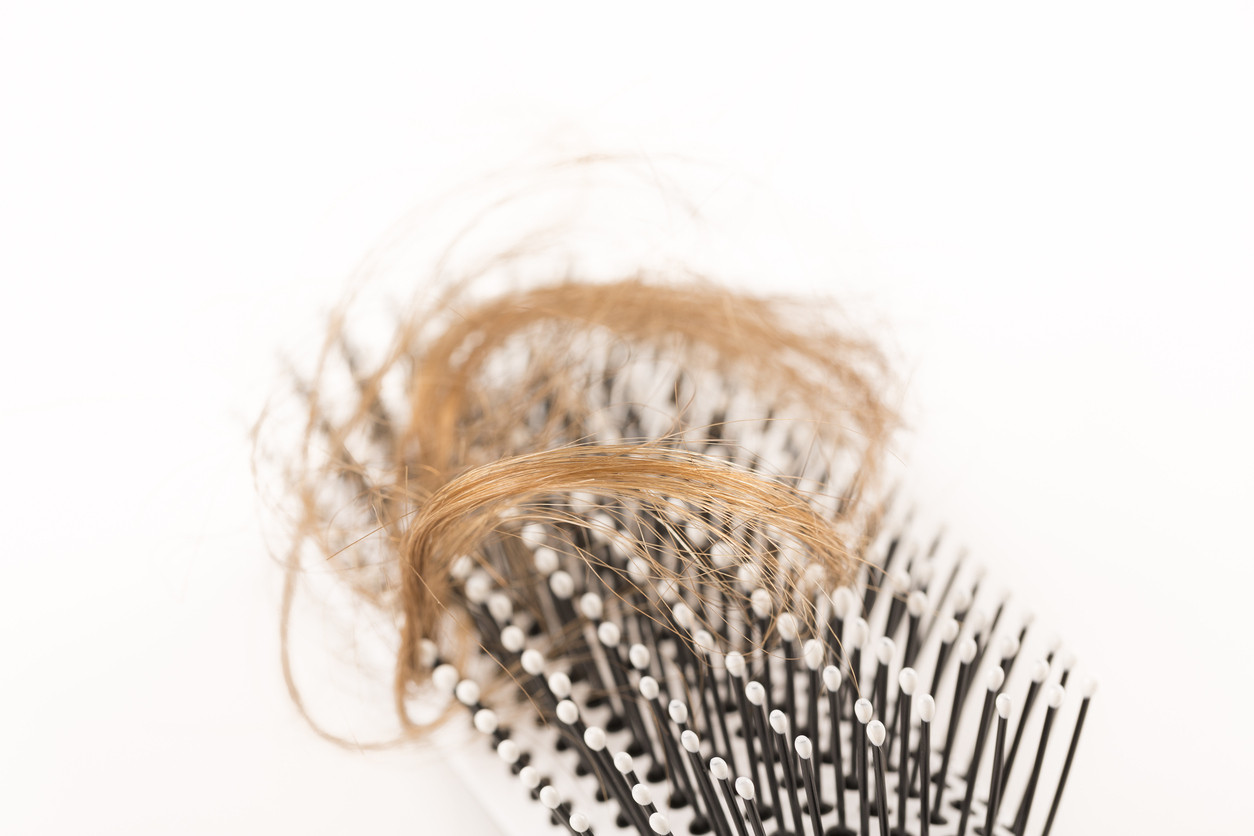
Why do I lose a lot of hair each fall?
Ask the doctors
Q. I have fairly thick hair in the summer, but it seems to thin out in late fall. Is there anything I can do now to prevent losing hair in a few months?
A. Sadly, no. What you've experienced is common to all of us. On average, about 90% of the hairs on our heads are in the growing phase and about 10% are in the resting phase. After a few months in the resting phase, the hairs are shed. It's normal to shed up to 100 hairs a day.

Should you have an annual pelvic exam?
By Hope Ricciotti, M.D., Editor in Chief
If you've come to expect a pelvic exam as a routine part of your annual well-woman physical, you may be surprised to learn that health experts disagree over whether it is necessary. The exam — in which the clinician inserts gloved fingers into the vagina to examine the cervix, uterus, and ovaries — has been routine for decades, but recently its benefits have been called into question.
In 2014 the American College of Physicians — an influential group of internal medicine specialists — issued a recommendation against routine pelvic examinations for women who aren't pregnant and have no unusual risk for or symptoms of pelvic diseases. However, the American College of Obstetricians and Gynecologists (ACOG) has stood by its longstanding policy recommendation — annual pelvic exams for women ages 21 and older — based on expert opinion. In March 2017, the U.S. Preventive Services Task Force — the pre-eminent medical guidelines organization — ruled that there is insufficient evidence to recommend either for or against annual screenings.

Drinking — and binge drinking — growing more common among older women
Research we're watching
A new study from researchers at the National Institutes of Health indicates that the rate of drinking in general, and binge drinking in particular, is rising faster among women ages 60 or older than among their male contemporaries. When the researchers analyzed data from National Health Interview Surveys from 1997 through 2014, they found that the proportion of older women drinkers increased at a rate of 1.6% a year, compared with 0.7% for older men. Binge drinking — defined as imbibing four or more drinks within two hours — increased by 3.7% annually among older women, but held steady among older men. The results were reported online March 24, 2017, by Alcoholism: Clinical and Experimental Research.
The researchers speculated that baby boomers, who tended to drink more than earlier generations did in youth, have continued their habits as they've aged. Whatever the reason, the trend doesn't bode well for older women's health. Because of biological differences, at any level of alcohol consumption, women have a higher blood alcohol concentration than men, putting them at greater risk of cognitive impairment and falls. It's a good idea to limit alcohol consumption to seven drinks a week, with no more than three drinks at a sitting.
Being overweight any time in adulthood still associated with a shorter life
Research we're watching
Previous studies have suggested that being somewhat overweight or even slightly obese may not be associated with a shortened life span. Some studies have suggested that being a bit overweight might even be healthier than being at normal weight. This has been referred to as the "obesity paradox."
A recent analysis of data from the Nurses' Health Studies I and II and the Health Professionals Follow-up Study has helped bring clarity to this paradox. Researchers from the Harvard T.H. Chan School of Public Health and Boston University School of Public Health assessed the maximum body mass index (BMI) over 16 years for more than 190,000 postmenopausal women and 35,000 senior men. They then tracked who died over a follow-up period averaging 12 years. They found that people with a maximum BMI in the normal range (18.5 to 24.9 kg/m2) throughout life had the lowest risk of death. Those whose highest recorded BMI fell into the overweight or obese category were at elevated risk of dying from any cause, as well as dying specifically from cardiovascular disease, cancer, or respiratory disease, during the follow-up period.

Breast implants linked to rare lymphoma
Research we're watching
The FDA's medical device reporting program recently announced that as of February 1, it had received 359 reports of anaplastic large cell lymphoma (ALCL), a rare type of non-Hodgkin's lymphoma, in women who had received breast implants. Nine women had died of the disease. The FDA uses such reports to alert clinicians about potential significant side effects from approved drugs and devices, and as it gathers more information, the data may change. Many reports contained details of the implants, including whether the outside surface was smooth or textured and whether the filling was silicone gel or saline.
ALCL is usually found within a capsule of fibrous scar tissue that forms around an implant, not in the breast tissue itself. It appears to develop more frequently in women with textured implants, regardless of filling type.



To PSA test or not to PSA test: That is the discussion
The recommended guidelines for whether men should have the prostate cancer screening test have changed in recent years. A man considering the test should talk with his doctor and understand all the pros and cons involved.
Healing after food poisoning
What is tempeh? Benefits, nutrition, and how to use it
Light exposure at night may raise risk for heart disease
Whole grains may improve several heart risk factors at once
A lumbar belt may help ease low back pain
Children of centenarians may stay healthier and live longer too, study finds
Signs of pneumonia: Sometimes vague and unexpected
The surprising link between ovarian cancer and the fallopian tubes
Using a vibration plate: What it can — and can't — do for your body
People who walk more or walk faster live longer, study finds
Free Healthbeat Signup
Get the latest in health news delivered to your inbox!
Sign Up
