

CoQ10: Should you take this popular supplement if you're on a statin?

Oat vs. dairy milk: Nutrition, benefits, and downsides

Microplastics: A hidden health threat?

Healing after food poisoning

What is tempeh? Benefits, nutrition, and how to use it

Light exposure at night may raise risk for heart disease

Whole grains may improve several heart risk factors at once

A lumbar belt may help ease low back pain

Children of centenarians may stay healthier and live longer too, study finds

Signs of pneumonia: Sometimes vague and unexpected
Alzheimer's Disease Archive
Articles

Quick-start guide to mental health professionals
Learn about the different kinds of experts and how they can help you.
Where should you turn when you suspect that you have a mental health condition: a psychiatrist, a psychologist, or some other type of mental health professional? It's tough to figure out what kind of clinician can best help you sort out your problems and provide the care you need.
Often a primary care visit is a good start. Your physician can assess your symptoms and refer you to a mental health professional for evaluation and appropriate treatment.

Consider this Harvard finding before you toast the New Year
News briefs
We've reported before that heavy drinking is tied to an increased risk for developing dementia. A Harvard-led study published online Sept. 27, 2019, by JAMA Network Open suggests that the risk is even worse if you have mild cognitive impairment (MCI). Researchers analyzed the data of more than 3,000 dementia-free adults (average age 78, some with MCI) who reported their alcohol use and underwent psychological testing for six years. People with MCI who drank heavily (more than 14 drinks per week) had a 72% higher risk for dementia than people who drank less than one drink per week. However, people without MCI who drank moderately (seven to 14 drinks per week) didn't appear to have an increased risk for dementia, and even seemed to have a 37% lower risk for dementia compared with people who consumed less than one drink per week. The bottom line: "Our results suggest that moderation is the healthiest approach if you drink. And if you have mild cognitive impairment, you may want to reconsider drinking alcohol at all," says Dr. Kenneth Mukamal, a study author and researcher with the Harvard T.H. Chan School of Public Health.
Image: franckreporter/Getty Images

Harnessing CRISPR to stop viruses
News briefs
A research team from Harvard reports that it has harnessed the powerful gene editing tool called CRISPR to recognize and kill viruses. The findings were published online Oct. 2, 2019, by Molecular Cell. CRISPR can alter strands of both DNA and RNA (a molecule related to DNA), which are built like strings of beads. Each bead consists of one of four chemicals called bases. CRISPR can recognize a specific sequence of bases (such as one that is characteristic of a particular virus), latch on to that sequence and cut it, and change the sequence to a different one. This can scramble the genetic sequence of a virus in such a way that the virus no longer can make copies of itself. The Harvard team used this technique to kill several viruses that are made of RNA — including influenza virus — in a laboratory dish. The next step will be to see if the CRISPR technique can also be used to kill viruses in a living animal. That will be much harder. However, if it works, the technique might someday help humans fight viral infections.
Image: © Bill Oxford/Getty Images

FDA approves new migraine medication
Research we're watching
If you suffer from migraine headaches, there's a new option available to relieve your pain. In October 2019, the FDA approved lasmiditan (Reyvow) to treat migraine pain in adults. Taken as a pill, it works for migraines either with or without an aura (a visual disturbance within the hour before migraine pain starts). Lasmiditan is not designed to prevent migraines. Lasmiditan is the first migraine treatment in a class of drugs known as serotonin (5-HT) 1F receptor agonists. In studies, researchers found that it could relieve pain and other migraine symptoms within two hours.
Migraines affect an estimated 28 million women in the United States, according to the American Migraine Foundation, and the World Health Organization ranks them among the top 10 disabling conditions. Pain and other symptoms, which may include nausea, sensitivity to light and temporary vision changes, result in lost work days, reduced productivity, and diminished quality of life for many people.

How to improve your episodic memory
These tips can help you recall the details from past events and learn from them.
Does this sound familiar? You can't recall the name of someone you met before. Or you forget the time-saving shortcut from a previous car trip. Or you repeatedly make the same silly mistake doing a once-familiar task.
It's frustrating when you can't recall certain past details. You may chalk it up to "senior moments." But, the actual problem is a breakdown in your episodic memory, the brain's largest and most complex memory system.

Troubled by migraines? Cut back on your caffeine drinks
In the journals
Over-the-counter pain medicines that contain caffeine can be effective at stopping some headaches. But drinking a large amount of caffeinated beverages might actually trigger a headache for some people with migraines, according to a study published in the August 2019 issue of The American Journal of Medicine.
Researchers recruited almost 100 people with migraines who suffered from fewer than 15 headaches per month. For six weeks, they recorded the timing and characteristics of each migraine and their intake of caffeinated beverages.

Eosinophilic esophagitis: A new food-related allergic condition on the rise?
Eosinophilic esophagitis is an allergic inflammation of the esophagus that most typically develops as an allergic response to certain foods. The exact cause is unclear, but if left untreated it can lead to permanent scarring or narrowing of the esophagus.

Heart attacks in women
Although hard-to-read heart attacks happen to both men and women, they are more common in women. One reason for this is that men's symptoms initially set the standard for recognizing heart trouble. Now a growing body of research shows that women can experience heart attacks differently than men.
Understanding sex differences in heart disease is important. Heart disease is the leading cause of death for women. Although it mostly affects older women, it isn't rare in younger women. One in 10 of all women who die from heart disease or a stroke are under age 65, and this age group accounts for one-third of heart- or stroke-related hospitalizations. Even so, younger women and their doctors don't necessarily suspect a heart attack even when all the signs are there.
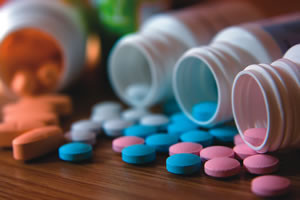
Bad mix: Blood thinners and NSAIDs
Image: Anita_Bonita/Getty Images |
Take the lowest dose of NSAIDs and stop using them as soon as possible.
Blood thinners are usually given to people at risk for developing blood clots from conditions, such as abnormal heart rhythms. Use of these lifesaving medications requires caution with other drugs, especially painkillers called nonsteroidal anti-inflammatory drugs (NSAIDs), such as ibuprofen (Advil) or naproxen (Aleve). But plenty of people take the risk to relieve aches and pains. "Many of the patients who need blood thinners are older and therefore at risk for arthritis, so it's not infrequent for a patient to be on both a blood thinner and an NSAID," says cardiologist Dr. Deepak L. Bhatt, a Harvard Medical School professor.

Trouble with crossword puzzles? Improve your semantic memory
Semantic memory is your store of factual knowledge and the meanings of words. It also helps you recall nonverbal concepts and relationships between words and concepts. And while some aspects of memory may decline with age, semantic memory does not.
CoQ10: Should you take this popular supplement if you're on a statin?
Oat vs. dairy milk: Nutrition, benefits, and downsides
Microplastics: A hidden health threat?
Healing after food poisoning
What is tempeh? Benefits, nutrition, and how to use it
Light exposure at night may raise risk for heart disease
Whole grains may improve several heart risk factors at once
A lumbar belt may help ease low back pain
Children of centenarians may stay healthier and live longer too, study finds
Signs of pneumonia: Sometimes vague and unexpected
Free Healthbeat Signup
Get the latest in health news delivered to your inbox!
Sign Up
