










Treating hair loss in men: What works?
Here's what to know about the two most effective medications, products you should avoid, and new options in the pipeline.
- Reviewed by Maryanne Makredes Senna, MD, Contributor
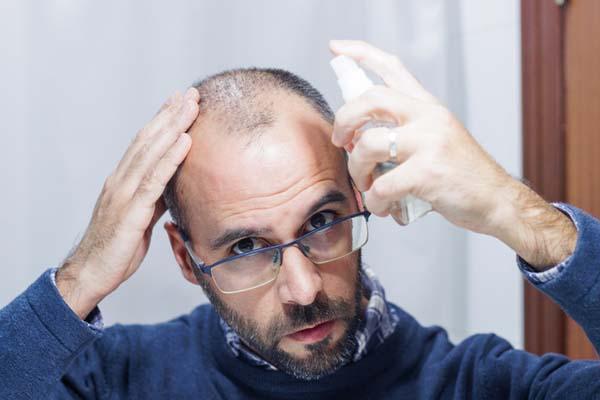
Most men notice their hair becoming a bit more sparse as they grow older. But more obvious thinning of the hair around the temples (a receding hairline) or crown of the head (a bald spot) is quite common even in younger men. Known as male-pattern baldness, it can first appear as early as the late teens.
"About 20% of men start balding by age 20, and about 30% do so by age 30," says Dr. Maryanne Makredes Senna, director of the Lahey Hair Loss Center of Excellence and assistant professor of dermatology at Harvard Medical School. That trend continues to age 50, when about half of men have lost noticeable amounts of hair, and the prevalence keeps rising with age.
What causes male-pattern baldness?
Also known as androgenetic alopecia, male-pattern baldness is the most common type of hair loss. Along with increasing age, genetics and sex hormones known as androgens play major roles. The main one, dihydroxytestosterone (DHT), is derived from the hormone testosterone. Excess DHT levels cause hair follicles to shrink and also shorten each hair's normal growth cycle, both of which accelerate hair loss.
Medications to prevent and treat hair loss
Two drugs are FDA-approved to treat male-pattern hair loss: topical minoxidil, which is available over the counter, and finasteride (Propecia), a prescription-only pill. With both drugs, you need to take them consistently for four to six months before seeing any noticeable improvement - and then you need to keep using them indefinitely to maintain any benefits.
5% minoxidil (Rogaine). Minoxidil was originally developed as a pill to treat high blood pressure. It was repurposed as a hair loss treatment after doctors noticed that people taking minoxidil were growing excess hair. For hair loss, the drug comes as a foam or liquid that's applied to the scalp twice a day. Experts believe the topical versions work by dilating blood vessels in the scalp, which helps increase blood flow and delivers needed nutrients to encourage hair growth.
"Most people find the liquid easier to use because it doesn't stick to nearby hair as much as the foam," says Dr. Senna. But unlike the foam, the liquid contains propylene glycol, a preservative that can irritate the skin, causing itching and redness in some people.
Finasteride (Propecia). Taken as a daily pill, this drug works by interfering with the conversion of testosterone to DHT. Side effects of finasteride include a lower sex drive, erectile dysfunction, and ejaculation issues; there are some reports of these side effects persisting even after stopping the drug. Breast enlargement, a temporary impairment of fertility, and mood changes can also occur. According to a 2025 scientific review in the Journal of Cosmetic Dermatology, oral finasteride is slightly more effective than topical minoxidil, based on the average change in hair density after six months of use.
Cautions about compounded products and supplements
Other hair growth products, typically sold online, are not only unproven but potentially unsafe. In April 2025, the FDA issued a warning to consumers about possible risks from compounded topical finasteride products. Studies show these products can lower blood DHT levels almost as much as oral finasteride, says Dr. Senna. Users reported side effects similar to finasteride pills, including erectile dysfunction, anxiety, and depression.
Other products contain untested mixtures of vitamins, minerals, and dietary supplements such as curcumin, ashwagandha, and green tea extract. While rare, there are reports of heathy young people developing drug-induced liver injury from these supplements, says Dr. Senna.
On the horizon
In the future, a low-dose, extended-release minoxidil pill also may be an effective and more convenient option for regrowing hair. If longer, larger studies confirm the benefits and safety of the new formulation (and lead to FDA approval), it would be the first non-hormonal pill for treating male-pattern baldness. (Dr. Senna serves as a scientific advisor to the company developing the drug.)
Several other potential new treatments are under development, including clascoterone (Breezula), which is already approved for treating acne (under the trade name Winlevi). This topical drug also blocks DHT, but very selectively - only at the hair follicle instead of throughout the body, says Dr. Senna. Clinical trials are ongoing, but early results suggest it's about as effective as currently available drugs and has only minor side effects, including redness and itching. Other promising candidates include pyrilutamide, which also selectively blocks DHT, and PP405, which aims to stimulate stem cells in dormant hair follicles.
Image: © Victor Manuel Mulero Ramirez/Getty Images
About the Author

Julie Corliss, Executive Editor, Harvard Heart Letter
About the Reviewer

Maryanne Makredes Senna, MD, Contributor
Disclaimer:
As a service to our readers, Harvard Health Publishing provides access to our library of archived content. Please note the date of last review or update on all articles.
No content on this site, regardless of date, should ever be used as a substitute for direct medical advice from your doctor or other qualified clinician.


