



Exercise stress test
- Reviewed by Robert H. Shmerling, MD, Senior Faculty Editor, Harvard Health Publishing; Editorial Advisory Board Member, Harvard Health Publishing
What is the test?
The exercise stress test, also known as the treadmill test or exercise tolerance test, is a measure of whether your heart is getting enough blood flow and oxygen when it's working its hardest, such as during exercise. Often, stress tests are given to people with chest pain or other symptoms that may be due to coronary artery disease, based on a medical evaluation and electrocardiogram (EKG). In addition, these tests are sometimes used for other purposes, from assessing the effectiveness of heart disease treatment to gauging the safety of a proposed exercise program.
Your heart health can be examined during and after exercise either by using an EKG or an echocardiogram (ultrasound of the heart). When this test uses an echocardiogram, it is called an "exercise echo."
Stress tests are among the best tools for diagnosing heart disease, and some research suggests that they may also be useful in estimating disease risk in people who don't have symptoms but have risk factors such as high cholesterol.
How do I prepare for the test?
Wear comfortable, loose-fitting clothing and athletic shoes. Let the doctor performing the test know if you think you won't be able to walk on a treadmill or use a bicycle for any health reason such as arthritis. Also let the doctor know if you have diabetes; since exercise can lower blood sugar, he or she may want to check your blood sugar level before the test begins, to be sure it is not too low. It's also important to tell the doctor or other health professional in the testing room if you've had any chest pain or pressure on the day of the test. Try to avoid eating a large meal right before the test, which could make exercising uncomfortable.
In some cases your medications may be temporarily adjusted prior to the stress test, particularly if you take medications that prevent your heart from increasing its heart rate.
What happens when the test is performed?
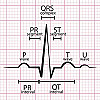
If you will be having your heart health measured by an EKG tracing, you will first have an EKG both while lying down and standing up. Your blood pressure is checked and several plastic-coated wires, or leads, are taped to your arms and one leg so that your heart's electrical pattern can be detected while you exercise. Your blood pressure and heart rate also are monitored during the test.
You are asked to walk on a treadmill (or in some cases, exercise on a bicycle) for about 10 minutes. The speed and steepness of the treadmill will increase several times while you exercise. Let the person who is monitoring you know immediately if you feel chest pain or heaviness, shortness of breath, leg pain or weakness, or other unusual symptoms, or if you think you can't continue exercising. After the exercise period is completed, your blood pressure will be checked again.
If your heart function is to be examined by echocardiogram rather than by EKG, you will lie down after you have exercised. After squirting some clear jelly onto your chest to help the ultrasound sensor slide around easily, a technician or doctor places the sensor (which looks like a microphone) against your skin. A picture of your heart appears on a video screen, and the technician or doctor slides the sensor back and forth on your chest to see different views of your heart. At times the volume from the machine might be turned on, transmitting a whooshing noise; this represents the sound of your heart beating and blood flowing.
A variation of this test (called a nuclear stress test) uses a radionuclide to visualize parts of the heart that may not be getting enough blood. The radionuclide is usually technetium or thallium. If you have this test, two sets of pictures are taken: one set while at rest and another set during exercise.
An exercise stress test strongly suggests coronary artery disease if walking on the treadmill produces symptoms such as chest discomfort, shortness of breath, or dizziness, and these symptoms are accompanied by EKG or imaging test changes that indicate inadequate blood flow to parts of the heart. A test is considered normal if you can perform a normal amount of exercise without symptoms or EKG changes. Many people have chest discomfort but no EKG changes, or vice versa. In these cases the exercise test may be considered inconclusive, and further testing may be recommended.
What risks are there from the test?
If you have cardiac disease, you might develop chest pain during the test. Because this is a sign that your heart isn't getting enough oxygen and could be in danger of damage, it's important that you alert the medical staff immediately so that the test can be stopped. Also, the technician will be closely watching your EKG tracing and vital signs for changes that might indicate a problem.
Must I do anything special after the test is over?
In most cases, there is nothing special that you need to do after a stress test. If your blood pressure becomes unusually high or low, or your develop chest pain, shortness of breath, or lightheadedness, the supervising doctor will immediately be notified. The team will continue to recheck you blood pressure and heart rate frequently and continue to monitor your EKG.
How long before the result of the test is known?
A doctor may offer immediate feedback about your test results. However, it may take a few days before the final report is available.
Additional info
American Heart Association
www.heart.org
About the Reviewer

Robert H. Shmerling, MD, Senior Faculty Editor, Harvard Health Publishing; Editorial Advisory Board Member, Harvard Health Publishing
Disclaimer:
As a service to our readers, Harvard Health Publishing provides access to our library of archived content. Please note the date of last review or update on all articles.
No content on this site, regardless of date, should ever be used as a substitute for direct medical advice from your doctor or other qualified clinician.