










Gene-editing therapy lowers harmful blood fats in early study
News briefs
- Reviewed by Robert H. Shmerling, MD, Senior Faculty Editor, Harvard Health Publishing; Editorial Advisory Board Member, Harvard Health Publishing
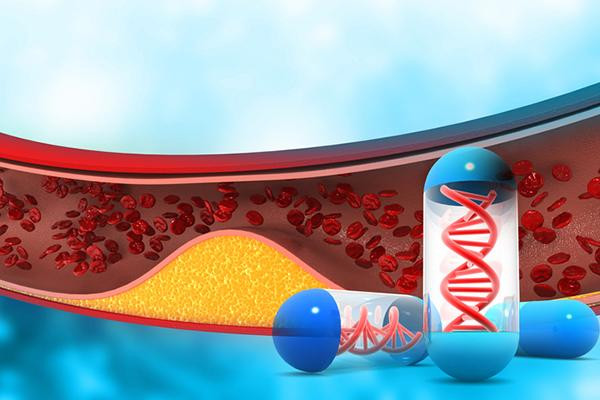
A one-time infusion of a gene-editing therapy may safely lower cholesterol and triglyceride levels, according to a small preliminary trial, the first study of the therapy done in humans.
The trial included 15 people with uncontrolled high LDL (bad) cholesterol, triglycerides, or both. All were already taking the maximum doses of medications to lower these levels. Each received one of five different doses of the therapy, which was given in a single infusion.
Called CTX310, the therapy delivers a gene-editing mechanism into the liver, where it switches off a gene called ANGPTL3. (People born with a disabled variant of this gene have a lower lifetime risk of heart disease with no apparent harmful consequences.) At the highest dose, CTX310 reduced both LDL cholesterol and triglycerides by an average of about 50%.
There were no serious side effects related to the treatment, but three people had minor reactions including temporary back pain and nausea that improved with medication. Monitoring will continue for at least a year after the trial, with additional safety checks for 15 years. Larger, longer trials are slated to begin in 2026. The study was published Nov. 8, 2025, in The New England Journal of Medicine.
Image: © Rasi Bhadramani/Getty Images
About the Author

Julie Corliss, Executive Editor, Harvard Heart Letter
About the Reviewer

Robert H. Shmerling, MD, Senior Faculty Editor, Harvard Health Publishing; Editorial Advisory Board Member, Harvard Health Publishing
Disclaimer:
As a service to our readers, Harvard Health Publishing provides access to our library of archived content. Please note the date of last review or update on all articles.
No content on this site, regardless of date, should ever be used as a substitute for direct medical advice from your doctor or other qualified clinician.


