










Partial knee replacement as effective as total replacement for select patients
News briefs
- Reviewed by Robert H. Shmerling, MD, Senior Faculty Editor, Harvard Health Publishing; Editorial Advisory Board Member, Harvard Health Publishing
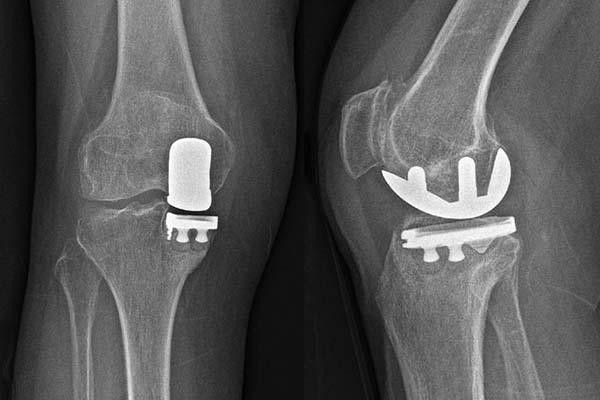
People with advanced knee osteoarthritis often opt for a knee replacement. But not everyone needs a total joint replacement. When worn-down cartilage and other damage is limited to one side of the knee joint, surgeons may recommend a partial knee replacement instead. With a partial replacement, the metal and plastic implant is inserted on only one side. The surgery is less invasive, with a quicker initial recovery.
A study published Nov. 18, 2025, in The Lancet Rheumatology found that people with arthritis affecting just one side of the knee did just as well with partial replacement as with total replacement. The study included 528 people with arthritis only on the inside (medial side) of the knee joint who were randomly assigned to receive either total or partial knee replacement.
At an assessment 10 years later, both groups had similar values on a score that measures pain relief and improved function. They also had similar rates of repeat surgeries. Over all, partial knee replacement came out ahead with fewer complications and lower cost.
Of note, not everyone with knee arthritis is a candidate for partial replacement, and not all knee surgeons perform them.
Image: © tunart/Getty Images
About the Author

Lynne Christensen, Staff Writer
About the Reviewer

Robert H. Shmerling, MD, Senior Faculty Editor, Harvard Health Publishing; Editorial Advisory Board Member, Harvard Health Publishing
Disclaimer:
As a service to our readers, Harvard Health Publishing provides access to our library of archived content. Please note the date of last review or update on all articles.
No content on this site, regardless of date, should ever be used as a substitute for direct medical advice from your doctor or other qualified clinician.


