










How to treat shoulder impingement
Improving posture and strengthening muscles can relieve this common cause of shoulder pain.
- Reviewed by Alana Noonan, PT, DPT, CLT, Contributor

Shoulder pain that occurs when you raise your arm or reach around your back may mean you have shoulder impingement.
Up to 30% of adults experience shoulder pain at some time, and impingement is the most common cause. "We often see it in people who engage in repeated overhead activities, such as athletes and laborers," says Alana Noonan, a physical therapist at Harvard-affiliated Spaulding Rehabilitation. But it can happen to anyone, and it's more common in women than men.
What is shoulder impingement?
There are different types of shoulder impingement, the most common being subacromial impingement.
The shoulder is a complex structure containing a ball-and-socket joint, a group of surrounding muscles and tendons (called the rotator cuff), and small fluid-filled sacs (bursae) that function as cushions to reduce friction. At the tip of the shoulder, a bone projection called the acromion, which is part of the shoulder blade, forms a sort of roof over the joint. It helps protect the tendons and other structures underneath.
With shoulder impingement, the tendons don't have enough space to move properly. When you raise your arm, the space narrows further, and the tendons or bursae can get compressed between the acromion and the upper arm bone (humerus). Constant irritation inflames the tendons and bursa. Certain movements, such as raising your arm or reaching across your body or behind your back, can cause pain. Lying on the affected side can also hurt.
What causes impingement?
"One major factor in developing shoulder impingement is poor posture," says Noonan. "Having rounded shoulders or hunched-over posture increases the forward tilt of the acromion and shoulder blade, which puts pressure on the structures underneath."
Noonan notes that shoulder impingement doesn't always happen alone. It can develop in people with arthritis or other shoulder problems. These conditions may contribute to impingement, and they influence the types of movements that trigger symptoms.
Identify the cause
The first step in treating shoulder impingement is identifying the cause of the altered movements that result in compression. A physical therapist can evaluate your condition (see "Shoulder impingement tests") and teach you exercises to alleviate it.
"Along with bad posture, other contributing factors are rotator cuff weakness or tears, weak muscles around the shoulder blade, and tightness in the muscles in the front of the shoulder," says Noonan.
Shoulder impingement testsPhysical therapists can use the following tests to evaluate patients for shoulder impingement: Neer impingement test. The examiner lifts the patient's arm all the way up and then rotates the arm inwards to see if compression causes pain. Hawkins-Kennedy test. The examiner brings the patient's arm up to about 90° with the elbow bent at 90°. The examiner then internally rotates the shoulder. This closes the space between the top of the humerus and the acromion. Pain indicates possible impingement. |
Shoulder impingement exercises
Start by improving your posture and ergonomics (the way you sit at your desk or in your car). Core strengthening exercises are key to restoring good posture.
Noonan recommends rotator cuff strengthening exercises for everyone with shoulder impingement (see "Internal and external rotation"). "The stronger your rotator cuff is, the more your humerus is supported, so it's not lifting within the joint and putting stress on those tissues," she says.
Exercises that stretch the front of the shoulder can help open the chest muscles (see "Doorframe stretch"). Noonan also recommends exercises to increase the strength and stability of the muscles in your upper back around your shoulder blade (see "Standing row").
"When doing exercises for shoulder impingement, it's important that they don't make your symptoms worse," says Noonan. "This is not a 'no pain, no gain' type of rehab." Speak with your physical therapist about modifying or changing the exercises if they cause discomfort.
Internal and external rotation
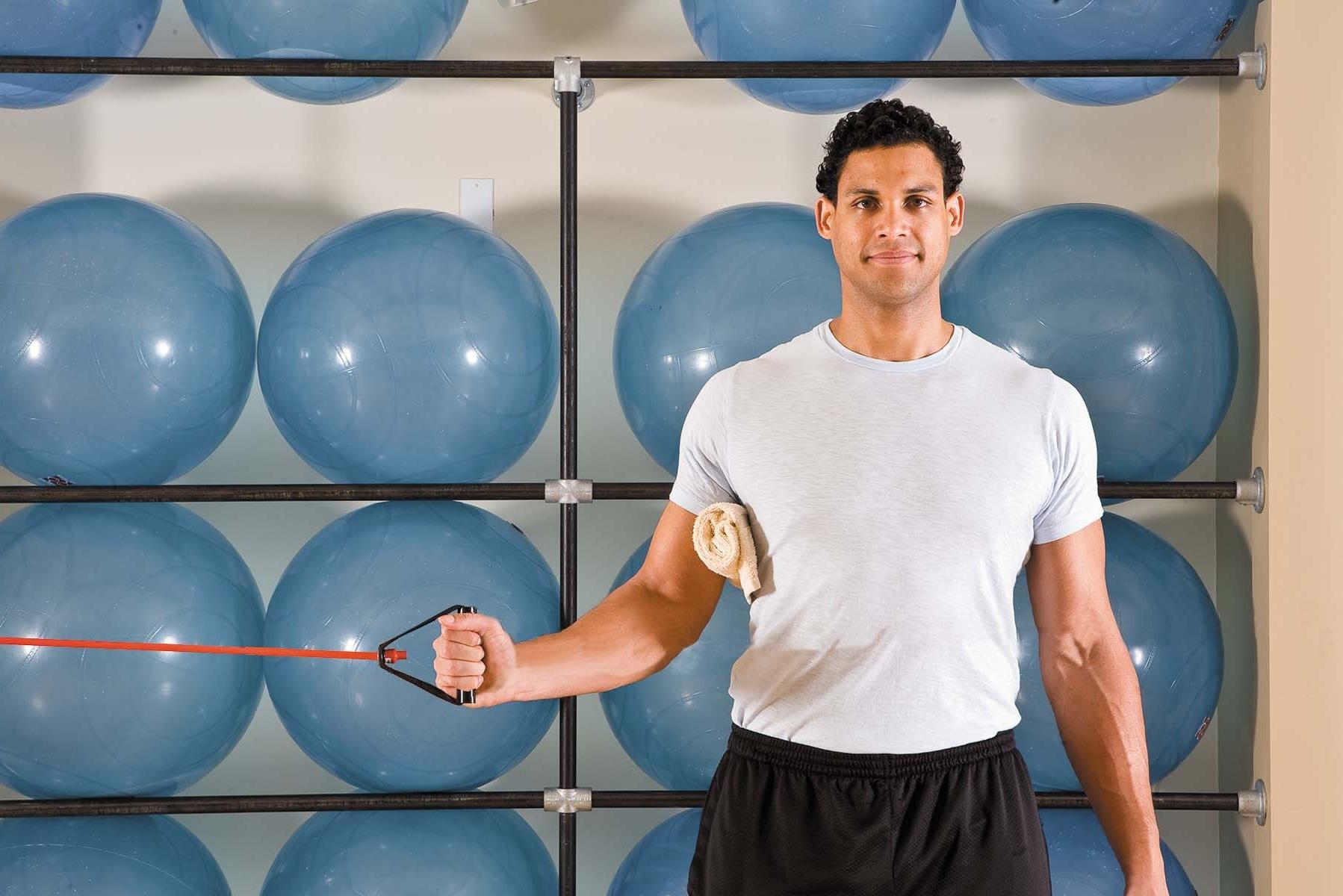
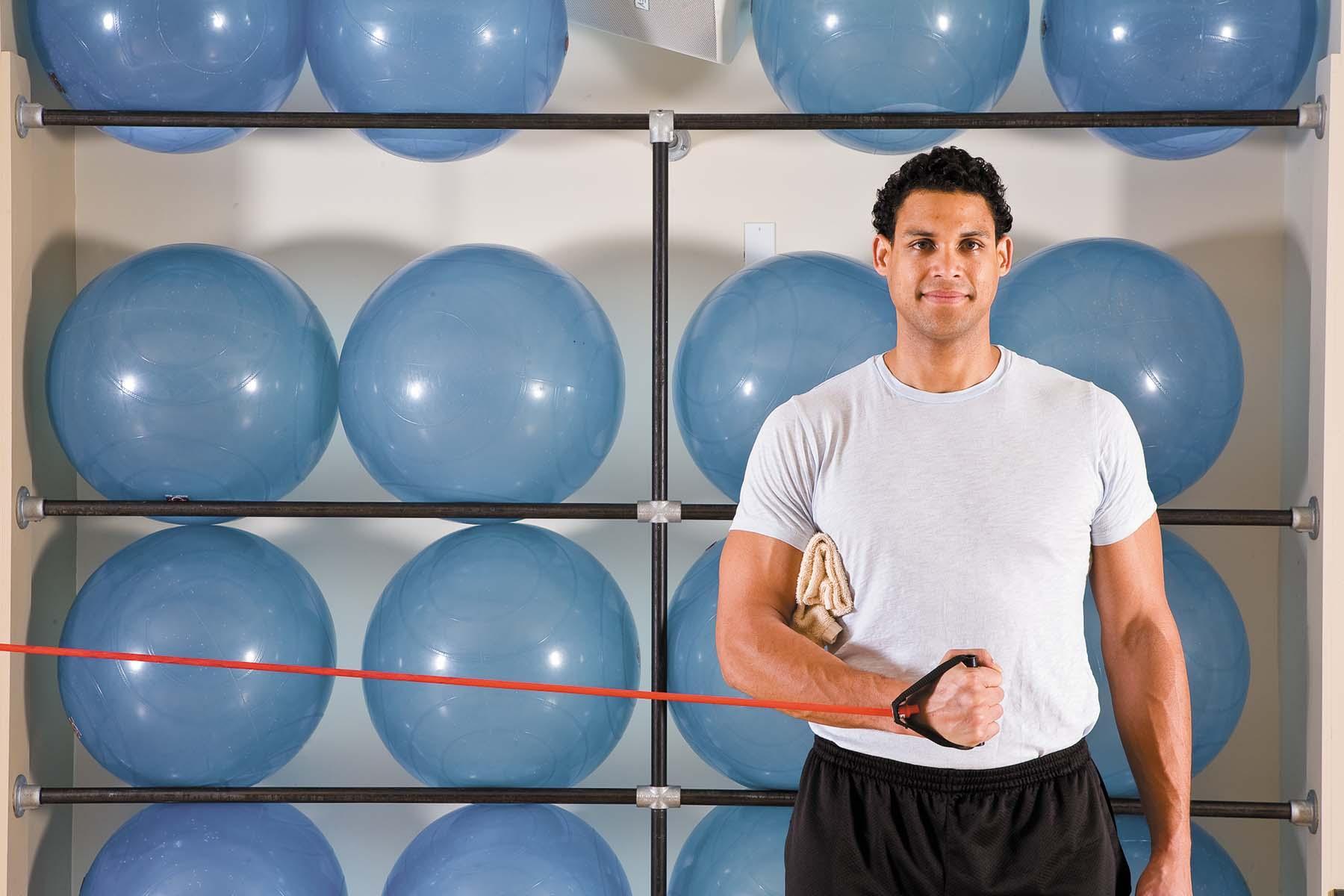
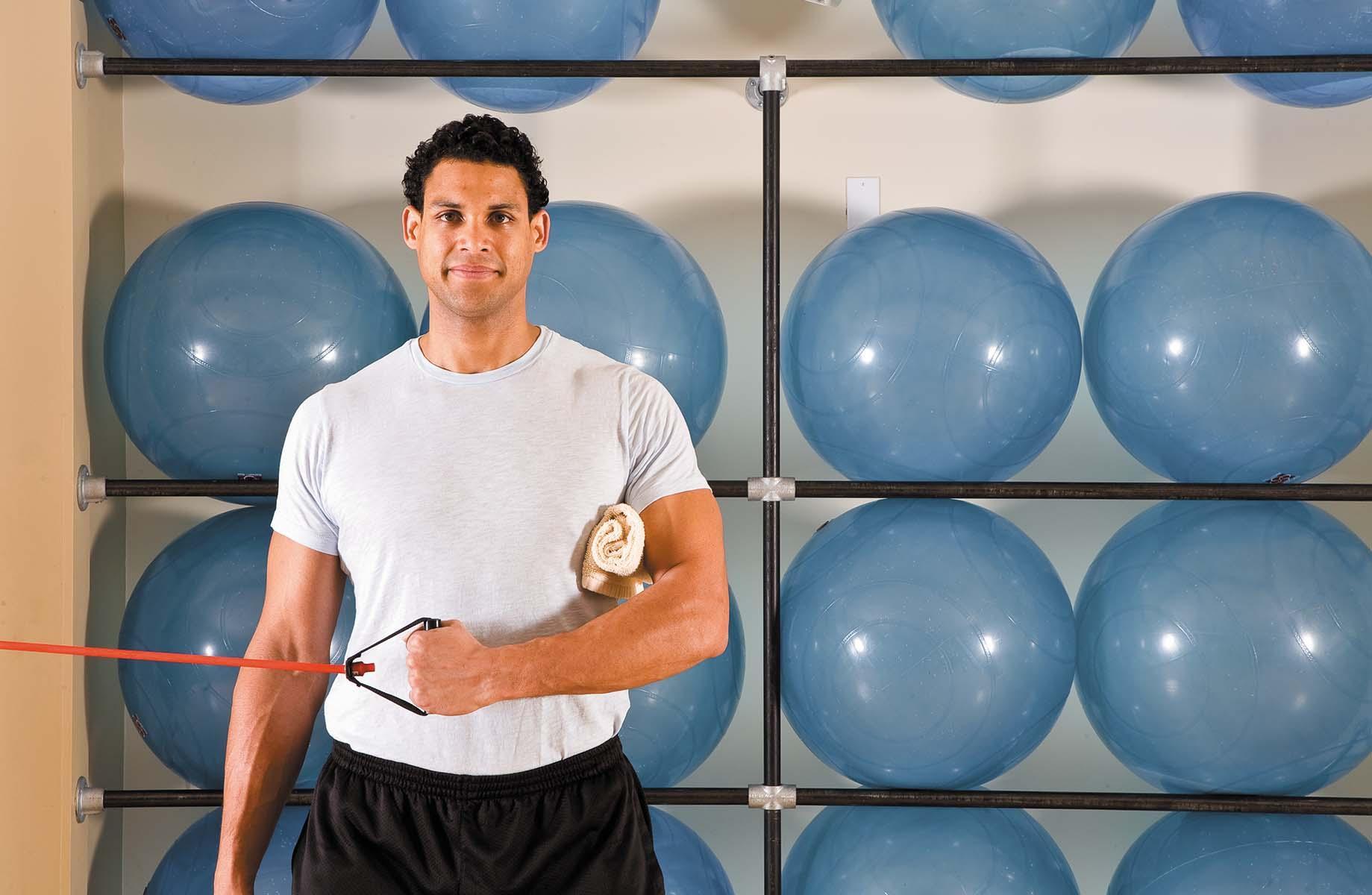
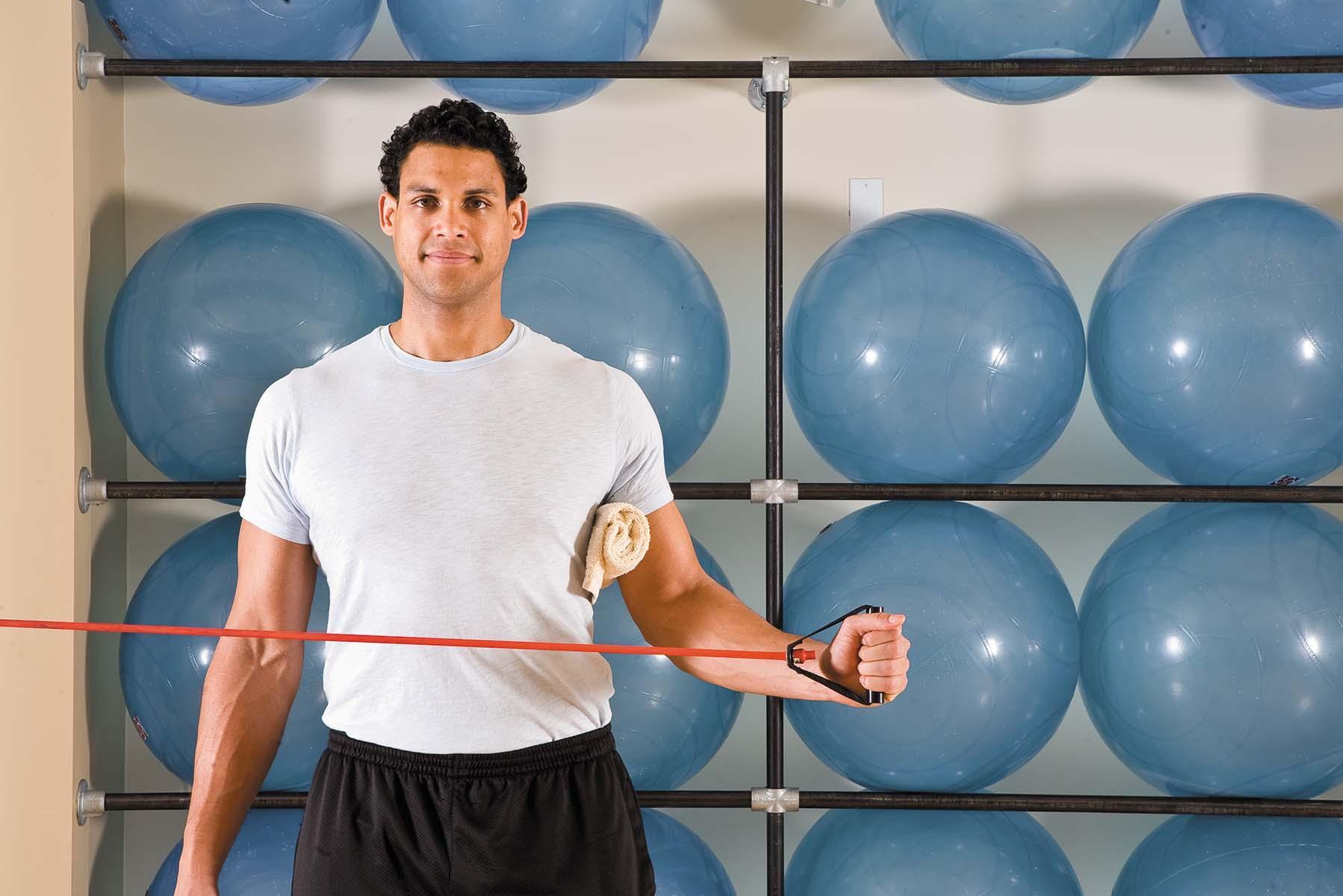
Internal rotation: Anchor a resistance band to a door at waist level. Grasp the handle of the band in your right hand, with your thumb facing up and your elbow firmly pinning a rolled-up hand towel at your side. Keep your chest up and shoulders back. Slowly pull the band in toward your navel, like closing a door. Return to the starting position. Do three sets of 10 repetitions. Repeat with the band anchored on the other side, grasping the handle with your left hand.
External rotation: With the resistance band anchored to a door at waist level, grasp the handle with your left hand across your waist and your left elbow pinning the hand towel to your left side. Keep your chest up and shoulders back. Slowly pull the band outward, as if opening a door. Pause, then return to the starting position. Do three sets of 10 repetitions. Repeat with the band anchored on the other side, grasping the handle with your right hand. |
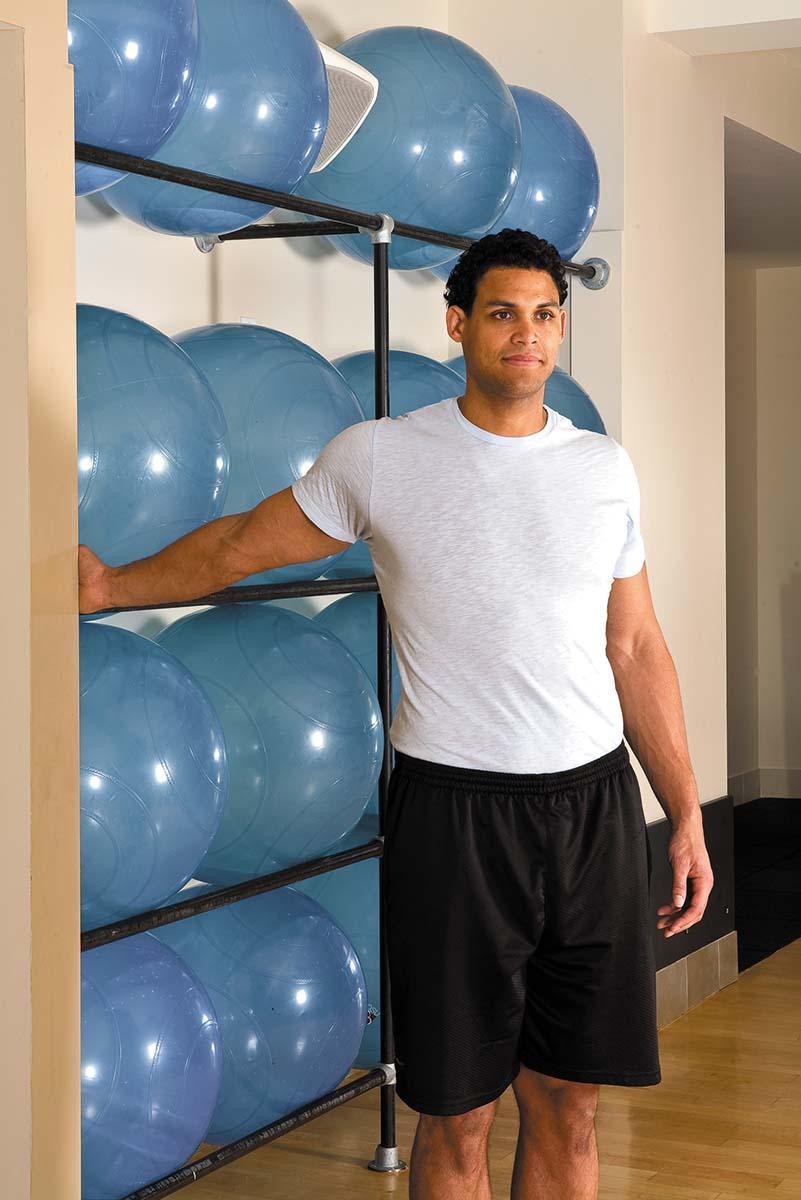
Doorframe stretch
Stand beside a doorway. Extend your right arm, and place your right hand on the edge of the door frame, slightly below shoulder level, with your palm facing forward and touching the door frame. Keep your shoulders down and back. Slowly turn your body to the left, away from the door frame, until you feel a stretch in your chest and shoulder. Hold for 30 seconds. Return to the starting position. Do this three times, then repeat on the opposite side. |
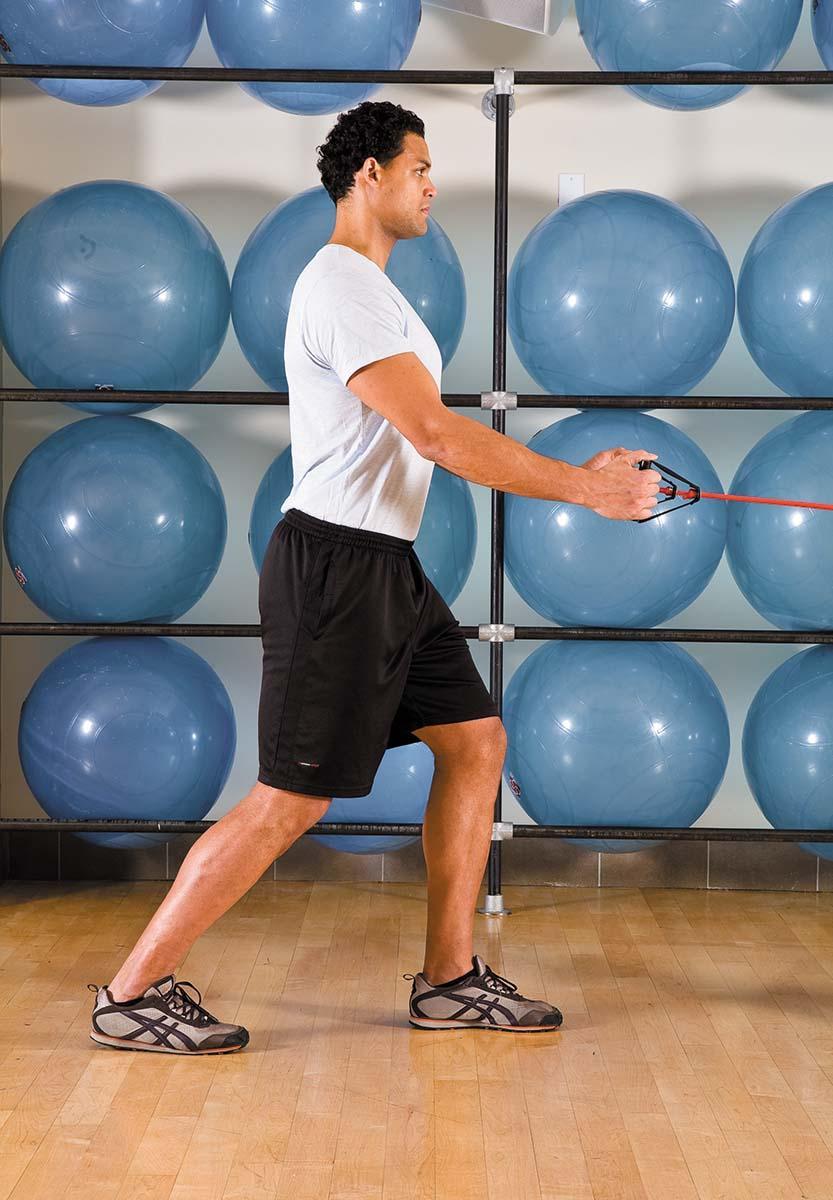
Standing row
Anchor the middle of a resistance band to a door at about waist height. Grasp a handle in each hand. Stand up straight and face the door with your feet together. Stand far enough away from the door to put tension on the band while holding the handles with your arms extended. Extend your right leg straight back and press your right heel toward the floor, bending both knees slightly. Slowly bend your arms and pull back until your elbow is bent at a 90° angle. Keep your elbows close to your ribs and pointing behind you. Pause, then slowly return to the starting position. Do three sets of 10 repetitions. Exercise photographs by Michael Carroll |
Sleeping position
To avoid pain at night, Noonan suggests sleeping on the side opposite the affected shoulder. Place a pillow under your arm to prevent it from falling across your body. "You can also sleep on your back with a pillow or other support under your elbow, so your arm stays in its natural alignment," says Noonan.
What to expect?
With these measures, you should start to feel improvement in two to six weeks, with more complete resolution of symptoms by 12 weeks. If the condition does not improve, you might need further evaluation by your physician or an orthopedic shoulder specialist.
For more information, check out the Harvard Special Health Report Healing Shoulder Pain.
Image: © Meeko Media/Getty Images
About the Author

Lynne Christensen, Staff Writer
About the Reviewer

Alana Noonan, PT, DPT, CLT, Contributor
Disclaimer:
As a service to our readers, Harvard Health Publishing provides access to our library of archived content. Please note the date of last review or update on all articles.
No content on this site, regardless of date, should ever be used as a substitute for direct medical advice from your doctor or other qualified clinician.


