










Don't let ankle arthritis slow you down
Exercises, optimal footwear, and sometimes an ankle brace or orthotics can help you walk more comfortably.
- Reviewed by Gail Monaghan, PT, ScD, AAOMPT, OCS
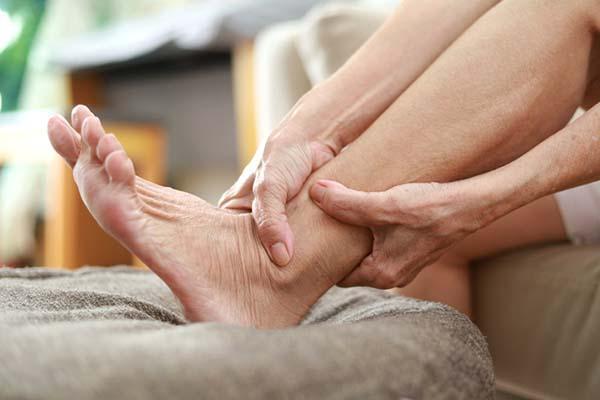
Your ankles bear your weight with each step you take. Like your knees and hips, they can develop osteoarthritis when the cushioning cartilage in the joint wears down. While the cause of osteoarthritis in most joints isn't always clear, old injuries, such as a broken bone or multiple sprains, often contribute to ankle arthritis.
From injury to arthritis
In an ankle sprain, ligaments are stretched or torn. "A bad ankle sprain changes the alignment of the joint," says Gail Monaghan, a physical therapist with Harvard-affiliated Spaulding Rehabilitation.
Even after the sprain has healed, ligaments can remain loose, causing the joint to bear weight unevenly. Over time, this can lead to cartilage wearing down. Loose ligaments also make you susceptible to more ankle sprains, which further increases the risk of arthritis.
With ankle arthritis, loss of cartilage leads to pain, swelling, and stiffness. People often have difficulty bending their foot up toward the shin (dorsiflexion). This can make it painful to walk downstairs or to squat. Over time, the ankle may become misaligned as you overuse one side of the joint to avoid pain on the other side.
Goals of treatment
When working with patients, Monaghan focuses not just on the ankle but on the entire connected system from the foot to the knee to the hip to the lower back. These elements work together in what professionals call the kinetic chain, contributing to body alignment.
"I look at the mobility of the ankle, because that affects everything up the chain," says Monaghan. She tests ankle dorsiflexion because "if they can't bend the foot upward without pain or stiffness, they're going to use other joints when they walk or squat."
"One goal of therapy is to get people to use the entire ankle joint surface pain-free," says Monaghan. "You also want to make sure joints above and below the ankle are functioning well, because that takes some stress off the arthritic ankle joint."
Ankle impairments can take many forms, including joint stiffness, joint instability, joint misalignment, and weakness or tightness of muscles across the joint. Depending on the combination of impairments, a physical therapist will emphasize different treatments.
Exercise
Exercises are the primary method of treatment. They're designed to increase the flexibility of the ankle, which is crucial for regaining function, and strengthen muscles.
One exercise is the half-kneeling ankle dorsiflexion stretch: Begin by kneeling on the floor. Bring one leg forward so it is bent in front of you with the foot flat on the floor. Move your front knee forward as far as you can while keeping your heel on the floor. Hold for 20 to 30 seconds and return to the upright position. Do this four more times. You can do this sitting on a step or chair if kneeling is difficult. "Pay attention to ankle alignment," says Monaghan. "As you move your knee forward, keep the knee aligned with your second toe."
To further increase your ability to flex the ankle, a physical therapist may perform joint mobilization, a technique using gentle movements to improve motion and reduce stiffness in a joint.
Because ankle problems can lead to shortening of the calf muscles, Monaghan also recommends stretching your calves (see "Standing soleus stretch").
To build ankle strength, try exercises such as ankle pumps (see "Ankle pumps") or heel raises. Hip strengthening is equally important because weak hip muscles can contribute to a misaligned foot position. "If someone is rolling their foot in or out, hip strength can correct it," says Monaghan.
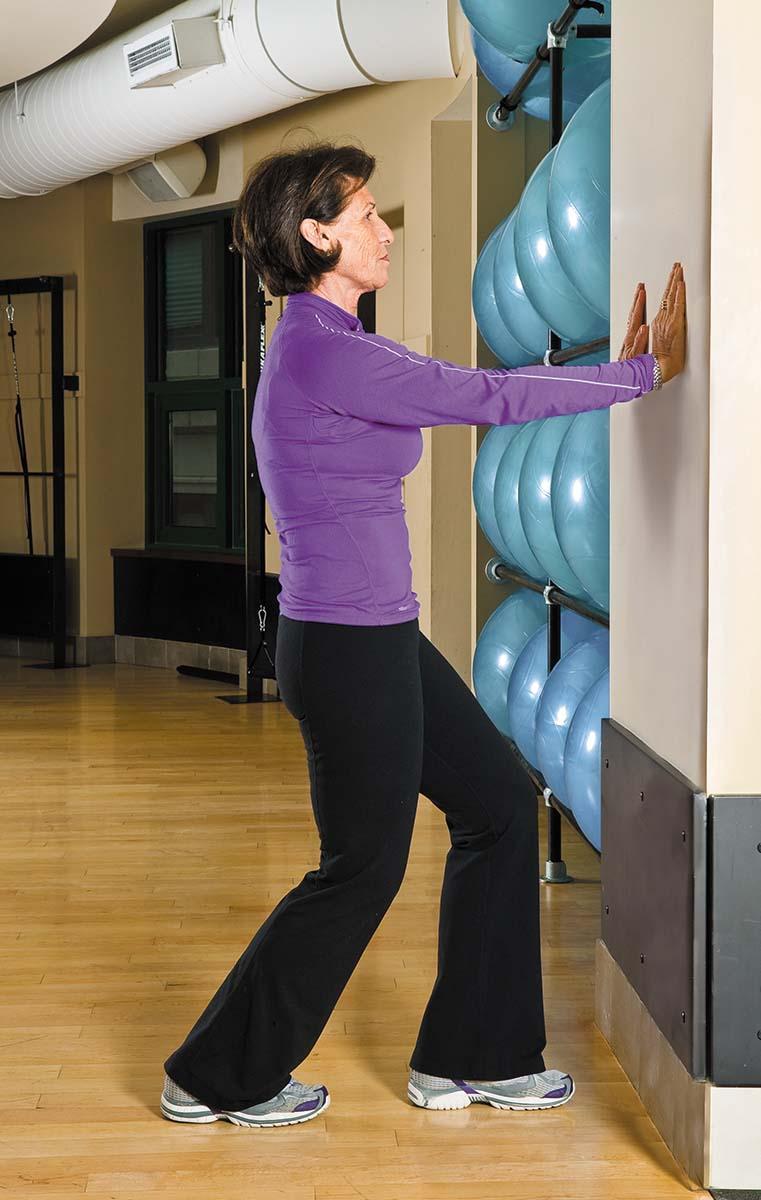
Standing soleus stretch
Stand up straight. Hold the back of a chair or press your hands against a wall, arms extended at shoulder height. Place your right foot a few inches behind your left foot and press the heel into the floor, bending your knees slightly as you do so, feeling a stretch in the lower calf of your right leg. Hold for 30 seconds. Return to the starting position and repeat two more times. Repeat with the left leg. |
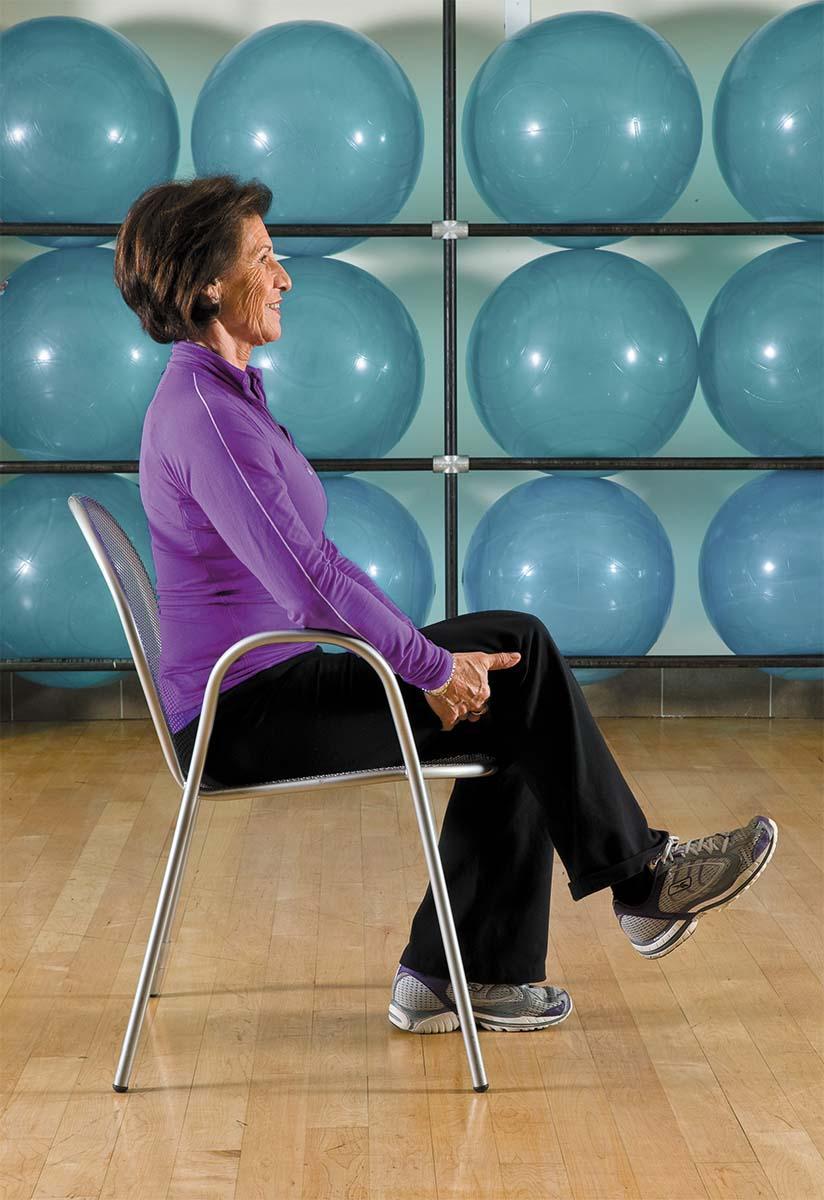
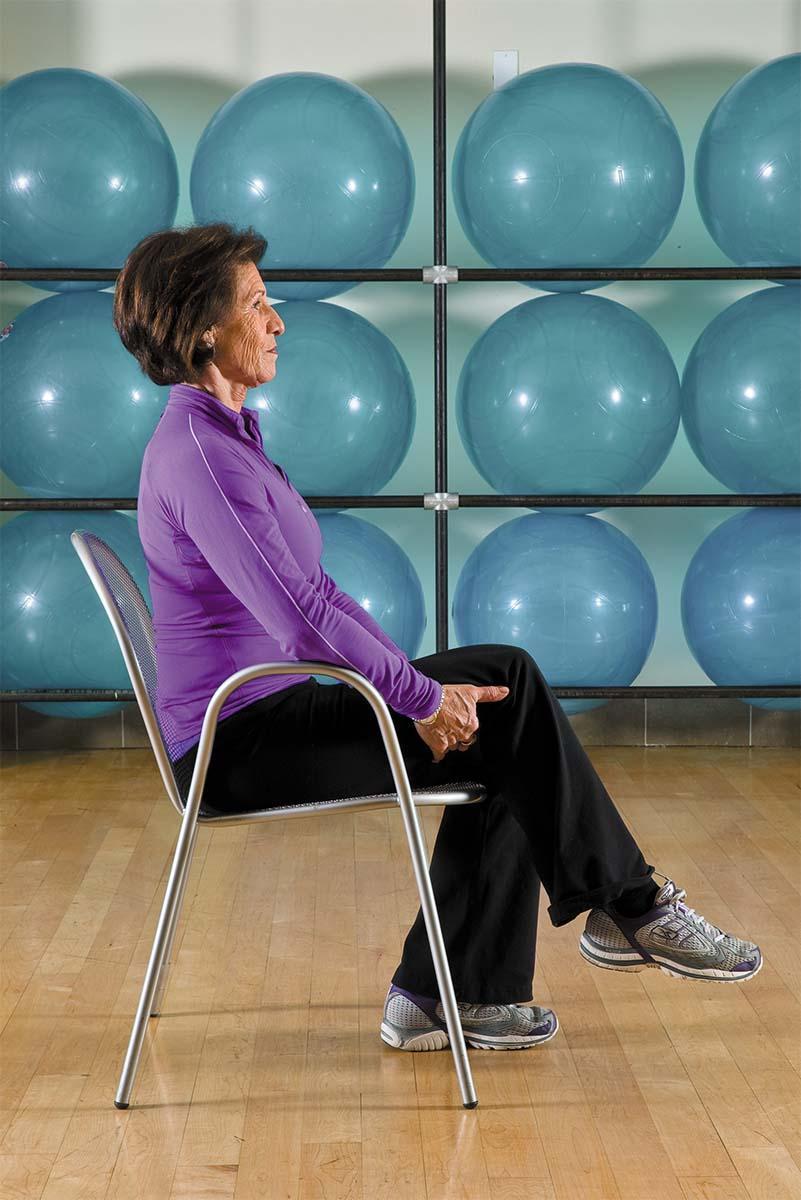
Ankle pumps
Sit up straight in a chair with your feet flat on the floor. Lift your right foot a few inches off the floor. Flex your foot to point your toes toward the ceiling. Then point your foot and toes toward the floor. Do three sets of 15 repetitions. Repeat with the other foot. When you feel ready, advance to wrapping a resistance band around the ball of your foot. Hold the ends with both hands, keeping tension on the band. Slowly point your foot toward the floor, pause, then slowly return to the starting position. |
Shoes, tape, orthotics, and more
"If pain persists, especially when you're squatting, walking, or going downstairs, we look at shoes and shoe inserts," says Monaghan. Wearing a completely flat shoe, with no drop from heel to toe, requires more movement in the ankle while walking. "If ankle motion is reduced, I recommend shoes with a greater heel-to-toe drop," says Monaghan.
Someone with more advanced arthritis might wear rocker-bottom shoes to alleviate pain. These have a curved sole that reduces the need to bend the ankle while walking.
A therapist can also teach you a foot taping technique that supports the arch so the foot doesn't flatten as much. This, too, can reduce pain in the joint.
Many people have pain on either the inside or outside of the ankle joint. Custom-made or off-the-shelf shoe inserts (orthotics) can be used to help align the joint and redistribute weight off the painful side.
An ankle-stabilizing orthosis (ASO) brace may help people with poor ankle alignment and loose ligaments. ASOs provide support while allowing for movement. Monaghan emphasizes that an ASO should not be worn all the time when bearing weight, unless it is painful to walk without it.
If you have a balance problem, other support options include canes and hiking poles. Hiking poles are often preferable because they distribute weight symmetrically and allow you to maintain better balance.
Image: © Thai Liang Lim/Getty Images; exercise photos by Michael Carroll
About the Author

Lynne Christensen, Staff Writer
About the Reviewer

Gail Monaghan, PT, ScD, AAOMPT, OCS
Disclaimer:
As a service to our readers, Harvard Health Publishing provides access to our library of archived content. Please note the date of last review or update on all articles.
No content on this site, regardless of date, should ever be used as a substitute for direct medical advice from your doctor or other qualified clinician.


