

Naturally gluten-free foods

Harvard study: Healthier fats linked to longer life after prostate cancer diagnosis

Shingrix shingles vaccine linked with lower heart disease risks

Estrogen-only hormone therapy tied to lower dementia risk
Should you have a hysterectomy?

Stair climbing may significantly lower cardiovascular risks

Why do I sweat so much?

Walking pneumonia: The "mild" illness that can still pack a punch

What causes knee pain: How doctors make a diagnosis

Where you carry excess weight matters in predicting heart disease risk
Women's Health Archive
Articles

What your skin should expect when you're expecting
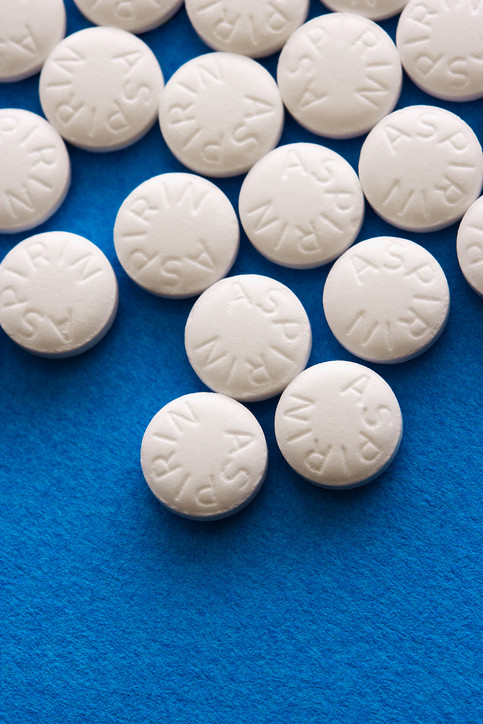
Aspirin and breast cancer risk: How a wonder drug may become more wonderful

Gender differences in cardiovascular disease: Women are less likely to be prescribed certain heart medications

Advancing maternal justice on both sides of the Atlantic

Getting your vitamins and minerals through diet
The benefits of multivitamins are looking doubtful. Can we do without them?
The answer is a qualified yes – we can do without them, as long as you eat a well-balanced diet rich in fruits and vegetables.
In the past, doctors often suggested a standard multivitamin with minerals each day. They don't cost much, and earlier studies had shown some benefits. For example, it appeared that folic acid and other B vitamins might lower the risk of heart disease, stroke and possibly cancer. But more recent studies have shown no added benefit of multivitamins for healthy people that eat a balanced diet.

Ask the doctor: Heavy bleeding, fibroids, and polyps
Q.I am 53. I've had fibroids for some time but have experienced heavy menstrual bleeding lately. A recent ultrasound showed fibroids and polyps. What are my options?
A. As you know, you're almost certainly in perimenopause, the four to eight years leading up to menopause and the complete cessation of menstruation. Every woman's script for the transition to menopause is a little bit different, but it's very common for the menstrual cycle to be irregular and the amount of blood flow to vary. Erratic ovulation — the release of eggs from the ovaries — may result in hormonal changes that cause the lining of the uterus (the endometrium) to become thicker than usual, so when it sloughs off, the menstrual bleeding is heavier and more prolonged than women are used to.

Study finds weak link between birth control and breast cancer
Overall risk is very small, and older women who used hormonal contraceptives many years ago aren't likely to have a higher risk.
Image: © designer491/Getty Images
Hormonal birth control — whether it comes as pills, injections, a ring, an intrauterine device (IUD), or an implant — may raise your risk of breast cancer, according to a study published Dec. 7, 2017, in The New England Journal of Medicine.
If you're like many women who currently use one of these contraceptive methods, or if you used one for years in the past, should you be worried?

Will removing your fallopian tubes reduce your risk of ovarian cancer?
Increasingly, doctors are turning to prevention for this hard-to treat cancer.
Image: © magicmine/Getty Images
Ovarian cancer is a challenging foe. It's often found at an advanced stage when it's difficult to treat.
In recent years, researchers have learned that many cases of ovarian cancer don't even start in the ovaries. "It turns out that ovarian cancer is a bit of a misnomer. We think a portion of ovarian cancers actually arise from cells in the fallopian tubes," says Shelley Tworoger, adjunct associate professor of epidemiology at Harvard Medical School and associate center director of population science at the Moffitt Cancer Center.

When the arrival of menopause brings symptoms of depression
A new study suggests that hormone therapy might help with perimenopausal depression. But is it safe for you?
Hormone therapy has long been a controversial topic, and a new study about the role of hormones in depression is adding some fodder to the debate. A study published in the January 10 issue of JAMA Psychiatry determined that hormone therapy may help ward off symptoms of depression in women. Researchers found that perimenopausal and early postmenopausal women who were treated with hormones were less likely to experience symptoms of depression than women in the study who were given a placebo.
But while the findings of the study are important — particularly considering that a woman's risk of depression doubles or even quadruples during the menopausal transition — that doesn't mean hormone therapy should be widely used for preventing depression in women at this stage of life, says Dr. Hadine Joffe, the Paula A. Johnson Associate Professor of Psychiatry in Women's Health at Harvard Medical School, who wrote an editorial accompanying the study. "It's not a 'never,' but it shouldn't be a standard approach; in general, all of medicine has moved away from using hormones for prevention," she says.

Pelvic physical therapy: Another potential treatment option
This treatment approach may help provide relief for many women with chronic pelvic pain and urinary symptoms.
The exact cause of pelvic pain for many women can be elusive, despite lots of tests and scans. In some cases, the symptoms are related to a problem that is often overlooked, says Dr. Eman Elkadry, an instructor in obstetrics, gynecology, and reproductive biology at Harvard Medical School. Pelvic pain may stem from a pelvic floor muscle problem that can be helped by a specialized form of physical therapy known as pelvic physical therapy.
"Although pelvic physical therapy may not work for everyone, it can be quite effective for certain individuals," says Dr. Hye-Chun Hur, director of the Division of Minimally Invasive Gynecologic Surgery at Harvard-affiliated Beth Israel Deaconess Medical Center and associate faculty editor of Harvard Women's Health Watch. She stresses that pelvic physical therapy is normally undertaken by a trained female practitioner.
Naturally gluten-free foods
Harvard study: Healthier fats linked to longer life after prostate cancer diagnosis
Shingrix shingles vaccine linked with lower heart disease risks
Estrogen-only hormone therapy tied to lower dementia risk
Should you have a hysterectomy?
Stair climbing may significantly lower cardiovascular risks
Why do I sweat so much?
Walking pneumonia: The "mild" illness that can still pack a punch
What causes knee pain: How doctors make a diagnosis
Where you carry excess weight matters in predicting heart disease risk
Free Healthbeat Signup
Get the latest in health news delivered to your inbox!
Sign Up
