

Even a little exercise linked with lower stroke risk in people with afib

Testosterone therapy without evidence of deficiency may boost heart risk

Weight-loss drug may lower risk of heart attacks and infections

What to eat on the DASH diet

Migraine: How it's diagnosed and what that means

Tricep workouts you can do at home

Mindfulness practices to reduce stress and improve focus

Antihistamines may not offer meaningful relief from eczema symptoms

Overweight and taking blood pressure medications: Study finds it's a trend that's working

FDA approves first mRNA-based flu vaccine
Medical devices Archive
Articles

A new look at testosterone therapy
Declining testosterone is a normal part of aging, but is replacement therapy right for you? Here is what you need to know.
Image: aquarius83men/Thinkstock
Testosterone replacement therapy (TRT) has surged in popularity over the past decade. Millions of older men have turned to TRT to restore hormone levels in hopes of refueling energy and reigniting their sex drive.
Yet TRT remains controversial because of its uncertain benefits and potential health risks. Safety concerns were raised years ago when studies showed a possible association between TRT and an increased risk of cardiovascular disease.

Too much of a good thing?
Proton-pump inhibitors are among the most-prescribed medications, but is long-term use safe?
Proton-pump inhibitors reduce stomach acid, which helps to treat symptoms of acid reflux.
Image: kamontad123/Thinkstock
Proton-pump inhibitors (PPIs), which are used to treat a variety of gastrointestinal problems, are among the most popular drugs in the United States. In fact, the FDA estimates about one in 14 Americans has used a PPI.

7 things you can do to avoid drug interactions
Each of your medications may be affecting how the others work, leading to harmful side effects and complications.
Each additional medication you take increases the risk of drug interactions.
Image: SheilaFitzgerald/Thinkstock
Are you taking more than one drug? Are you taking a few different types of medications? Are you seeing several different doctors? If so, you may be at increased risk for drug interactions, which occur when a drug, a supplement, or even a food affects the way your body processes a medication. Such interactions can make a drug more powerful—so that a standard dose becomes an overdose—or can render it less potent or altogether ineffective.

Atrial fibrillation: The latest treatment trends
About one in six strokes can be traced to atrial fibrillation. Doctors now have newer and better options to lessen this risk.
Close to one in 10 people ages 65 or older have atrial fibrillation (afib), the most common heart rhythm disorder. During a bout of afib, the usually rhythmic contractions of the heart's upper chambers (the atria) are replaced by an ineffectual quiver. While the symptoms, which include a racing heartbeat, dizziness, and shortness of breath, are troublesome for some people, the real threat lies in the increased risk of stroke that accompanies the condition.
When the heart takes on the afib rhythm, blood does not completely move out of the atria. Instead, it tends to pool and clot in a pouchlike extension in the upper left quadrant of the heart, called the left atrial appendage. If these clots break loose, they may travel to the brain and cause a blockage. This is known as an ischemic stroke.

The new generation of wearable medical alert systems
Cheap, mid-priced, and Cadillac. Which one is for you?
Option one
This basic option usually includes a button you wear on a pendant or wristband, and a base unit (similar to a speaker-phone) that you plug into your house phone jack. If you get into trouble, you simply press your button, which signals the base unit to call the alert system operators. An operator then talks to you through the speaker in the base unit and sends paramedics if you need help. Most gadgets are waterproof and have built-in batteries that don't need recharging; most batteries last for years and will be replaced free of charge if they run out.
Typical price: $25–$30/month
Considerations: Just like a wireless house phone, these buttons can signal the base unit only within a limited range, such as 400 feet. But the buttons don't provide two-way communication with operators; only the base unit does that. So what happens if you're upstairs when you call for help, but the unit is downstairs? How will you hear the operator? Answer: you'll need another speaker, called a voice extender (that costs extra). And what if you're unable to press the button after a fall? Or what if you fall when you're away from home? You'll need upgrades to address those issues, such as fall detection or cellular technology, typically available in options two and three, below.
Option two
Option three
This premium option usually upgrades the button to a top-of-the-line device that looks like a mini cellphone, and actually uses cellular technology to contact emergency help. The improved communication allows you to use the alert system wherever you go, whether it's the grocery store or the great outdoors. Unlike the other options, this device has a built-in speaker, so you can talk to an operator through the button. It also features global positioning system technology (GPS), which gives alert system operators the ability to send help to your exact location.
Typical price: $40–$50/month
Considerations: This button is thicker and larger than the type worn only at home, so you probably won't be able to wear it comfortably on your wrist—you'll have to put it in your pocket or wear it around your neck. Also, it must be charged every few days, just like a cellphone. If you're not faithful about that, the button won't work.
Additional services
The fine print
It's not enough to find the latest and greatest alert system. You'll want to make sure that the company you choose has low activation fees, no long-term contracts, no cancellation fees, discounts for add-ons to your service, free replacement for equipment that's not working, and most important: operators who are available 24 hours a day at a UL-listed call center, which means the center meets requirements for backup systems in the event of failures, and is certified by safety testing company UL.
There are many alert system companies that meet all of those standards. Your choice may be swayed by recommendations from a friend, your doctor, or a local hospital. Just do your homework, and then give the system a try. You may soon wonder how you ever got along without it.
Could you use an alert system?An alert system is worth strong consideration if you live alone. But anyone at risk of falling could benefit from using one. The story of a Georgia couple's tragedy in January 2016 underscores the need: An 86-year-old man fell out of his motorized wheelchair outside their home, and shouted for his 74-year-old wife. She fell while trying to reach him, and both wound up on the ground overnight, with no way to call for help. The wife died in freezing temperatures; her husband was dressed warmly and survived. Think about how an alert system could help in your own living situation. What if, for example, you fell while a family member was in another part of the house, unable to hear you? What if you fell while your family member was out doing errands? What if you fell and were simply unable to shout for help? If you have an alert system, you'll save precious time and get treatment sooner. "I think these devices are a good thing, especially for people who don't have someone calling every day to be sure they are okay. Unfortunately, sometimes the very people who need them the most are the people who won't wear them," says geriatrician Dr. Suzanne Salamon, a Harvard Medical School assistant professor. |
A quick guide to medical alert system option levelsMake sure the company you choose has low activation fees, no long-term contracts, no cancellation fees, free equipment replacement, and operators available 24/7. | ||
Option one | Option two | Option three |
|
|
|

Should you keep taking that heartburn medication?
It may be time to re-evaluate if it's been a while since you started using proton-pump inhibitors.
Long-term use of some heartburn medications appears to be associated with an increated risk of dementia, heart attack, and chronic kidney disease.
Image: Thinkstock
You may think you're reaching for heartburn relief when you take a proton-pump inhibitor (PPI), a type of medication that helps block the production of stomach acid. PPIs are effective, and some—such as lansoprazole (Prevacid) and omeprazole (Prilosec)—are readily available over the counter. Others, such as pantoprazole (Protonix), are frequently prescribed for long-term use. But PPIs may have risks when taken over a long period.

Too old for a stent?
Image: Thinkstock
Ask the Doctor
Q: I recently turned 86 and my angina is getting worse, even though I'm taking several different medications for it. Am I too old to have an angioplasty and a stent?
A: Not necessarily. During an angioplasty, a doctor threads a thin tube into a heart blood vessel and inserts a tiny mesh scaffold (called a stent) to keep the vessel open and restore blood flow. This can often improve chest pain, or angina. However, many studies of angioplasty haven't included large numbers of people over 80. That's primarily because older people tend to have more health problems than their younger counterparts, so including more elderly people in a study could skew the results.

Cancer survivors may face cardiovascular complications
Even the newer, targeted cancer therapies may harm the heart.
Image: Bigstock
About 14 million people in the United States are living with cancer, a number that reflects the steady rise in cancer survivorship in recent decades. In 1980, only about half of people with cancer lived five years after diagnosis. Today, five-year cancer survival rates are greater than 70%.
Unfortunately, many cancer-suppressing treatments can have undesirable effects on the heart and blood vessels. The increasing awareness of these effects—coupled with the surge of older people being diagnosed with and surviving cancer—has spurred a new specialty known as cardio-oncology. Experts in this burgeoning field focus on promoting heart health in people with cancer, both during and after their treatment.

Why dietary supplements are suspect
Supplements aren't held to the same standards as FDA-approved drugs. Evidence indicates that few are effective, many are useless, and others may be harmful.
Image: Thinkstock
Dietary supplements—including herbs, vitamins, minerals, and other products—are a $37-billion industry in the United States, and 60% of women are taking them regularly. At the same time, mounting research is suggesting that supplements—even mainstays like calcium—may be harmful at high doses.
The use of supplements and other alternatives to standard treatments is centuries old, but Dr. David Eisenberg, adjunct associate professor at the Harvard T.H. Chan School of Public Health, was the first to document the widespread use of alternative therapies in the United States. In a 1993 article in The New England Journal of Medicine, Dr. Eisenberg and colleagues reported that more than a third of Americans were using unconventional therapies, largely for chronic conditions, and most were doing so without letting their clinicians know. That report covered acupuncture, spinal manipulation, massage, and yoga, but it also focused public attention on all unconventional treatments, including the growing use of herbal remedies and other dietary supplements. In 1998, the Office of Alternative Medicine in the National Institutes of Health (NIH) was revamped as the National Center for Complementary and Alternative Medicine and charged with funding rigorous studies into the safety and effectiveness of alternative physical treatments as well as popular dietary supplements and herbs.
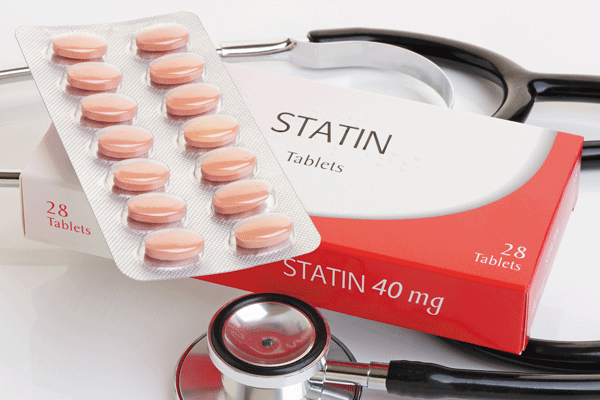
Why you may need a statin
Although risk calculators disagree, at some point age becomes the deciding factor in the decision to take a cholesterol-lowering medication.
Image: Thinkstock
If you've been diligent about monitoring your risk factors for developing heart disease, you may have realized that online calculators can be helpful. If you have the results from your latest cholesterol test, these online calculators can compute your chance of having a heart attack or stroke in the next decade:
Framingham Risk Calculator http://cvdrisk.nhlbi.nih.gov
ACC/AHA Heart Risk Calculator www.cvriskcalculator.com
Reynolds Risk Score www.reynoldsriskscore.org
However, each may give you a slightly different number. And while the Framingham calculator might indicate that your risk is low and therefore you don't need a cholesterol-lowering statin drug, the ACC/AHA calculator could indicate that you should be taking a statin to reduce your risk.
Even a little exercise linked with lower stroke risk in people with afib
Testosterone therapy without evidence of deficiency may boost heart risk
Weight-loss drug may lower risk of heart attacks and infections
What to eat on the DASH diet
Migraine: How it's diagnosed and what that means
Tricep workouts you can do at home
Mindfulness practices to reduce stress and improve focus
Antihistamines may not offer meaningful relief from eczema symptoms
Overweight and taking blood pressure medications: Study finds it's a trend that's working
FDA approves first mRNA-based flu vaccine
Free Healthbeat Signup
Get the latest in health news delivered to your inbox!
Sign Up
