

CoQ10: Should you take this popular supplement if you're on a statin?

Microplastics: A hidden health threat?

Oat vs. dairy milk: Nutrition, benefits, and downsides

What is tempeh? Benefits, nutrition, and how to use it

Healing after food poisoning

Children of centenarians may stay healthier and live longer too, study finds

Light exposure at night may raise risk for heart disease

A lumbar belt may help ease low back pain

Whole grains may improve several heart risk factors at once

Signs of pneumonia: Sometimes vague and unexpected
Knees Archive
Articles

Best treatments for this common finger problem
Doctors have three ways to treat Dupuytren's contracture, a condition that pulls one or more fingers toward the palm. A needle aponeurotomy breaks up the thick collagen tissue sticking to the tendons. A collagenase injection contains an enzyme that eats up and dissolves the collagen. Surgery involves the removal of the collagen tissue. With all three procedures, the condition can return. The procedure that's right for someone depends on the condition's severity and the location of the collagen.

The perception of pain
Most people experience occasional acute musculoskeletal pain as part of daily living, such as an injury caused by exercising or a minor household accident. Acute pain is short-term and often becomes manageable with home remedies and over-the-counter medication. However, when symptoms persist there is greater chance that it will become chronic pain, which lasts two to three months or longer. That's when medical advice is needed.


Dupuytren's contracture of the hand
One condition affecting the hands and fingers is Dupuytren's contracture, where one or more fingers become curled, making it difficult to perform everyday activities. Dupuytren's affects one in 20 Americans, so what do people need to know about it?
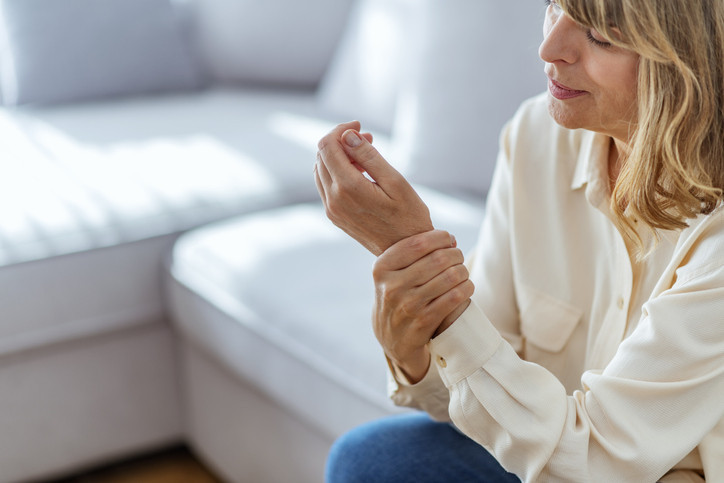
Remedies for hand cramps
The typical causes of cramps in the hands include dehydration and straining the muscles with repeated motions like typing. Low calcium or magnesium or a compressed nerve in the wrist may also cause cramping. Stretching the fingers may help.

What to do about bunions
A bunion is a deformity of the foot that causes the big toe to turn inward toward the other toes. This can result in damage to the other toes, calluses, and trouble walking.

Soleful aging
Like the rest of the body, the feet are vulnerable to the effects of aging. Women may be more susceptible to certain foot conditions due to hormone fluctuations during pregnancy and a higher incidence of decreased bone density with aging. But everyone's soft tissues become less elastic, making foot problems more likely. Foot conditions that can develop or worsen with age include stress fractures, plantar fasciitis, bunions, flat feet, and osteoarthritis. Simple measures, such as resting the feet and wearing supportive shoes, can help ease pain.

Recovering from an ankle sprain
Ankle sprains are common, but they require proper treatment to heal correctly. You should rest for one or two days and use ice to reduce swelling, then begin exercising to regain strength and range of motion.

Overcoming shoulder pain
Most people will experience shoulder pain at some point in their lives. The most common causes of shoulder pain are bursitis, rotator cuff problems, frozen shoulder, and osteoarthritis. They can occur for various reasons, such as overuse, injury, and age-related wear and tear. A doctor may be able to make a likely diagnosis based on a person's symptoms, a shoulder exam, and sometimes MRI. Treatment often includes a combination of rest, over-the-counter medication, corticosteroid injections, and physical therapy. In some cases, surgery is needed to repair damage.
CoQ10: Should you take this popular supplement if you're on a statin?
Microplastics: A hidden health threat?
Oat vs. dairy milk: Nutrition, benefits, and downsides
What is tempeh? Benefits, nutrition, and how to use it
Healing after food poisoning
Children of centenarians may stay healthier and live longer too, study finds
Light exposure at night may raise risk for heart disease
A lumbar belt may help ease low back pain
Whole grains may improve several heart risk factors at once
Signs of pneumonia: Sometimes vague and unexpected
Free Healthbeat Signup
Get the latest in health news delivered to your inbox!
Sign Up
