

Even a little exercise linked with lower stroke risk in people with afib

Testosterone therapy without evidence of deficiency may boost heart risk

Weight-loss drug may lower risk of heart attacks and infections

What to eat on the DASH diet

Migraine: How it's diagnosed and what that means

Tricep workouts you can do at home

Mindfulness practices to reduce stress and improve focus

Antihistamines may not offer meaningful relief from eczema symptoms

Overweight and taking blood pressure medications: Study finds it's a trend that's working

FDA approves first mRNA-based flu vaccine
Hearing Loss Archive
Articles

Is it normal to lose my sense of smell as I age?
On call
Q. I am 72, and over the past year I have begun to lose my sense of smell. Is this a normal part of aging?
A. Some loss of sensitivity to smells — also known as anosmia — is normal as we get older, but there may be another explanation. The ability to smell depends on a healthy lining of the nasal cavity, open nasal passageways, and normal function of the olfactory (smell) nerves. A problem with one or more of these can lead to loss of smell. The most common causes are nasal problems, like nasal polyps, blocked sinuses, and seasonal allergies. These can be detected by a routine examination, although you may need to see an ear, nose, and throat specialist for a more extensive exam.

Ringing in the ear: tinnitus and hearing loss
Many people with hearing loss also have tinnitus, commonly known as ringing in the ear. This phrase is misleading, however, because some people hear ringing while others hear whistles, chirping, or a combination of sounds. Regardless of the particular sound, the distinguishing feature is that it doesn't have an external cause. People with tinnitus hear sounds that people around them don't hear. This isn't to say that tinnitus isn't real—researchers at the National Institute on Deafness and Other Communication Disorders have detected changes in brain activity that occur with tinnitus.
Strategies that can help
Some people with hearing loss and tinnitus find that both problems improve after they get a hearing aid or have a cochlear implant. Others find that their tinnitus symptoms improve somewhat when they cut down on caffeine and alcohol, reduce the amount of fat in their diets, and quit smoking. The following techniques may also help reduce your tinnitus symptoms:

Is vertigo caused by a magnesium deficiency?
Ask the doctors
Image: © ayo888/Thinkstock
Q. I suffer from vertigo and have heard that taking a magnesium supplement might help. Is that true? If so, how much should I take?
A. Vertigo can be caused by almost anything that interferes with the normal function of the inner ear, which is instrumental in preserving balance. The most common form of vertigo — benign paroxysmal positional vertigo (BPPV) — results when tiny calcium carbonate crystals migrate from one part of the inner ear to the semicircular canal in another part of the ear, triggering a false message to the brain about the direction in which the head is moving and the speed of its motion. Dizziness is a result of the brain's attempt to resolve the conflicting messages from the ear and the other senses.
Hearing loss linked to late menopause, extended hormone use
Research we're watching
It was once thought that hearing loss in older women might be linked to loss of estrogen and progesterone following menopause and that hormone therapy might reduce that risk. Recent results from the Nurses' Health Study II indicate just the opposite — that late natural menopause and the use of oral hormone therapy are linked to a higher risk of hearing loss.
Researchers enrolled 80,972 women ages 27 to 44 in 1991. All completed periodic questionnaires on their health status and lifestyles. By 2013, 18,558 participants had reported hearing loss. When the researchers analyzed the results, they found that women who underwent natural menopause at age 50 or older had a 10% greater risk of hearing loss than women who reached menopause before 50. Compared with nonusers, women who used hormone therapy — either estrogen alone or estrogen and progesterone — had a 15% greater risk of hearing loss if they used hormones for five to 10 years and 21% higher risk if they used them 10 years or longer.

Keep on driving
Your health can go downhill after you lose your driving skills. Here's how to stay behind the wheel as long as possible.
Image: © AGSTOCK1/Thinkstock
One of the best ways to stay healthy is to keep driving. "Driving makes you more independent so you can get out of the house more to socialize, visit your doctor more often, go exercise, or simply enjoy the outside," says Dr. Anthony Zizza, a gerontologist with Harvard-affiliated Beth Israel Deaconess Medical Center.
Losing the ability to drive can have the opposite effect. Research published online Jan. 19, 2016, by the Journal of the American Geriatrics Society reviewed health-related data for drivers 55 and older and noted that their health worsened after they stopped driving.

Should you consider a low-cost hearing-aid alternative?
Some personal sound amplification products may perform as well as costlier hearing aids.
Image: © shironosov/Thinkstock
If you're hearing more about hearing lately, there's a reason. In October 2015 the President's Council of Advisors on Science and Technology issued a report on the sorry state of hearing in the United States. In June 2016, the National Academy of Sciences came to similar conclusions. Both acknowledged that as many as 85% of people with hearing loss aren't wearing hearing aids, citing two significant barriers to better hearing — the FDA requirement for having a hearing test before you purchase a hearing aid and the cost of the devices, averaging $1,000 to $3,000 per ear.
Why hearing aids cost so much
One of the reasons hearing aids have been so expensive is that the process of adjusting them is often bundled with the cost of the devices themselves. Medicare — and most other insurers — don't cover either hearing aids or the tests required to adjust them, but they do cover a hearing and balance exam that can distinguish age-related hearing loss from a hearing impairment that stems from an underlying condition. Dr. Mark Sanders, an audiologist at Harvard-affiliated Massachusetts Eye and Ear Infirmary, recommends getting that initial exam. "Anytime you suspect you have a hearing loss, it's always best to seek out a professional to get a legitimate diagnostic test. That way, you can determine if it's necessary to get a medical evaluation by an ear, nose, and throat physician," he says.

Make your voice heard!
Project better and reduce breathiness with voice therapy, hydration, and a bit of homework.
Image: © Ralf Nau/Thinkstock
Older adults have plenty to say, but changes to the vocal cords, nerves, or lungs sometimes make it harder to speak up. The voice may become soft or breathy, or it may grow hoarse, rough, or strained. "This sets up a real challenge for people to communicate. It may be difficult to speak over noise in a restaurant or in a group. It can be very isolating," says Barbara Worth, a speech-language pathologist at Harvard-affiliated Beth Israel Deaconess Medical Center.
Age-related changes
The vocal cords are twin bands of muscles that open when you breathe and close when you swallow or speak. They are located in the voice box (larynx) on top of the windpipe (trachea), and they vibrate and make sound as you exhale and air moves through them.
Take steps to protect your hearing now
News briefs
A study published online March 2, 2017, by JAMA Otolaryngology–Head & Neck Surgery suggests that hearing loss is going to become a major public health issue. Using current hearing loss estimates and population projections, scientists concluded that hearing loss among adults 20 or older in the United States will go from about 44 million in 2020 to almost 74 million in 2060, with the greatest increases among older adults. The climb is expected to be gradual, except between 2020 and 2030, when researchers project that mild hearing loss among people ages 70 to 79 will jump from about nine million to 12 million people.
The study doesn't prove that hearing loss cases will increase. But scientists are urging greater attention to hearing loss prevention. Protect your hearing by wearing earplugs if you know you'll be around loud noise. For more, check out the Harvard Special Health Report Hearing Loss (www.health.harvard.edu/HL).

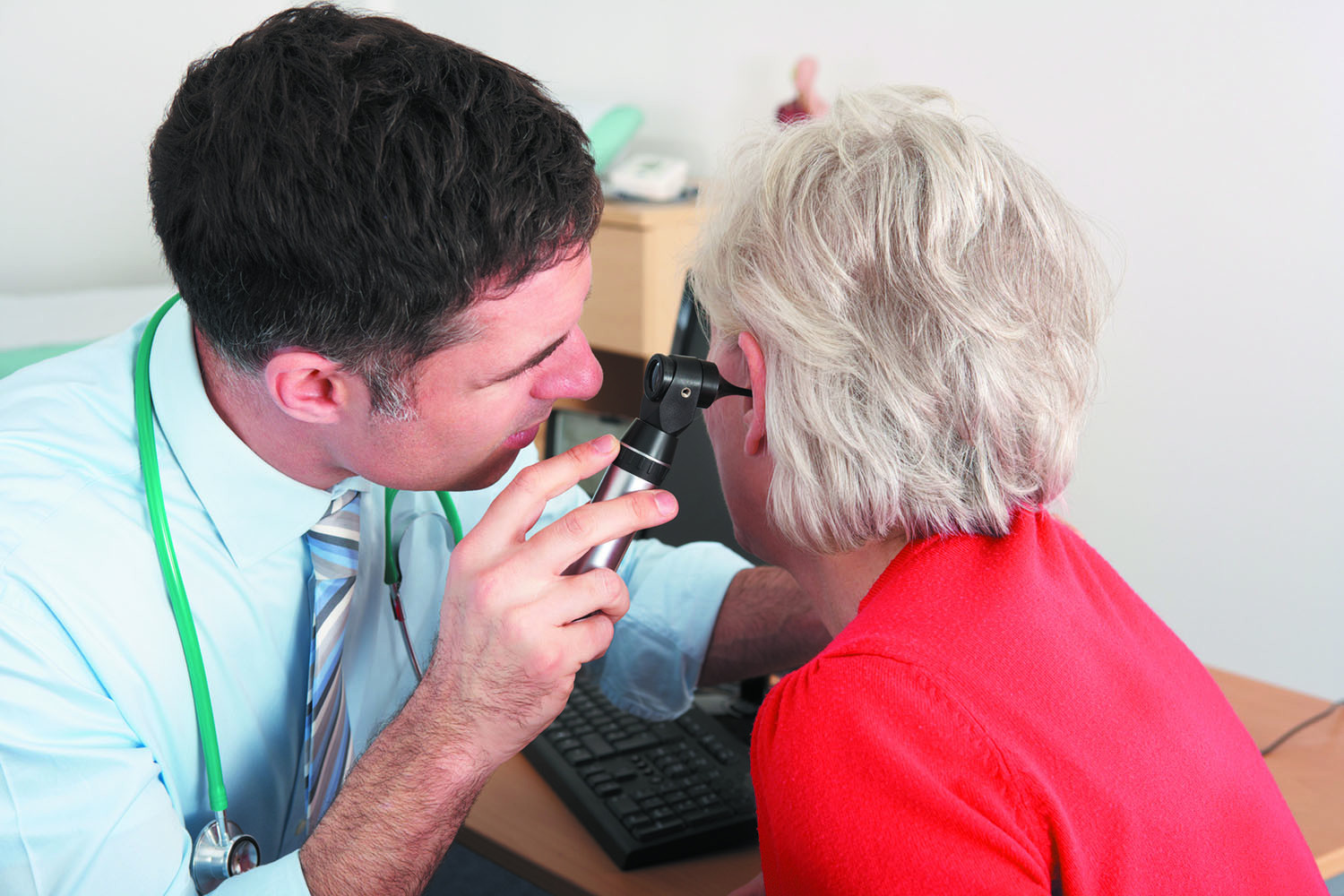
What to do for earwax
The ear's self-cleaning system usually prevents wax from accumulating. But wax impaction requires medical attention.
Image: © monkeybusinessimages/Thinkstock
If you are like 90% of Americans, you assume that wax is something to be cleaned from your ears regularly, and you may have tried using cotton swabs, toothpicks, bobby pins, or any number of other small implements to do the job. However, according to the American Academy of Otolaryngology–Head and Neck Surgery Foundation, you are not only performing an unnecessary task, you are risking hurting your ears and jeopardizing your hearing. The academy's new guidelines on earwax repeated a familiar warning — "Don't stick anything smaller than your elbow in your ear."
Dr. Rachel Roditi, an otolaryngologist at Harvard-affiliated Brigham and Women's Hospital, agrees that there usually isn't much reason to clean one's ear canals: "I advise people that the ear has a lot of self-cleaning mechanisms already and so you usually don't need to do anything. Just let the ear do its job."
Even a little exercise linked with lower stroke risk in people with afib
Testosterone therapy without evidence of deficiency may boost heart risk
Weight-loss drug may lower risk of heart attacks and infections
What to eat on the DASH diet
Migraine: How it's diagnosed and what that means
Tricep workouts you can do at home
Mindfulness practices to reduce stress and improve focus
Antihistamines may not offer meaningful relief from eczema symptoms
Overweight and taking blood pressure medications: Study finds it's a trend that's working
FDA approves first mRNA-based flu vaccine
Free Healthbeat Signup
Get the latest in health news delivered to your inbox!
Sign Up
