



Correcting how you walk may ease osteoarthritis knee pain
Many people shift their weight to protect their painful knees, making matters worse.
- Reviewed by Whitney Rokui, PT, DPT, Contributor
If you have knee osteoarthritis, you may have been told to strengthen your muscles, stretch regularly, and work on your balance. Paying attention to how you walk - what's called your gait - may not get as much attention, but perhaps it should.
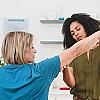
"When someone with knee osteoarthritis comes to see me, there are four areas I focus on: strengthening, stretching, balance, and gait training," says Whitney Rokui, a physical therapist at Harvard-affiliated Spaulding Rehabilitation.
Why walking patterns matter
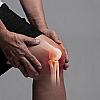
A painful knee (or knees) can lead you to change the way you walk without you realizing it. You might shift your weight, favoring the side that is more symptomatic to avoid putting your full weight on that leg.
Plus, "people with knee arthritis might not pick up their feet completely because it hurts to bend their knees, which results in a shuffling pattern," says Rokui.
These altered ways of walking can become a habit and throw off your natural movement pattern, which can lead to muscle weakness, poor balance, and more stress on the knee joint. Correcting how you walk can be an important part of osteoarthritis treatment.
Practice walking mechanicsYou can practice the mechanics of walking at home using a counter for support, if needed. Here are two exercises: Heel and toe taps. Stand up straight. Lift one leg, extending it slightly behind you. Tap your toe on the ground, then swing that leg forward slightly to tap your heel on the ground in front of you. This simulates a walking motion. Do this 10 to 20 times, then repeat the sequence with the other leg. Heel-toe rocking. Place one foot about 12 inches in front of the other, distributing your weight equally on both feet. Lean back onto both heels, then forward onto both toes, transferring your weight in a rocking motion. Do this 10 to 20 times, then repeat with the other leg forward. |
Practice walking correctly
"Our brains are quick to pick up bad habits, but with practice they can also correct those habits," says Rokui. The goal is to normalize your walking pattern as much as possible.
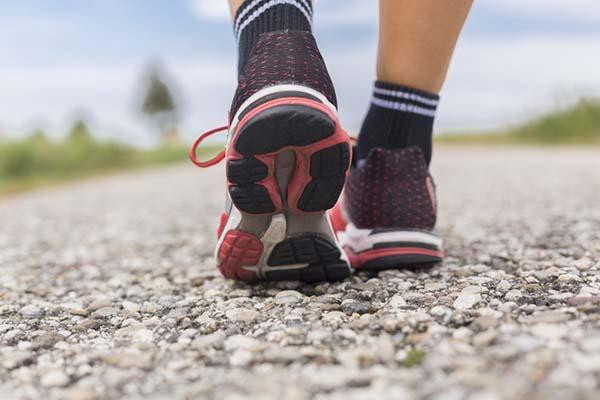
"I encourage my patients to gradually spend more time on the symptomatic leg to reinforce the message that discomfort does not necessarily mean harm," says Rokui. She starts evaluating her patients by observing how each foot hits the ground. She then has them practice doing it correctly. The heel should land first, with the toes in the air.
"I want to make sure they spend a nice amount of time in the mid-stance position before pushing off through the ball of the foot," says Rokui. Toes and kneecaps should point straight ahead, as if they're aimed at 12 on a clock face.
"One of my favorite analogies is to imagine you're going to squish a bug under your shoe. Land on your heel, squish the bug as you transfer your weight over your foot, and then push off through the ball of your foot as your heel rises," says Rokui.
Engage your muscles
When walking, you need to engage the muscles in your belly (abdominals), the fronts of your thighs (quadriceps), and buttocks (gluteals). These muscle groups work together to stabilize the knees. Strengthening these muscles will make it easier to correct your gait.
The calf muscles also play a role. Tight calf muscles make it difficult to lift your toes and land on your heel. Some simple calf stretches can help (see "Calf stretches").
Posture matters too. "Think about pulling your navel to your spine, staying upright, with your back straight and your ears stacked over your shoulders and hips," says Rokui.
Correcting how you walk can be a valuable part of managing the symptoms of knee arthritis - but remember that it's just one component. Ultimately, the best results come from combining gait training with strengthening, stretching, and balance work.
Calf stretchesHere are two simple calf stretches: Standing calf stretch
Stand up straight. Hold the back of a chair or press your hands against a wall, arms extended at shoulder height. Step back with your right leg, pressing the heel against the floor. Allow your left knee to bend while keeping both heels on the floor. Hold for 30 seconds. Repeat with the other leg. Do this three times with each leg. Seated calf stretch Sit in a chair with one leg extended straight out in front of you. Wrap a strap, belt, or leash around the ball of your foot, and pull gently toward you. Hold for 30 seconds. Repeat with the other leg. Do this three times with each leg. Photo by Michael Carroll |
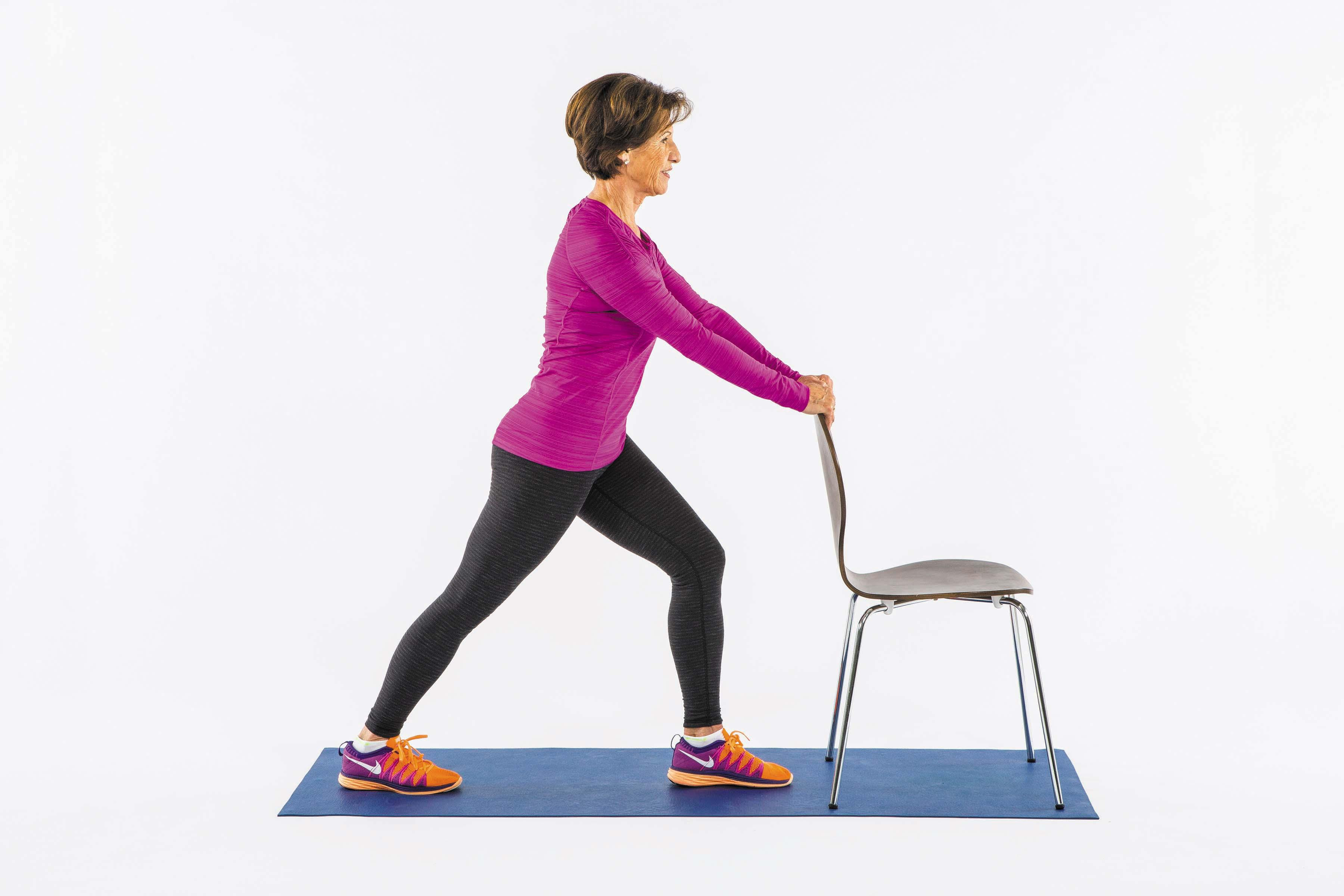
Image: © Westend61/Getty Images
About the Author

Lynne Christensen, Staff Writer
About the Reviewer

Whitney Rokui, PT, DPT, Contributor
Disclaimer:
As a service to our readers, Harvard Health Publishing provides access to our library of archived content. Please note the date of last review or update on all articles.
No content on this site, regardless of date, should ever be used as a substitute for direct medical advice from your doctor or other qualified clinician.