Urgent care vs. emergency room: What's the right choice?
Deciding which care setting is best can be vexing in fraught moments.
- Reviewed by Daniel Sands, MD, MPH, Contributor
When Natalie, 48, noticed her left leg swell dramatically, she knew better than to ignore it. She headed to an urgent care center, hoping clinicians there could figure out the source of the fluid buildup, which was also accompanied by pain, warmth, and redness. But after she waited a couple of hours, a doctor there told her she would need to go to a hospital emergency room (ER) instead.
There, Natalie was diagnosed with deep-vein thrombosis, a serious blood clot that can travel to the lungs and cause a life-threatening blockage called a pulmonary embolism. The case illuminates the sometimes-tricky choice between the ER versus urgent care, says Dr. Daniel Sands, a primary care doctor at Harvard-affiliated Beth Israel Deaconess Medical Center.
About one in every five American adults goes to an ER for care every year. But up to 60% of all ER visits aren't urgent and are potentially unnecessary, according to the National Committee for Quality Assurance, a nonprofit organization that sets health care quality and accountability standards. Meanwhile, more than a quarter of Americans visit one of the 15,300 urgent care centers in the United States each year.
Choosing the right place matters - not only for your health, but for your time and even your wallet. Some health insurers won't cover emergency care if it's deemed that urgent care - which tends to be less costly - would have sufficed.
"We all know the ER can take care of everything," Dr. Sands says. However, "urgent care is another animal. The quality of urgent care centers varies widely."
When to go to urgent care
An urgent care center can be the right place if you need prompt treatment but your problem isn't life-threatening - such as a throat infection, sprain, or minor cut. If the clinicians there believe your problem is more serious than they can handle, they'll send you to an ER.
At an urgent care center, you can typically get basic lab tests, x-rays (but not advanced imaging), prescriptions, and referrals. Waiting times tend to be shorter than at ERs. If you don't have a primary care doctor, or their office is closed, go to urgent care if you have a problem such as
- a minor cut, burn, or sprain
- cold, flu, or COVID-like symptoms
- ear pain, sore throat, or sinus pain
- a possible fracture where the bone isn't sticking out
- mild asthma symptoms or wheezing
- a rash or mild allergic reaction
- urinary symptoms
- fever (if you're otherwise healthy and alert).
Be aware, however, that urgent care centers don't operate under uniform quality standards, Dr. Sands says. "They're individual doctor's offices, in a sense - some are owned by hospitals, and some by private entities," Dr. Sands explains. "The care there could be hit or miss."
When to seek emergency care
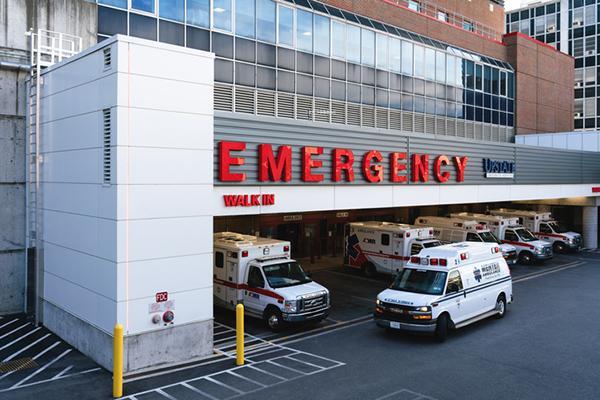
Open 24/7, ERs are the place to go for life-threatening or serious conditions. They frequently offer access to advanced testing and highly trained specialists. But "they're busy places, and your wait there is going to be, by far, the longest," Dr. Sands says.
"The trade-off is they can do everything there. Not all are trauma centers, but they largely can handle anything that comes up," he says. "And ERs are connected to hospitals, so they can admit you, if need be."
Go to the ER - or call 911 - if you have red-flag symptoms such as
- chest pain or pressure
- shortness of breath or trouble breathing
- signs of stroke (face drooping, slurred speech, arm weakness)
- severe abdominal pain
- sudden, intense pain anywhere in the body
- heavy, uncontrolled bleeding
- head injury with confusion, vomiting, or loss of consciousness
- seizure or fainting
- any symptom that feels severe or frightening, or is rapidly worsening.
While Dr. Sands' recommendations don't change based on someone's age or chronic conditions, people who are pregnant or "medically complex" - meaning they have dementia or any of a variety of other serious conditions - are more likely to need ER care.
Still in doubt?If you're still unsure about the right place to seek medical care, Dr. Daniel Sands, a primary care doctor at Beth Israel Deaconess Medical Center, offers this advice. Call your primary care doctor. List your symptoms and "let them help you decide," he says. Do homework. Call nearby urgent care centers or visit their websites to ask which types of conditions they can or can't treat. Go with your gut. If something feels seriously wrong, or you'd rather not guess, choose the emergency room. "It's the safest choice," he says. |
Image: © M. Suhail/Getty Images
About the Author

Maureen Salamon, Executive Editor, Harvard Women's Health Watch
About the Reviewer

Daniel Sands, MD, MPH, Contributor
Disclaimer:
As a service to our readers, Harvard Health Publishing provides access to our library of archived content. Please note the date of last review or update on all articles.
No content on this site, regardless of date, should ever be used as a substitute for direct medical advice from your doctor or other qualified clinician.