










Tai chi walking: What is it and does it work?
This slow, mindful practice offers a simpler way to get many of tai chi's benefits.
- Reviewed by Stanwood Chang, Contributor
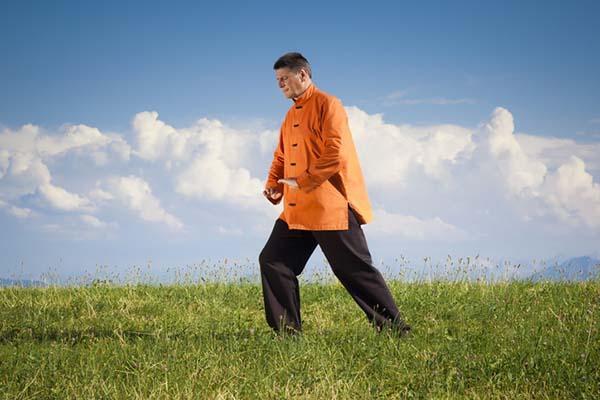
You probably know about tai chi and its many health benefits. This mind-body practice may help lower blood pressure, boost mood, promote better sleep, reduce pain, reduce stress, improve balance, and increase bone density.
Watching people practice tai chi, it may seem relatively simple. The reality is that tai chi routines can be complex and take a long time to learn. One way to get started is with tai chi walking.
What is tai chi walking?
Tai chi itself is a centuries-old martial art and exercise involving slow, flowing motions designed to increase well-being through the circulation and balance of the body’s essential energy, or qi (pronounced “chee”). “The idea is that if qi is flowing smoothly throughout your body, there’s no stagnation, and this prevents illness,” says Stanwood Chang, a tai chi instructor at WellnessWorks, part of Harvard-affiliated Beth Israel Deaconess Medical Center. According to this concept, “once qi is blocked, illnesses and chronic conditions can occur,” he says.
Tai chi involves choreographed postures and steps that flow continuously from one to the next in a particular order. An entire routine is called a form. “Learning a tai chi form can be a little daunting for some people because it requires a lot of memorization,” says Chang. Some forms can take up to a year to master.
“Tai chi walking is basically the footwork component of tai chi forms,” says Chang. “It’s a way to get the lower body and other health benefits of tai chi without having to learn an entire form.”
All you need is a sidewalk, pathway, or hallway (see “How do you do tai chi walking?”).
What are the benefits of tai chi walking?
Tai chi walking benefits come from slowing down the ordinary act of walking to deliberate movements. When you walk normally, momentum helps propel you forward. With tai chi walking you spend a longer time on each foot, which challenges your balance. It allows the body to practice remaining upright when the center of gravity shifts.
Tai chi walking also makes you more aware of the sense of touch in your feet. Instead of stepping forward quickly without much thought, you place your foot and gradually shift your weight onto it. Noticing subtle changes as you slowly transfer your weight can help improve your gait and balance.
Typically, when you walk, the larger muscles do much of the work. The slow and controlled movements of tai chi walking engage the smaller muscles in the feet, ankles, and lower legs. These muscles play important roles in balance and gait. The slow, prolonged loading of weight onto each leg also has the potential to enhance bone density.
Tai chi walking is also a mindfulness practice. You deliberately resist the urge to speed up, and instead focus on the process of taking one step at a time. “You’re also more aware of your breathing,” says Chang.
It’s important to have realistic expectations. “Outsized claims floating around online that you can lose large amounts of weight or build bulging muscles with tai chi walking are simply false,” says Chang.
How do you do tai chi walking?The basic movements of tai chi walking are easy to learn, but it may help to watch a video or learn from an instructor. The movements can be performed moving forward, sideways, or backward.
|
Image: © magann/Getty Images
About the Author

Lynne Christensen, Staff Writer
About the Reviewer

Stanwood Chang, Contributor
Disclaimer:
As a service to our readers, Harvard Health Publishing provides access to our library of archived content. Please note the date of last review or update on all articles.
No content on this site, regardless of date, should ever be used as a substitute for direct medical advice from your doctor or other qualified clinician.


