










Is this common skin problem overlooked?
News briefs
- Reviewed by Anthony L. Komaroff, MD, Editor in Chief, Harvard Health Letter; Editorial Advisory Board Member, Harvard Health Publishing
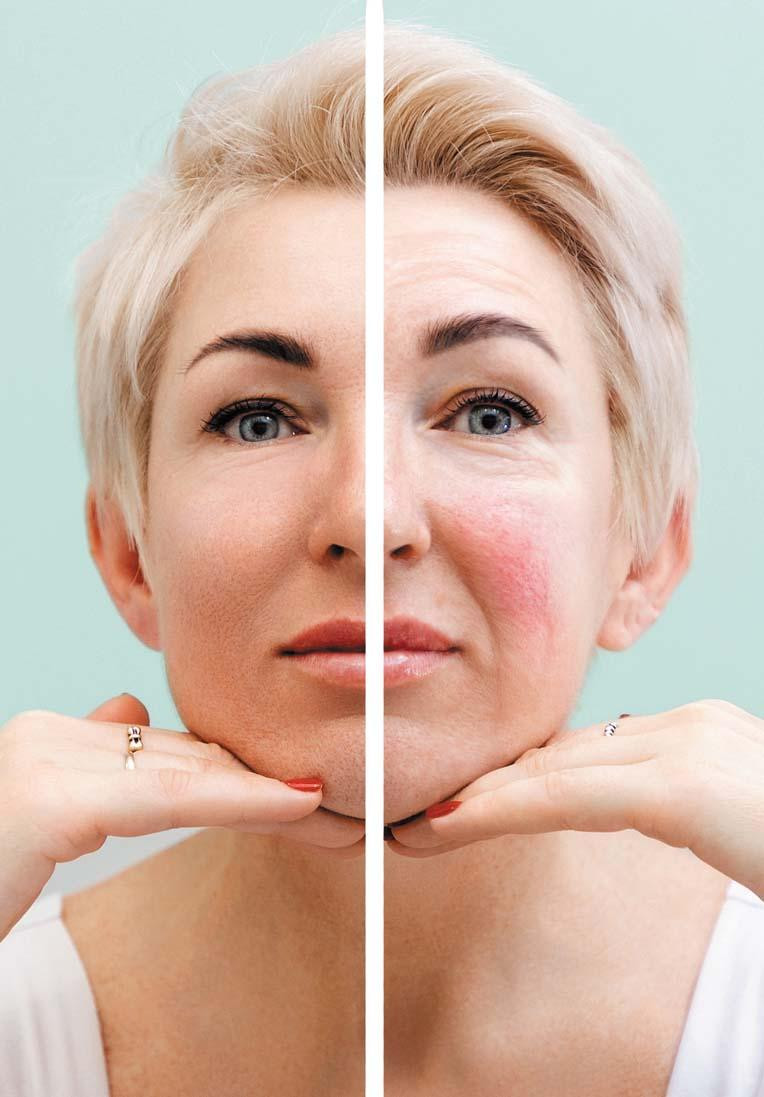 Rosy cheeks might be cute in holiday cartoons, but in real life, the redness can signal a chronic inflammatory skin disease called rosacea. It can spread all over the face, leading to ruddy skin, angry-looking pimples, burning sensations, eye irritation, and even a disfigured nose. Unfortunately, rosacea's early and middle stages often go undiagnosed in people ages 70 or older, according to findings published in a research letter in the August 2025 issue of the Journal of the American Geriatrics Society. The study involved 552 people in Finland who answered health questionnaires and underwent medical exams, including a skin check performed by a dermatologist. About 25% of the participants were found to have rosacea, but only 7% had ever been diagnosed with the condition. The authors speculate that the lack of diagnosis might be due to busy general physicians with limited awareness of rosacea or patients' embarrassment or unwillingness to seek treatment. If you suspect you have rosacea, talk to your primary care doctor about it or visit a dermatologist. Numerous lifestyle strategies and treatments (such as topical medications) can reduce rosacea symptoms and improve quality of life.
Image: © Ildar Abulkhanov/Getty Images
About the Author

Heidi Godman, Managing Director
About the Reviewer

Anthony L. Komaroff, MD, Editor in Chief, Harvard Health Letter; Editorial Advisory Board Member, Harvard Health Publishing
Disclaimer:
As a service to our readers, Harvard Health Publishing provides access to our library of archived content. Please note the date of last review or update on all articles.
No content on this site, regardless of date, should ever be used as a substitute for direct medical advice from your doctor or other qualified clinician.


