PRP injection for knee osteoarthritis: Does it work?
New guidance clarifies who may benefit from platelet-rich plasma injections and what to expect.
- Reviewed by Joanne Borg Stein, MD, Contributor
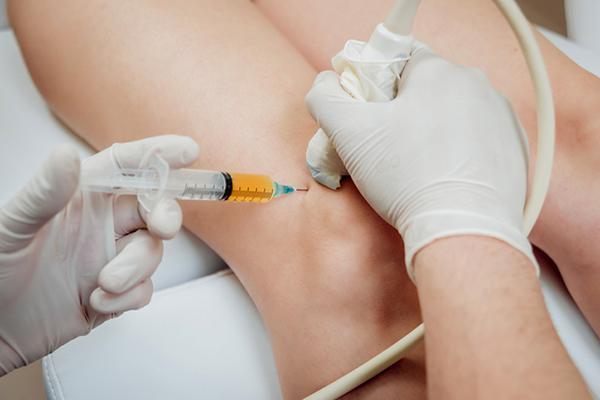
If you haven’t gotten relief for your achy, stiff, arthritic knee with measures such as physical therapy, exercise, and pain medications, but you’re not ready for a knee replacement, you might consider platelet-rich plasma (PRP) injections.
PRP belongs to a category of treatments called orthobiologics, which attempt to harness the abilities of natural substances in the body to reduce inflammation and promote the healing of injured or degenerated tendons, ligaments, muscles, and joints. With PRP, that substance is a component of blood — platelets.
Platelets aid in clotting. They also contain substances that can potentially reduce inflammation and pain. PRP is the most widely used orthobiologic agent, and the most extensively studied application is knee osteoarthritis.
What is PRP therapy?
“PRP is a concentrate of platelets, which reduces proteins and substances called cytokines that promote inflammation,” says Dr. Joanne Borg Stein, director of the Regenerative Sports Medicine Program at Harvard-affiliated Mass General Brigham.
A PRP injection involves isolating platelets from your own blood and injecting them into the treatment site (see “What to expect during and after PRP treatment”). While the exact mechanism for providing pain relief is not completely understood, it appears to relate to its anti-inflammatory effects. Whether PRP can help preserve or regenerate cartilage continues to be studied.
To help clinicians identify which patients are most likely to benefit from a PRP injection, a guidance statement was published in May 2026 by the American Academy of Physical Medicine and Rehabilitation (AAPM&R), a medical society representing physiatrists (doctors who specialize in physical medicine and rehabilitation).
“We’ve been doing this for about 15 years. We now have a better understanding of how PRP works, and the quality of PRP preparations has improved,” says Dr. Borg Stein, the lead author of the guidance.
Is PRP right for you?
The AAPM&R guidance recommends PRP for people with mild-to-moderate knee osteoarthritis who have persistent symptoms despite standard treatment (such as loss of excess weight, as well as physical therapy and pain relievers). People with severe arthritis or a misaligned joint should probably consider knee replacement.
“We decide whether someone is a good candidate by assessing their current exercise program, prior physical therapy, diet, and the severity of their arthritis,” says Dr. Borg Stein. “People with mild or moderate arthritis who have the ability to exercise but haven’t gotten enough relief are probably good candidates for PRP.”
She emphasizes that PRP injections do not replace other measures for managing arthritis, including weight management and exercise.
“We have patients come in for one physical therapy session before giving the injection, and another session two weeks afterwards to make sure they’re progressing well and doing the right exercise program,” says Dr. Borg Stein.
How long you can expect symptom relief from PRP injections varies, depending on factors such as the severity of arthritis, how consistently you stay active, and any other health conditions. “We generally get at least one year out of it, sometimes longer and usually not less than six months,” says Dr. Borg Stein.
Where else is PRP used?
PRP is not limited to the treatment of knee osteoarthritis. “We use it for arthritis in the shoulder, hip, foot, and ankle, plus tendon disorders like tennis and golfer’s elbow, Achilles tendinitis, and hamstring tendinitis,” says Dr. Borg Stein.
One downside of PRP therapy is its cost. Most insurance plans don’t cover the injections, which can cost $500 to $2,500 per injection.
If you’re considering trying PRP, Dr. Borg Stein recommends going to a medical center or private practice with extensive experience with PRP injections — specifically, one that provides a physical therapy program to support it.
What to expect during and after PRP treatmentA PRP injection is performed as an office procedure.
As with any type of injection, there is a small risk of infection and bleeding associated with this procedure. |
Image: © romaset/Getty Images
About the Author

Lynne Christensen, Staff Writer
About the Reviewer

Joanne Borg Stein, MD, Contributor
Disclaimer:
As a service to our readers, Harvard Health Publishing provides access to our library of archived content. Please note the date of last review or update on all articles.
No content on this site, regardless of date, should ever be used as a substitute for direct medical advice from your doctor or other qualified clinician.