







Machine learning used on mammograms may help predict heart disease
News briefs
- Reviewed by Robert H. Shmerling, MD, Senior Faculty Editor, Harvard Health Publishing; Editorial Advisory Board Member, Harvard Health Publishing
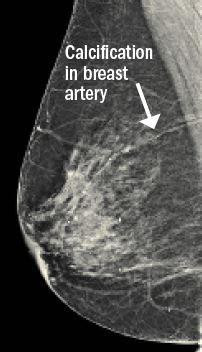 A machine learning tool that analyzes routine mammograms can predict a woman's risk of heart-related problems, a new analysis suggests.
The study, published online Sept. 16, 2025, in the journal Heart, looked at data collected from 49,196 Australian women (average age 60) who had received at least one routine mammogram. During a median follow-up period of nearly nine years, 3,392 of the women had experienced a first heart attack or stroke, or were diagnosed with coronary artery disease or heart failure.
The researchers developed a deep machine learning tool (a type of artificial intelligence) to predict heart disease risk over a 10-year period, based only on a woman's age and features from her mammogram images (such as blood vessel calcium deposits and breast density). The analysis showed that the new tool was just as accurate as common heart disease risk calculators, which rely on age and medical data such as cholesterol and blood pressure values.
Despite popular belief, heart disease is far more common (and deadly) than breast cancer. According to the study authors, mammography has potential as a "two-for-one" tool to screen for both breast cancer and heart disease.
Mammogram image courtesy of Catherine Giess, MD
About the Author

Julie Corliss, Executive Editor, Harvard Heart Letter
About the Reviewer

Robert H. Shmerling, MD, Senior Faculty Editor, Harvard Health Publishing; Editorial Advisory Board Member, Harvard Health Publishing
Disclaimer:
As a service to our readers, Harvard Health Publishing provides access to our library of archived content. Please note the date of last review or update on all articles.
No content on this site, regardless of date, should ever be used as a substitute for direct medical advice from your doctor or other qualified clinician.


