

Whole grains may improve several heart risk factors at once

Light exposure at night may raise risk for heart disease

Children of centenarians may stay healthier and live longer too, study finds

A lumbar belt may help ease low back pain

Signs of pneumonia: Sometimes vague and unexpected

Using a vibration plate: What it can — and can't — do for your body

The surprising link between ovarian cancer and the fallopian tubes

People who walk more or walk faster live longer, study finds

Rosacea treatments: What works?

For sleep apnea, a dental device may be as effective as CPAP
Sleep Archive
Articles

Feeling younger may mean living longer
Claiming to feel younger than your age isn't just whistling into the wind. It can also mean you have more years ahead than some of your former classmates. According to a report in the Dec. 15, 2014, issue of JAMA Internal Medicine, older people who felt three or more years younger than their chronological age had a lower death rate compared with those who felt their age or older.
Two researchers at University College London looked at the responses of about 6,500 men and women with an average age of 65 who answered the question, "How old do you feel you are?" About 70% reported that they felt three or more years younger than their years, while 25% felt close to their age, and 5% felt more than one year older than they were.

iPad can disrupt sleep, study suggests
Image: Thinkstock |
Using an iPad or other backlit electronic tablet in the hours before bedtime not only prevents you from falling asleep, it may also affect your alertness the next day, according to a report published in the Proceedings of the National Academy of Sciences, Dec. 22, 2014. Researchers at Harvard-affiliated Brigham and Women's Hospital found that the light emitted by the devices reset the body's circadian clock, which synchronizes the daily rhythm of sleep to daylight. As a result, people reading e-books took longer to fall asleep and were less alert the next morning than when they read print books instead.
During the two-week study, 12 men and women read digital books on an iPad for four hours before bedtime each night for five consecutive nights. They also followed the same routine using printed books. When they read the iPad, participants were less sleepy before bedtime but were less alert the following morning, even after eight hours of sleep.

Protect your vision to protect your independence
Getting a comprehensive eye exam can help catch and treat potential problems that may otherwise rob you of your eyesight and independence. Images: Thinkstock |
Comprehensive exams and preventive care are the keys to eye health.

Ask the doctor: Any health benefits in dessert drinks?
It appears that moderate |
Q. Do the protective effects of alcohol extend to dessert wines and liqueurs, or do those have too much sugar?
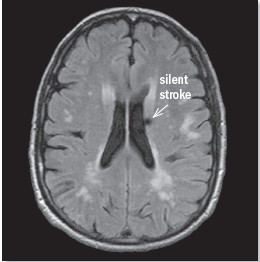
Reduce your risk of silent strokes
As seen on this MRI scan, a silent stroke |
Exercise, eat a healthy diet, and manage blood pressure and cholesterol to lower your odds.

Boost the power of your breakfast cereal
Image: Thinkstock One serving each of whole-grain cereal, low-fat milk, and fruit meet the requirements for a healthy breakfast. |
Learn which ingredients will give your day a healthy start.
Grocery store shelves are filled with dozens of breakfast cereals all promising important health benefits. But how do you know if you're getting what you need? "Labels and marketing promises on boxes can be confusing. It's best to go cereal shopping with a plan," says Kathy McManus, director of the Department of Nutrition at Harvard-affiliated Brigham and Women's Hospital. She advises that you complement cereal with milk for protein and calcium and with fresh fruit for natural sweetness and some fiber. Don't worry if the cereal is organic or not. But do read ingredient lists carefully, and aim for the following markers of good nutrition.

Tips to help the medicine go down
Adding medications to foods and trying new swallowing techniques can help.
Swallowing pills can be difficult and downright unpleasant. It causes one in three people to gag, vomit, or choke. That may keep people from sticking to their medication routines, which can make them sicker. "We often see people who can swallow food and liquid just fine, but have difficulty with pills," says Denise Ambrosi, director of the Speech-Language Pathology Department at Harvard-affiliated Spaulding Rehabilitation Hospital.
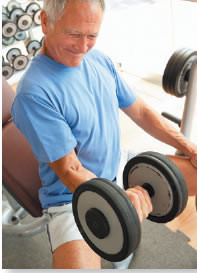
Add weight training to control belly fat, say Harvard researchers
Images: Thinkstock |
Aerobic exercise is not enough to fight belly fat, according to researchers at the Harvard School of Public Health. They say that weight training is also key to fighting the battle of the bulge. Researchers analyzed physical activity, weight, and waist circumference data for more than 10,000 men ages 40 and older, and found that healthy men who did 20 minutes of daily weight training had less of an increase in age-related abdominal fat compared with men who spent the same amount of time doing aerobic activities. Aerobic exercise alone was associated with less weight gain compared with weight training. The best results came from combining weight training and aerobic activity. The findings were published online Dec. 22, 2014, in Obesity. "Engaging in weight training or, ideally, combining it with aerobic exercise could help older adults lessen abdominal fat while increasing or preserving muscle mass," says Dr. Rania Mekary, the study's lead author and a researcher in Harvard's Department of Nutrition.
Abdominal fat is linked to heart disease, diabetes, bone loss, and decreased bone strength. You can fight back by aiming for the recommended 150 minutes of moderate-intensity exercise per week and starting a weight-training program if your doctor approves.
Balance and strength exercises may help reduce falls
It appears that exercise may significantly reduce falls among people with less severe PD, and may improve balance and quality of life for anyone with PD.

Poor sleep linked to dementia and ministrokes
Images: Thinkstock |
Poor sleep is linked to high blood pressure, diabetes, obesity, and heart disease. Now a study published in Neurology Dec. 10, 2014, suggests that people with conditions that rob them of oxygen and deep sleep are more likely to have changes in the brain that may lead to dementia. Researchers say conditions such as emphysema and sleep apnea reduce the amount of oxygen in the blood during sleep, which can lead to silent, undetectable "ministrokes." Researchers also found that people who spend less time in deep sleep, called slow-wave sleep, are more likely to have loss of brain cells than people who spend more time in slow-wave sleep. Slow-wave sleep is important in processing new memories and remembering facts. The researchers noted that past evidence has shown that using a continuous positive airway pressure (CPAP) machine for obstructive sleep apnea may improve cognition, even after dementia has developed. "Sleep quantity and quality are important to maintain optimal health and prevent disease," says sleep expert Dr. Lawrence Epstein, an instructor in medicine at Harvard Medical School. "By getting enough sleep, you ensure that you are getting all the types of sleep, which is necessary to maintain proper functioning."
Whole grains may improve several heart risk factors at once
Light exposure at night may raise risk for heart disease
Children of centenarians may stay healthier and live longer too, study finds
A lumbar belt may help ease low back pain
Signs of pneumonia: Sometimes vague and unexpected
Using a vibration plate: What it can — and can't — do for your body
The surprising link between ovarian cancer and the fallopian tubes
People who walk more or walk faster live longer, study finds
Rosacea treatments: What works?
For sleep apnea, a dental device may be as effective as CPAP
Free Healthbeat Signup
Get the latest in health news delivered to your inbox!
Sign Up
