

CoQ10: Should you take this popular supplement if you're on a statin?

Oat vs. dairy milk: Nutrition, benefits, and downsides

Microplastics: A hidden health threat?

Healing after food poisoning

What is tempeh? Benefits, nutrition, and how to use it

Light exposure at night may raise risk for heart disease

Whole grains may improve several heart risk factors at once

A lumbar belt may help ease low back pain

Children of centenarians may stay healthier and live longer too, study finds

Signs of pneumonia: Sometimes vague and unexpected
Positive Psychology Archive
Articles

There is something you can do about Alzheimer's disease-join a study
Thousands of volunteers are needed for current Alzheimer's studies. |
Women are at greater risk for dementia. Joining clinical trials can help to speed the development of promising drugs.
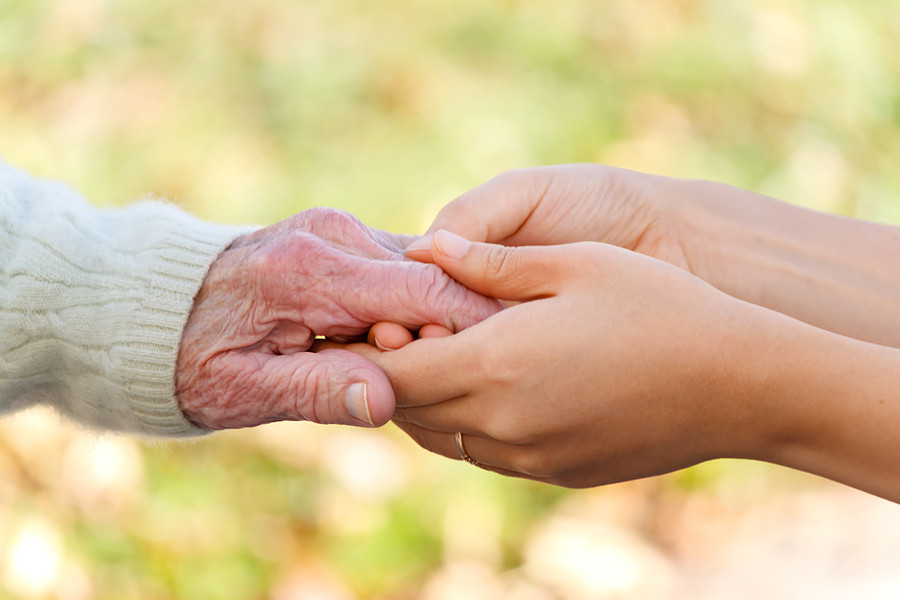
Can hospice care reduce depression in the bereaved?
Hospice care improves quality of life in the dire circumstances of a person’s last days. It can enable the dying to spend this time in peace, surrounded by family and friends, and in little pain. Studies confirm what many know intuitively. Family members are likely to experience major depression following the loss of a loved one. A recent study published in today’s online JAMA Internal Medicine looked at whether hospice care reduces the severity of bereavement-related depression in people who had recently lost a spouse. While the researchers saw no difference between spouses whose partners were enrolled in hospice and those how weren’t, major depression was less common in spouses who received support from a hospice program.

Pay attention to signs of depression
Over time, most people with dementia or mild cognitive impairment (a decline in thinking skills) also experience behavioral changes, such as depression and agitation. Which comes first? A study published online by Neurology on Jan. 14, 2015, suggests that psychological and behavioral changes can begin before people develop mild cognitive impairment or dementia. Researchers evaluated the daily functioning, memory and thinking skills, and psychological and behavioral symptoms of about 2,400 people, ages 50 and older, who had no evidence of cognitive decline. The study also suggests that a pattern of depressive symptoms may occur in older adults, unrelated to cognitive decline. The takeaway? "Depressive symptoms can occur in older adults for many reasons. If you are experiencing mood or cognitive changes that last for more than a few weeks, it's a good idea to bring this up with your doctor or consult a mental health specialist to help sort out possible causes," says Dr. Nancy Donovan, an instructor in psychiatry at Harvard Medical School.

Two ways to stay mentally sharp
Regular physical activity helps keep your heart, lungs, and muscles in shape and can stave off the effects of aging. In much the same way, exercising your brain can help keep your mind sharp and your memory intact. Here are two ways to activate your brain.
Keep busy and engaged
The MacArthur Foundation Study on Successful Aging, a long-term study of aging in America, found that education level was the strongest predictor of mental capacity as people aged. The more education, the more likely an individual was to maintain his or her memory and thinking skills. Other research has shown that people who held jobs that involved complex work, such as speaking to, instructing, or negotiating with others, had a lower risk of memory loss (dementia) than people whose jobs were less intellectually demanding.

Memory slips? Consider these seven common causes of forgetfulness
Ask these questions to get to the root of the problem.
Do you think you've been having more memory slips than usual lately? Annoying but essentially harmless age-related memory impairment is common, but pinpointing the cause isn't easy. Start by considering common and often reversible causes of memory problems. This could lead to a more productive discussion with your physician.
"Anyone concerned about memory should talk with a doctor for further evaluation," says Dr. David Hsu, a geriatric psychiatrist with the Center for Alzheimer Research and Treatment at Harvard-affiliated Brigham and Women's Hospital. "Having an honest discussion about memory and getting tested may help open up discussions about other areas of health too."
New drug shows promise for early Alzheimer's disease
Researchers from the biotechnology company Biogen have reported that a new drug reduced the amount of amyloid plaques—the brain deposits associated with dementia—and slowed cognitive decline in people with early Alzheimer's disease. They presented the report March 20, 2015, at the International Conference on Alzheimer's and Parkinson's Diseases in Nice, France.
The researchers studied 166 people ages 50 to 90 who had been diagnosed with mild Alzheimer's. The participants were randomly assigned to receive either a placebo or one of four different doses of the drug aducanumab—an antibody that attaches to amyloid deposits and turns the immune system on them.
Vocabulary improves with age, research shows
Harvard researchers Joshua Hartshorne and Laura Germine have added to the growing body of research indicating that, in some respects, our cognitive function is improving, not declining, as we age. Their report, published online March 15, 2015, by Psychological Science, indicates that our vocabulary skills keep improving past retirement age.
The researchers wanted to understand how and when reasoning and memory change over the life span as a basis for distinguishing normal from abnormal aging. They recruited 48,000 volunteers of all ages and had them complete online tests that measured brain processing speed, memory, emotional intelligence, and vocabulary.

Listening to your favorite music may relax your arteries
Music has charms to soothe a savage breast, as the 17th-century poet William Congreve wrote. In fact, music might soothe your heart by relaxing your arteries, a small study hints.
Researchers measured arterial stiffness in 20 healthy young adults before and after they listened to 30 minutes of classical music, rock music, or nothing (as a control). They used a technique called carotid-femoral pulse wave velocity (PWV). This measures the time it takes for the pulse to travel to the carotid artery in the neck versus the femoral artery in the leg. Longer pulse times suggest stiffer arteries, which translates to a higher risk of cardiovascular problems. Higher "wave reflections" (another measure of artery health) are also linked to heart disease risk.

Tips to avoid caregiver stress
A number of strategies can help lighten the load of caregiving, such as delegating tasks to family and friends, using support services such as respite care, and taking some time for exercise and socializing. Image: Thinkstock |
Stay well when caring for a loved one by maintaining your physical and emotional health. Caring for yourself means you'll be able to care for another.

Pets can help their humans create friendships, find social support
Pets can provide their owners with more than companionship. A new study, published online in the journal PLoS One, shows that pets can also help create human-to-human friendships and social support, both of which are good for long-term health. The effect isn’t limited to dogs. Other kinds of pets, including cats, rabbits, and snakes, can also be catalysts for making friends and finding social support. In a survey of residents of four cities, being a pet owner was the third most common way that respondents said they met people in their neighborhoods. Pet owners were 60% more likely than non–pet owners to get to know people in their neighborhoods they hadn’t known before. They were also more likely to have reported befriending someone they met through a pet-related connection or getting social support from them. As described in Get Healthy, Get a Dog, a Special Health Report from Harvard Medical School, pet ownership has many direct physical and mental health benefits.
CoQ10: Should you take this popular supplement if you're on a statin?
Oat vs. dairy milk: Nutrition, benefits, and downsides
Microplastics: A hidden health threat?
Healing after food poisoning
What is tempeh? Benefits, nutrition, and how to use it
Light exposure at night may raise risk for heart disease
Whole grains may improve several heart risk factors at once
A lumbar belt may help ease low back pain
Children of centenarians may stay healthier and live longer too, study finds
Signs of pneumonia: Sometimes vague and unexpected
Free Healthbeat Signup
Get the latest in health news delivered to your inbox!
Sign Up
