

Healing after food poisoning

What is tempeh? Benefits, nutrition, and how to use it

Light exposure at night may raise risk for heart disease

Whole grains may improve several heart risk factors at once

A lumbar belt may help ease low back pain

Children of centenarians may stay healthier and live longer too, study finds

Signs of pneumonia: Sometimes vague and unexpected

The surprising link between ovarian cancer and the fallopian tubes

Using a vibration plate: What it can — and can't — do for your body

People who walk more or walk faster live longer, study finds
Energy and Fatigue Archive
Articles

Turn your exercise into summer fun
Moving more doesn't have to be a drag.
Many people don't look forward to their daily workout so much as they look forward to getting through it. "Exercise is often a very negative term," says Dr. Edward Phillips, assistant professor of physical medicine and rehabilitation at Harvard Medical School. "People hear it as something they have to do. It becomes another thing on the list, and when they don't do it, they feel even worse."
If this sounds like you, it may be time to reframe your workouts. Exercise should feel like a gift, not a chore, says Dr. Phillips. Sound like a lofty goal? The first step toward achieving it is to change your thinking. Stop calling it exercise, he suggests; start referring to it as physical activity, and a whole new world of options will open up.

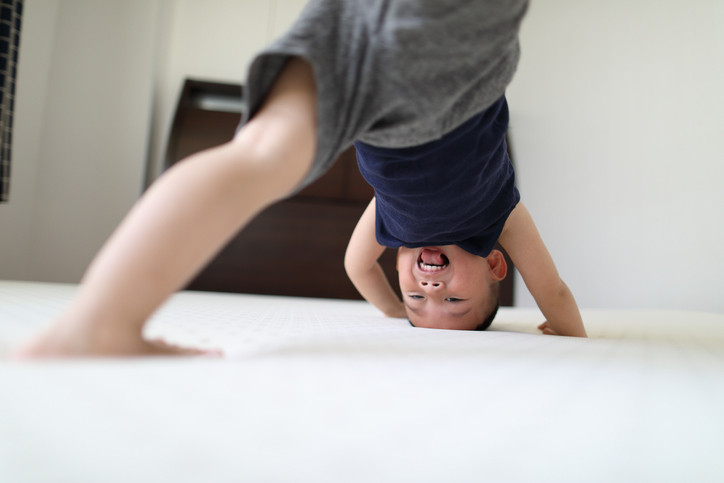
5 winning ways for kids to burn energy
After a couple of months of sheltering in place, and with warm weather upon us, your children probably have plenty of excess energy. Here are five suggestions for activities that will get them moving — and there’s nothing stopping parents from joining in.

Step up your fitness and safety
This simple at-home exercise can improve flexibility, leg strength, and balance to protect against falls.
Falls continue to be a significant cause of fatal injury among older adults, according to the CDC. In fact, each year, falls result in more than 2.8 million injuries treated in emergency rooms and more than 27,000 deaths.
Lack of mobility and declining strength are the main contributors to falls. Still, another threat, which often goes unrecognized, is simply the fear of falling.

Your heart’s best friend: A canine companion?
These popular pets have been linked to a range of heart-related benefits.
Seeing a dog's wagging tail and furry face can be heartwarming. But living with and caring for a dog may be heart-protecting — and might even help you live longer, according to a growing body of research.
The latest findings include two articles published last year in Circulation: Cardiovascular Quality and Outcomes. One pooled findings from 10 studies involving a total of 3.8 million people who were followed between one and 22 years. Dog owners were 31% less likely to die from a heart attack, stroke, or other cardiovascular condition than people who didn't own dogs. A separate study, which followed more than 335,000 heart attack and stroke survivors over 12 years, found that having a dog was linked to a 21% lower risk of death from any cause.

Getting into the swing of golf
This low-impact, lifelong sport can be a good way to exercise, socialize, and enjoy nature — three factors linked to lower heart disease risk.
Famously described as "a good walk spoiled," golf is nonetheless a popular sport in the United States, played by an estimated 25 million Americans. And one could argue that rather than spoiling a nice walk, the game instead provides a good way for people of all ages to be physically active and reap other heart-related rewards.
"You're outdoors in a beautiful place with three friends and no phones or computer screens," says Dr. James Muller, a cardiologist at Harvard-affiliated Brigham and Women's Hospital. In today's world, people are often stuck behind their screens and lose touch with their in-person social community. Playing golf helps to remedy that problem.

Can certain exercises worsen my pelvic organ prolapse?
Ask the doctors
Q. I have pelvic organ prolapse and I want to start working out. Are there exercises I should avoid?
A. Pelvic organ prolapse is a common problem, caused by a weakening of the bowl-shaped group of muscles and tissues that supports your pelvic organs. As this support fails, one or more of these organs — such as the uterus, bladder, or rectum — can shift out of place, typically pushing into (and sometimes protruding out of) the vagina.

Can forest therapy enhance health and well-being?
When you were a child and your mother told you to go play outside, it wasn’t just because she needed some child-free time. Inspired by a Japanese practice, forest therapy is an immersion in nature that has been shown to have positive effects on health.

Perfecting your walking technique
People are often surprised to learn that there's more to walking than simply putting one foot in front of the other. In fact, a little technique goes a long way to making your walks more enjoyable and more effective. Technique is especially important if you are hoping to become fitter and lose weight, because it will enable you to walk faster and longer. When you're standing tall, your muscles will move through a greater range of motion for a more powerful stride. Improving your walking posture will help you to look and feel more confident, too—and you'll look slimmer before losing a single pound. It will also help alleviate aches and pains and allow you to take deep breaths for more energy.
For any type of walking
The following rules will help you maintain good form.
The "hip hike" exercise for building hip strength
The hip hike is used to build hip strength if you're about to get into a running or walking program. It's easy, but you can also perform the hip hike by holding a chair to steady yourself. Make sure you're standing on a low, but stable, platform before you begin.
Healing after food poisoning
What is tempeh? Benefits, nutrition, and how to use it
Light exposure at night may raise risk for heart disease
Whole grains may improve several heart risk factors at once
A lumbar belt may help ease low back pain
Children of centenarians may stay healthier and live longer too, study finds
Signs of pneumonia: Sometimes vague and unexpected
The surprising link between ovarian cancer and the fallopian tubes
Using a vibration plate: What it can — and can't — do for your body
People who walk more or walk faster live longer, study finds
Free Healthbeat Signup
Get the latest in health news delivered to your inbox!
Sign Up
