

Naturally gluten-free foods

Harvard study: Healthier fats linked to longer life after prostate cancer diagnosis

Shingrix shingles vaccine linked with lower heart disease risks

Estrogen-only hormone therapy tied to lower dementia risk

Should you have a hysterectomy?

Stair climbing may significantly lower cardiovascular risks

Why do I sweat so much?

Walking pneumonia: The "mild" illness that can still pack a punch

What causes knee pain: How doctors make a diagnosis
Where you carry excess weight matters in predicting heart disease risk
Brain health Archive
Articles

Music can boost memory and mood
Dan Cohen watches Mary Lou Thompson, who has Alzheimer's, respond to the playlist he made for her. Image: Photo Courtesy of BOND 360 |
By Dr. Anne Fabiny, Editor in Chief, Harvard Women's Health Watch
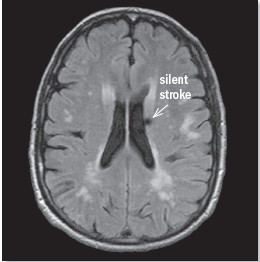
Reduce your risk of silent strokes
As seen on this MRI scan, a silent stroke |
Exercise, eat a healthy diet, and manage blood pressure and cholesterol to lower your odds.

Ask the doctor: Stroke danger from a hole in the heart?
Q. I just discovered that I have a hole in my heart that my doctor called a patent foramen ovale, which was found during an ultrasound. What are the pros and cons of having it repaired?
A. All people start off with an oval, flap-like opening (called a foramen ovale) between the right and left upper chambers of their hearts. This small hole usually closes during infancy. But in about one in four people, it stays open and is known as a patent foramen ovale (PFO). Most people with the condition have no symptoms and never know they have it unless it's discovered by accident, as happened to you.

Can memory woes foretell a stroke?
Well-educated people who report memory problems may face a higher risk of stroke.
Minor memory slips—such as losing your keys or forgetting an acquaintance's name—are common as we age. However, people who express concern about their memory may have a heightened risk of stroke, particularly if they're highly educated, according to a study in the January 2015 Stroke.

Cocoa: a sweet treat for the brain?
There are many reasons why you might want to give someone chocolate on Valentine’s Day. There’s the tradition of it, and the idea of sweets for your sweetheart. Here’s another tempting reason: certain compounds in chocolate, called cocoa flavanols, have recently been linked with improved thinking skills. Italian researchers found people who drank a daily cocoa brew with a lot of flavanols (more than 500 milligrams) significantly improved their scores on tests that measured attention, executive function, and memory. How might cocoa flavanols boost thinking skills? They may help brain cells connect with each other. Dark chocolate is a good source of flavonols. It’s also a good source of calories. Adding it to your diet without taking out other foods can lead to weight gain, which may wipe out any health gain.
Diabetes in midlife may hasten dementia in later life
Image: Thinkstock |
If you have diabetes or prediabetes and you need motivation to get your blood sugar under control, consider this: a study published Dec. 2, 2014, in Annals of Internal Medicine suggests that diabetes in midlife appears to age the mind at a faster rate in later life. Researchers analyzed changes in the thinking skills of more than 15,000 people during a 20-year period. The average age at the start of the study was 57. Twenty years later, among people with a history of diabetes, there was 19% more decline than expected. There were even declines, although smaller, among people with a high blood sugar condition known as prediabetes. "We know that over time, diabetes, like hypertension, will cause mini-strokes in the brain that will impair one's thinking and memory. This study strengthens the claim that addressing cardiovascular risk factors like diabetes early may prevent dementia in the future," says Dr. David Hsu, a psychiatrist in the Center for Alzheimer Research and Treatment at Harvard-affiliated Brigham and Women's Hospital. You can lower your blood sugar—and your risk of diabetes—by exercising, losing weight, and cutting back on refined grains and added sugars.
Naturally gluten-free foods
Harvard study: Healthier fats linked to longer life after prostate cancer diagnosis
Shingrix shingles vaccine linked with lower heart disease risks
Estrogen-only hormone therapy tied to lower dementia risk
Should you have a hysterectomy?
Stair climbing may significantly lower cardiovascular risks
Why do I sweat so much?
Walking pneumonia: The "mild" illness that can still pack a punch
What causes knee pain: How doctors make a diagnosis
Where you carry excess weight matters in predicting heart disease risk
Free Healthbeat Signup
Get the latest in health news delivered to your inbox!
Sign Up
