

Naturally gluten-free foods

Harvard study: Healthier fats linked to longer life after prostate cancer diagnosis

Shingrix shingles vaccine linked with lower heart disease risks

Estrogen-only hormone therapy tied to lower dementia risk

Should you have a hysterectomy?

Stair climbing may significantly lower cardiovascular risks

Why do I sweat so much?

Walking pneumonia: The "mild" illness that can still pack a punch

What causes knee pain: How doctors make a diagnosis

Where you carry excess weight matters in predicting heart disease risk
Bones and joints Archive
Articles

Osteoarthritis relief without more pills
It's possible to ease arthritis pain and stiffness without medication, but it takes some work. |
Here are some steps you can take to reduce your reliance on medication to control symptoms and stay functional.

Ask the doctor: I fractured my hip three years ago, but my leg still hurts when I exercise. Should I stop exercising?
Image: Thinkstock |
Q. I'm a 78-year-old athlete and dancer. Three years ago, I broke my hip. After it was repaired I completed extensive physical therapy. Since then, I've been working out at a gym using the treadmill, stationary bicycle, and rowing machine. But I still have tremendous pain in my thigh. Should I stop exercising? It helps me control my weight and blood pressure.
A. I applaud you for persisting with your exercise. You're not only keeping your weight and blood pressure down but you're also building stronger bones to help prevent fractures in the future.

Acetaminophen: Minimal relief for knee arthritis pain
The pain from an arthritic knee can be intense, limiting daily activities and independence. Men can try a range of medications, but overall acetaminophen (Tylenol, other brands) appears to relieve pain only slightly better than a placebo pill, according to a research review in Annals of Internal Medicine.
The researchers pooled results from 137 randomized clinical trials involving about 33,000 people with knee arthritis and compared the relative effectiveness of the following treatments:
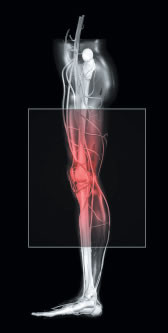
Could that leg pain be peripheral artery disease?
The pain of peripheral artery disease may be felt above or below the knee during activity, and will fade with rest. Image: Thinkstock |
The telltale sign is leg pain and fatigue that comes on with activity and goes away with rest.

When are opioids safe to take?
Opioids are commonly used to control acute, intense pain. Meditation, yoga, and acupuncture may help control pain when tapering off opioids. |
Although these powerful pain relievers can be addictive, opioids are safe for most people when used properly.
Keep moving when knee or hip pain strikes
Mobility relies on the body's two largest joints, the hips and knees. We ask a lot of both these joints: they must bear our full weight and coordinate movement over a lifetime of standing, walking, running, dancing, and sports. Not surprisingly, hip and knee pain are common complaints, and nearly everyone who lives into old age can expect some trouble with these joints. But taking care of your hips and knees and managing any pain that arises will help you avoid losing mobility as you age.
Try these self-help measures when knee or hip pain strikes:

Ask the doctor: Calcium supplements: Not routinely recommended
Dairy products are good sources of calcium. |
Q. My internist told me to take calcium because I have osteoporosis. However, I heard that blockages in heart arteries could also contain calcium. Am I hurting my arteries by taking calcium supplements?
A. Doctors often recommend calcium supplements for people with osteoporosis, and I'd advise you to follow your physician's advice, as calcium is important for bone health. The Recommended Dietary Allowance for calcium for adults is 1,000 to 1,200 milligrams (mg) a day; dairy products are the best sources. For healthy people who get enough calcium in their diets, the role of calcium supplements is less clear, although some people hope that taking them may help preserve bone strength.

Getting a new knee: Timing is everything
Don't rush into it, but don't wait longer than you need to.
More than 700,000 Americans will have one or both knee joints replaced this year, usually because of damage from wear-and-tear arthritis. Age itself is no barrier, and about half of total knee replacements go to people 65 and older. Replacing a joint damaged by osteoarthritis helps men stay active and independent.
Naturally gluten-free foods
Harvard study: Healthier fats linked to longer life after prostate cancer diagnosis
Shingrix shingles vaccine linked with lower heart disease risks
Estrogen-only hormone therapy tied to lower dementia risk
Should you have a hysterectomy?
Stair climbing may significantly lower cardiovascular risks
Why do I sweat so much?
Walking pneumonia: The "mild" illness that can still pack a punch
What causes knee pain: How doctors make a diagnosis
Where you carry excess weight matters in predicting heart disease risk
Free Healthbeat Signup
Get the latest in health news delivered to your inbox!
Sign Up
