










Trying to lose weight? Be careful not to lose muscle
Rapid weight loss can lead to muscle loss. Here's how to prevent that.
- Reviewed by Caroline Apovian, MD, FACP, FTOS, DABOM, Contributor
The percentage of Americans classified as obese dropped from 40% to 37% over the last three years (2022 to 2025), according to a recent Gallup survey. The survey also found that obesity rates came down alongside a sharp increase in people using a class of medication called GLP-1 receptor agonists. GLP-1 drugs mimic a natural hormone called glucagon-like peptide 1, helping to regulate blood sugar, control appetite, and slow digestion.
While losing any amount of excess weight helps lower your risk for heart disease, diabetes, cancer, and other serious conditions, it has an important downside: you lose muscle in the process.
"No matter how much weight you lose, about 25% of that will be from muscle," says Dr. Caroline M. Apovian, co-director for Weight Management and Wellness at Harvard-affiliated Brigham and Women's Hospital. "And if you lose a lot of weight quickly, as can happen when you use GLP-1s or follow an extreme low-carb or low-calorie diet, you can lose even more muscle and at a faster rate."
Weight loss versus fat loss
Why do you lose muscle when losing weight? Weight loss refers to a decrease in total body mass (largely in fat, muscle, and water). When most people say they want to "lose weight," what they really mean is that they want to "lose fat." To do this, you need to operate at a calorie deficit, which means consuming fewer calories than your body uses, exercising to expend more calories than you consume, or both.
To compensate for having fewer calories to use when it needs energy, the body first draws on stored glycogen, a carbohydrate-based energy reserve. Once glycogen is depleted, your body burns fat for energy; but you also convert muscle protein to glucose, especially as a quick backup energy source. That means loss of muscle mass.
How to minimize muscle loss
To prevent excessive muscle loss while losing weight, you need to take a three-tiered approach: perform resistance training to build muscle, consume enough protein, and slow your pace of weight loss.
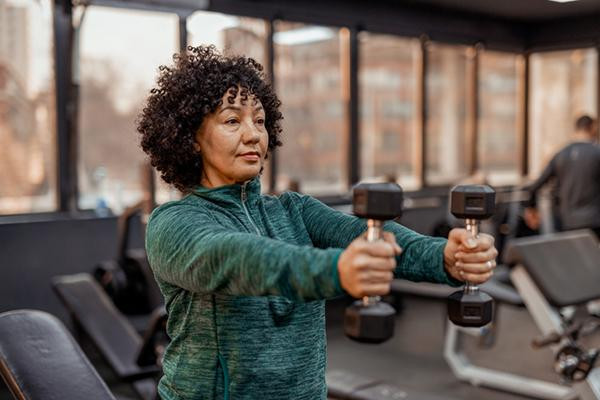
Resistance training. Resistance training refers to exercises in which you work against a load, whether that's from weights, exercise bands, or your own body weight. Regular training helps you build muscle; gradually increasing the intensity and difficulty of workouts stimulates muscle growth and makes you stronger.
Building more muscle with resistance training also helps with weight loss. Not only are you burning calories while actively using your muscles, but muscles continue to consume calories during rest and recovery.
Guidelines recommend that most people do at least two sessions of resistance training, along with 150 minutes of moderate-intensity aerobic activity, per week. Consult a personal trainer for a suitable training plan.
Increase protein. Muscles also need fuel to grow, and that's where protein comes in. The body breaks down dietary protein into amino acids, which it uses to build muscle.
Guidelines recommend that adults consume 0.8 grams of protein per kilogram of body weight per day. However, research suggests that adults ages 65 and older who engage in resistance training require 1.2 to 1.5 grams of protein per kilogram of body weight. That's approximately 90 to 112 grams daily for a 165-pound person.
There's some debate about how much protein the body can use at one time. The general opinion is 20 to 40 grams, but some studies say the limit may be higher. Dr. Apovian recommends not focusing on the amount of protein per meal but rather on meeting your total daily quota. "You don't want to eat all your protein at once, so try to spread it throughout the day and make sure you have some protein with each meal and snack."
Gradual weight loss. When doctors first prescribe a GLP-1 agonist, the main reason they begin with a lower dose is to minimize side effects. But this also helps prevent very fast weight loss, which can accelerate burning muscle protein rather than fat. By losing weight slowly - 1 to 2 pounds weekly - you can maintain and even build muscle mass when combined with consistent resistance training and proper protein intake.
Image: © PixelsEffect/Getty Images
About the Author

Matthew Solan, Former Executive Editor, Harvard Men's Health Watch
About the Reviewer

Caroline Apovian, MD, FACP, FTOS, DABOM, Contributor
Disclaimer:
As a service to our readers, Harvard Health Publishing provides access to our library of archived content. Please note the date of last review or update on all articles.
No content on this site, regardless of date, should ever be used as a substitute for direct medical advice from your doctor or other qualified clinician.


