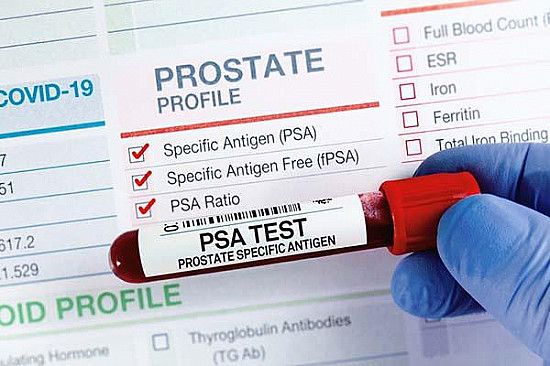
Does having prostate cancer raise your risk for other cancers?
Ask the doctor

Q. I was recently diagnosed with prostate cancer. Does the occurrence of one type of cancer indicate a danger of developing other types?
A. It can, but it depends upon the type of cancer and the treatment.
In general, prostate cancer that occurs after age 50 or 60 probably does not increase the risk of getting a second, different cancer.
Prostate cancer is the most common cancer among men. Almost every man develops prostate cancer if he lives long enough. So just being a man makes you as likely to develop a different type of cancer -- whether or not you have been diagnosed with the prostate cancer.
There are likely some exceptions. Some men inherit genes that increase the risk of developing a more aggressive type of prostate cancer, often at an early age (under 50). These same genes could increase the risk of other cancers as well.
There is a small increased lifetime risk of developing rectal cancer in men who have been treated with radiation therapy for prostate cancer. This is related to the treatment, not the prostate cancer.
Another possible association of prostate cancer with colon cancer relates to diet. Men who eat large quantities of red meat have a higher risk of both of these diseases than men who eat little red meat.
Image: © andresr/Getty Images
About the Author
Howard E. LeWine, MD, Chief Medical Editor, Harvard Health Publishing; Editorial Advisory Board Member, Harvard Health Publishing
Disclaimer:
As a service to our readers, Harvard Health Publishing provides access to our library of archived content. Please note the date of last review or update on all articles.
No content on this site, regardless of date, should ever be used as a substitute for direct medical advice from your doctor or other qualified clinician.