










Strength in numbers: Building a weight lifting workout
Challenge yourself by changing the amount of weight and the number of repetitions you do.
- Reviewed by Vijay Daryanani, PT, MS, Contributor

Doing strength training exercises at least two days a week is a great way to support your cardiovascular health. For starters, adding muscle mass benefits your heart by helping your body burn more fat and better regulate both your blood sugar and blood pressure.
"Stronger muscles also improve your balance and overall function, which makes it easier to play sports like pickleball, tennis, and golf," says Vijay A. Daryanani, a certified personal trainer and physical therapist with Harvard-affiliated Spaulding Outpatient Center. Along with brisk walking and similar activities, playing such sports counts toward the 150 weekly minutes of moderate-intensity exercise recommended for cardiac and overall health, he adds.
Starting and maintaining a strength training practice requires some planning. One popular method is lifting free weights (such as dumbbells and kettlebells), either in your home or at the gym. But how do you know how much weight to lift, and is it better to lift heavier rather than lighter weights? According to a 2025 study of 20 young men published in The Journal of Physiology, muscle strength can be increased similarly by lifting light or heavy weights. The difference is in the number of repetitions (reps) you perform, which depends on your preference: you can do fewer reps with heavier weights or more reps with lighter weights.
The key is to keep continuously challenging yourself as your muscles adapt and you become gradually stronger over time. "I tell my clients that a weight workout should feel 'uncomfortably pleasant,'" says Daryanani. Here's how he advises people who are new to strength training.
Hire a pro. Consider enlisting the services of a personal trainer for at least a few sessions when you're starting out. A qualified trainer can teach you proper form to help you avoid injuries (see "Choosing a personal trainer"). Free weights allow for a greater range of motion than using weight machines, so you need good body awareness to stay safe, says Daryanani.
Choosing a personal trainerSome gyms and fitness centers have personal trainers on staff or hire them as contractors. But many will come to your house and can devise an at-home workout plan for you, even if you don't own any machines or special equipment. Look for one who's accredited by one or more of these organizations:
Ask about the person's training background, experience working with clients your age, approach to designing client programs, and cost. Consider asking for references, especially from clients like you. Sign up for a few sessions at first to gauge how well you and the trainer work together before you commit to something longer. |
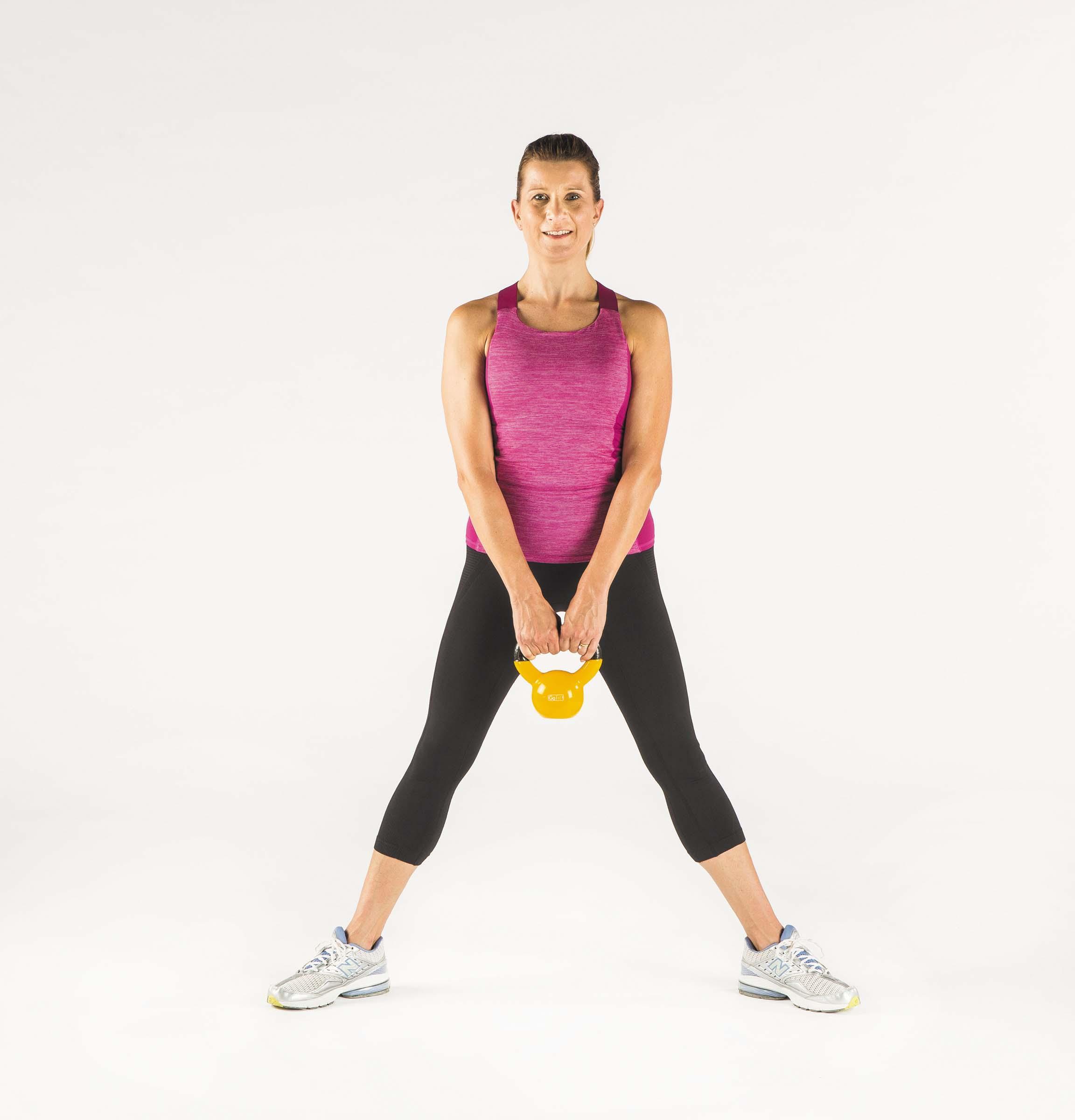
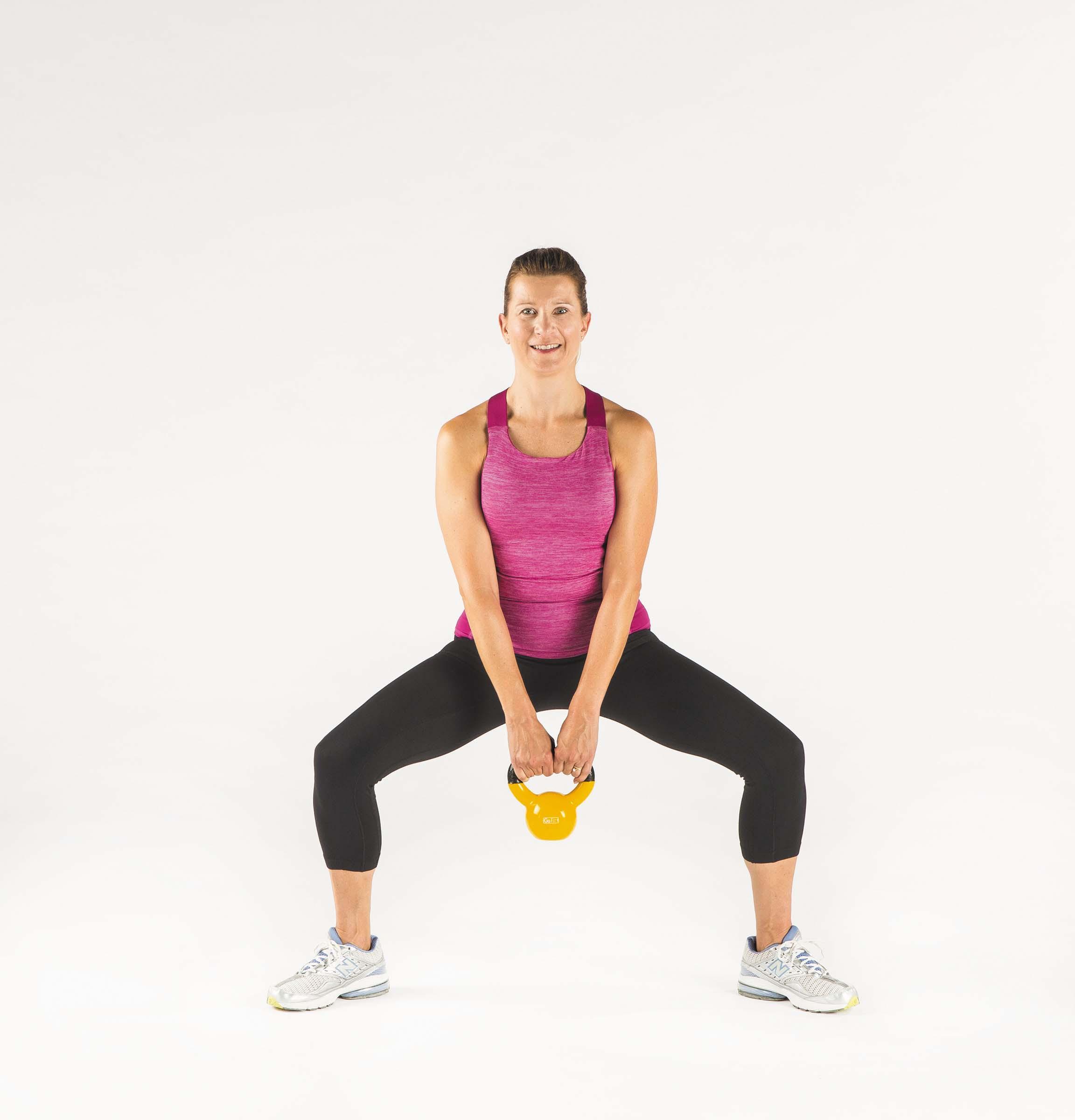
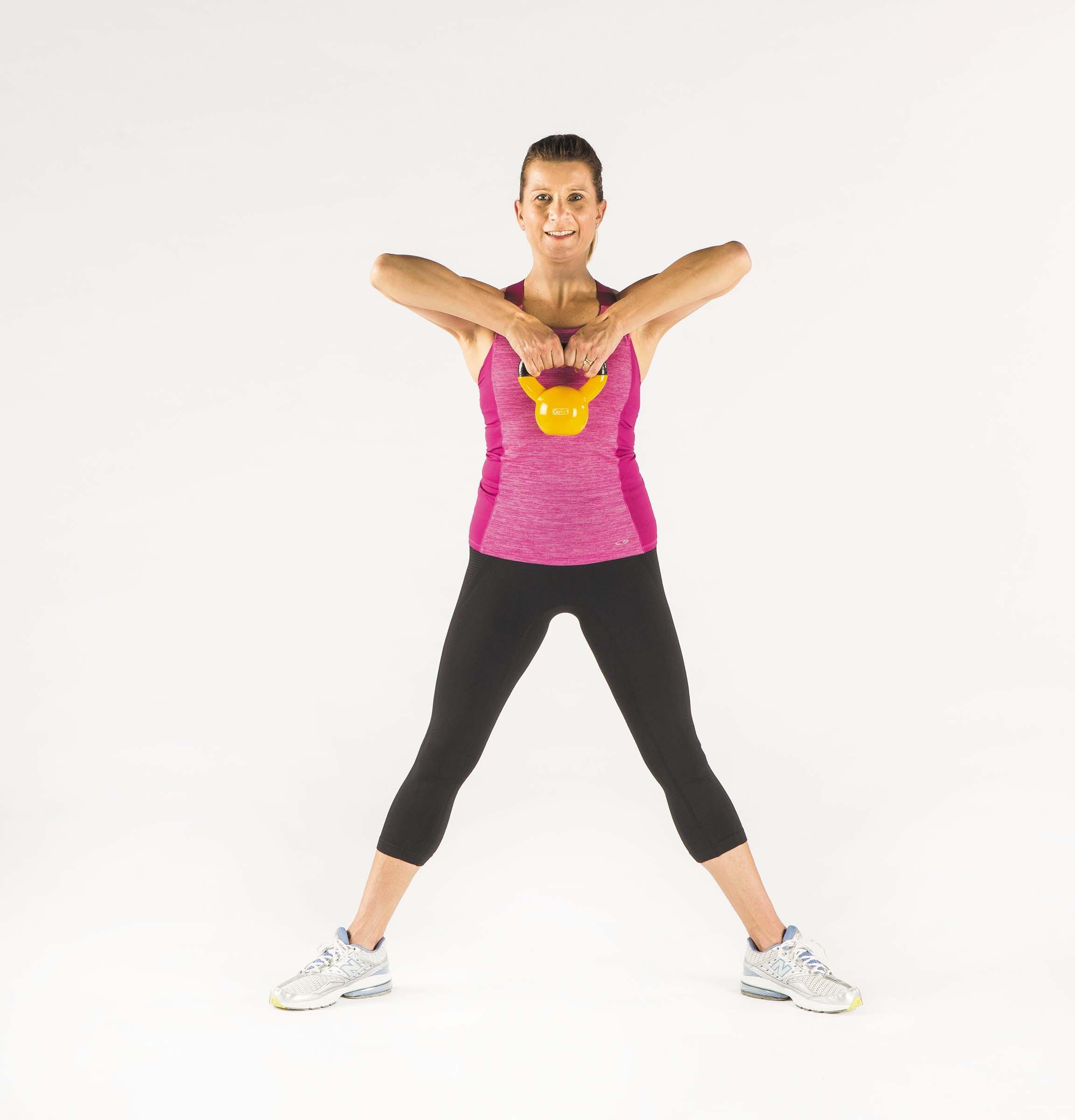
Work all your major muscles. To get a full-body workout, focus on the body's five main muscle groups: chest, back, arms, shoulders, and legs. To save time, do exercises that engage multiple muscles at once, such as the kettlebell squat and pull and the wood chop (below). For more examples, see Harvard Health Publishing's Special Health Report Strength and Power Training for All Ages.
Start low, go slow. Begin with easy, light weights (for example, 3- to 5-pound dumbbells) to practice your form. When you've mastered that, move up to heavier weights, using an amount that allows you to perform a set consisting of 10 to 12 reps while keeping good form. Do two sets of each exercise at each workout for a few weeks, then add another so you're doing three sets. Rest for 30 to 90 seconds between sets. (The more challenging the set, the longer you should rest.)
Don't overdo it. More is not always better when it comes to strength training. Two or three workouts per week produces the most muscle size and strength compared with either fewer or more sessions.
Progress by making small changes. Once you feel confident doing three sets of 12 exercises, how do you keep up the challenge? If you're using 5-pound weights, switching to 7.5 pounds is a 50% increase, which is a big jump, says Daryanani. Instead of doing all three sets at the new weight, do two sets with your 5-pound weights and one set with the 7.5. Do fewer reps with the heavier weights initially, adding one or two reps at each workout. Over time, do more sets (or more reps) with the heavier weight. "This gradual approach to adding weight is often less overwhelming and more empowering," says Daryanani.
Kettlebell squat and pull
Starting position: Stand with your feet more than shoulder-width apart and your toes pointing slightly out to the sides. Hold a kettlebell with both hands down in front of you. Movement: Bend your knees, lowering into a plie squat. Hold. As you stand up, bend your elbows out to the sides and pull the kettlebell up to about chest height. Hold again. This is one rep. |
Wood chop
Starting position: Stand with your feet about shoulder-width apart and hold a dumbbell with both hands. Hinge forward at your hips and bend your knees to sit back into a slight squat. Rotate your torso to the right and extend your arms to hold the dumbbell on the outside of your right knee. Movement: Straighten your legs to stand up as you rotate your torso to the left and raise the weight diagonally across your body and up to the left, above your shoulder, while keeping your arms extended. In a chopping motion, slowly bring the dumbbell down and across your body, returning to the starting position. This is one rep. Finish all reps, then repeat on the other side. This completes one set. |
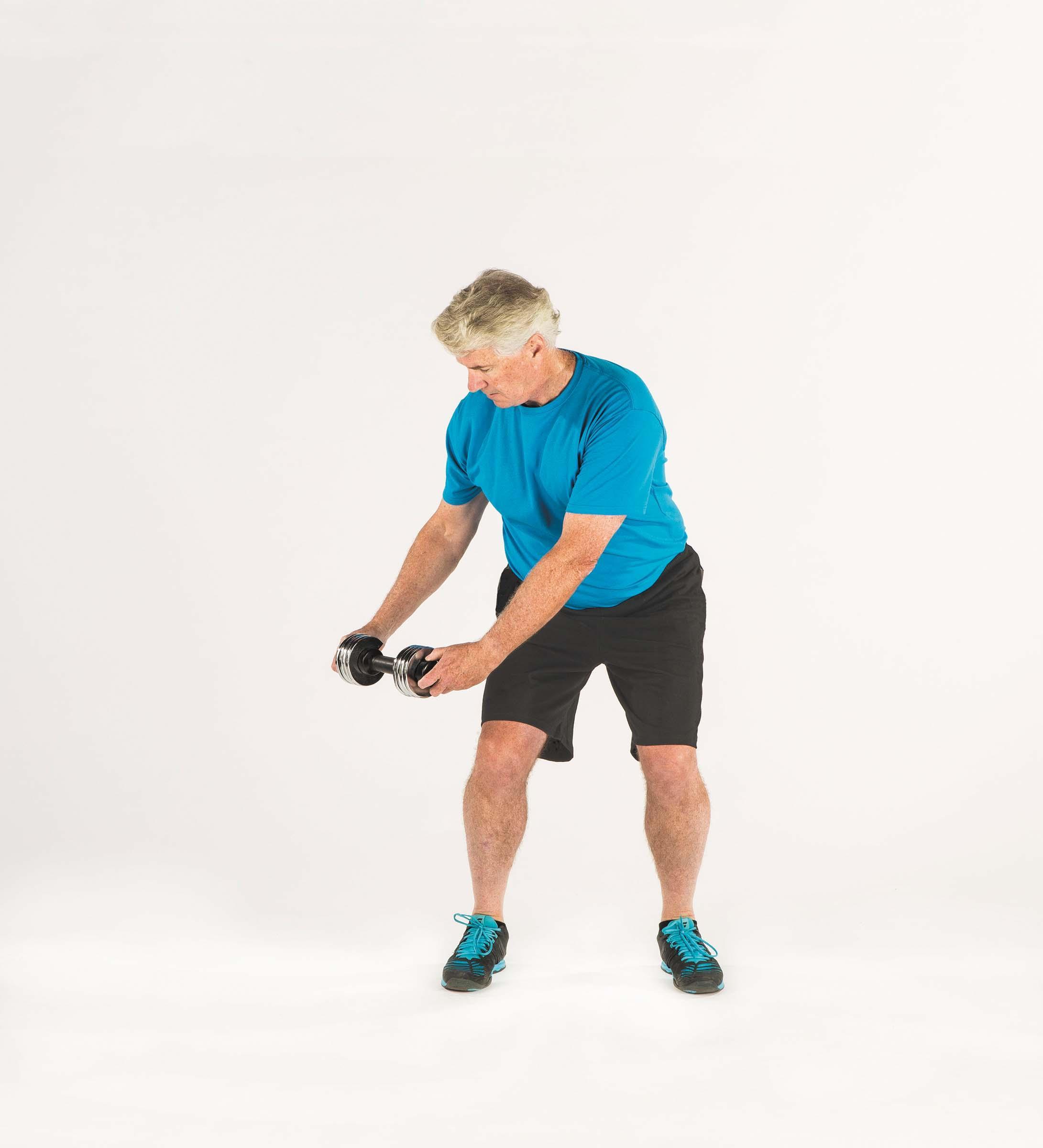
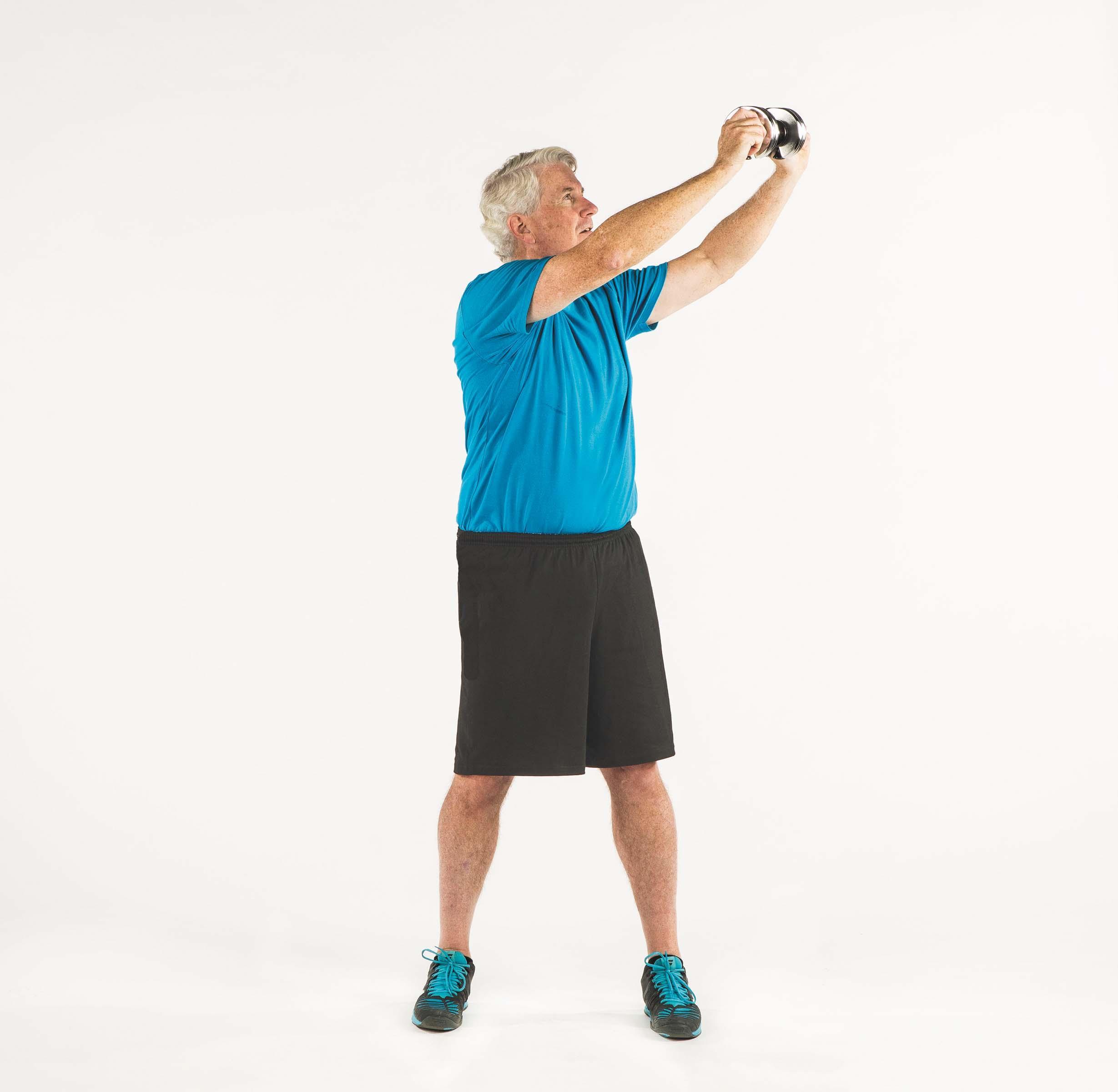
Image: © Peter Carruthers/Getty Images; exercise photos by Michael Carroll
About the Author

Julie Corliss, Executive Editor, Harvard Heart Letter
About the Reviewer

Vijay Daryanani, PT, MS, Contributor
Disclaimer:
As a service to our readers, Harvard Health Publishing provides access to our library of archived content. Please note the date of last review or update on all articles.
No content on this site, regardless of date, should ever be used as a substitute for direct medical advice from your doctor or other qualified clinician.


