Coping with dry eyes
Dry eye disease is extremely common, but many people miss or dismiss symptoms. Learn why that's a mistake and how you can treat it.
- Reviewed by Thomas Dohlman, MD, Contributor
Characterized by eyes that constantly feel irritated or tired, dry eye affects more than 16 million Americans, two-thirds of them women, according to the American Optometric Association. Despite its prevalence, however, dry eye is often dismissed as just part of getting older, says Dr. Thomas Dohlman, an ophthalmologist and eye surgeon at Harvard-affiliated Massachusetts Eye and Ear. But dry eye disease can significantly disrupt daily life and even threaten your vision.
Why do so many people neglect to seek help? "Maybe they don't even realize it's a condition," Dr. Dohlman says. "There are also degrees of severity. In some situations, people say their eyes feel a little gritty or dry or tired, and they assume it's not much more than normal aging."
Common symptoms and causes
Tears are essential to eye health, keeping the eyes moist, comfortable, and protected from irritants and bacteria. Dry eye disease is broken down into two types: In aqueous-deficient dry eye, the eyes don't produce enough tears. In evaporative dry eye (sometimes called meibomian gland dysfunction) there are enough tears, but they're unstable and evaporate too quickly. This is usually caused by a problem with the meibomian glands in the eyelids, which secrete a layer of oil that keeps the tears in place.
"Dry eye is sort of the big umbrella," Dr. Dohlman says. "But it's possible to have both types."
With either version, your eyes may feel
- gritty or sandy
- stinging
- burning
- scratchy
- tired
- sensitive to light.
Other symptoms are often missed - or dismissed, Dr. Dohlman says. Watery eyes, in particular, would seem to be the opposite problem, but can occur as a response to irritation.
Someone with dry eye may also experience blurry vision. "The tear film is responsible for a large part of the eye's refraction of light," he says. "In dry eye, the tear film isn't healthy, so vision can become less clear."
Risk factors
Aging does increase our risk of developing dry eye disease, and people who wear contact lenses or have had eye surgery are also more susceptible. Older women are especially affected as well, likely because hormonal changes after menopause can reduce tear production. Women also suffer disproportionately from autoimmune conditions such as Sjögren's syndrome or lupus, which also can leave the eyes feeling dry.
Medications frequently prescribed later in life, such as blood pressure drugs or antidepressants, can also worsen eye dryness in both sexes, Dr. Dohlman notes.
If you notice symptoms, Dr. Dohlman urges you not to ignore them. Left untreated, dry eye can have lasting implications, including eye infections and scratches, thinning, or scarring of the cornea (the clear surface of the eye). Diagnosing dry eye involves simple tests that are well worth the effort, he says.
"The problem can be more than just uncomfortable," Dr. Dohlman says. "In extreme examples, you can develop a perforation of the cornea."
Treatment options
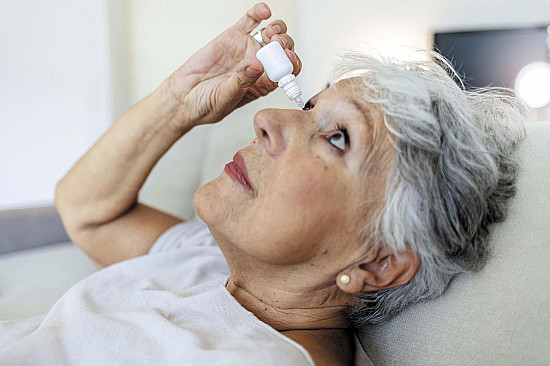
Dr. Dohlman calls artificial tears the "starting point and foundation" of dry eye treatment for the vast majority of people, who tend to deal with occasional or mild symptoms.
"Avoid drops that say, 'Get the red out.' Use ones that are labeled as artificial tears," he says. Caveat: if you find yourself reaching for them more than six times a day, buy a preservative-free version. "The standard kind has preservatives, and if you're using it a lot, it can irritate the eyes," he says.
For clogged meibomian glands, warm compresses can enable thickened oils in the glands to flow more freely and keep tears from evaporating as quickly. And taking breaks from screen use can help irritated eyes, encouraging you to blink more frequently, which keeps them moist.
For more severe symptoms, eye doctors sometimes prescribe anti-inflammatory eye drops. They can also place tiny, permanent or dissolvable inserts that work like a stopper in a sink to keep the tears from draining out, so they stay on the surface of the eye longer. Tear-stimulating medications and eye drops derived from your own blood serum are also options for extreme cases, as is a nasal spray called varenicline (Tyrvaya) to increase tear production.
"If you're using over-the-counter artificial tears regularly and not getting any relief - or things are getting worse - it's definitely worth talking to your eye doctor," Dr. Dohlman says.
Image: © Science Photo Library/Getty Images
About the Author

Maureen Salamon, Executive Editor, Harvard Women's Health Watch
About the Reviewer

Thomas Dohlman, MD, Contributor
Disclaimer:
As a service to our readers, Harvard Health Publishing provides access to our library of archived content. Please note the date of last review or update on all articles.
No content on this site, regardless of date, should ever be used as a substitute for direct medical advice from your doctor or other qualified clinician.