Neuroblastoma
- Reviewed by Howard E. LeWine, MD, Chief Medical Editor, Harvard Health Publishing; Editorial Advisory Board Member, Harvard Health Publishing
What is neuroblastoma?
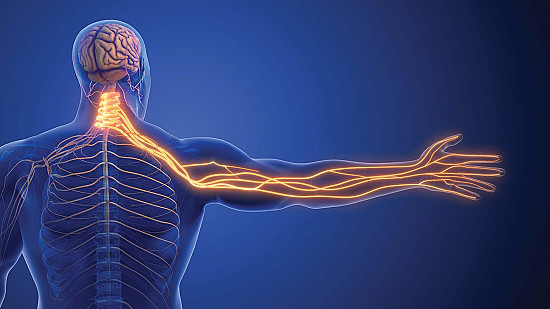
Neuroblastoma is a cancer that starts in primitive nerve cells. It affects infants (younger than a year old) and children. It rarely occurs after age 10. On average, children with the disease are diagnosed between 1 and 2 years old.
Neuroblastoma often starts in immature nerve cells in one of the adrenal glands. People have two adrenal glands, one on top of each kidney. These glands produce hormones that help control heart rate, blood pressure, blood sugar, and the way the body reacts to stress. When a neuroblastoma starts in an adrenal gland, it usually grows into a large, firm mass that presses on other organs.
The disease can develop in other areas of the body, including the nerves near the spine and in the abdomen, chest, neck, and pelvis.
As a neuroblastoma grows, it has the potential to spread (metastasize) to other areas, most often to the lymph nodes, bone marrow, bones, liver, and skin. In most cases of neuroblastoma, the cancer has already spread by the time it's diagnosed. Even so, these patients tend to do very well. There have been cases in which the tumors in these infants go away on their own, but this is not common.
There is no solid evidence that neuroblastoma is caused by toxic chemicals or something in the environment. It is sometimes inherited.
Symptoms of neuroblastoma
Symptoms of a neuroblastoma include
- a firm mass in the abdomen, with or without pain or discomfort
- a swollen belly
- trouble breathing (due to the mass pressing on the child's lungs)
- weight loss or inability to gain weight (called "failure to thrive")
- anemia (a low number of red blood cells)
- fever
- crankiness
- bone pain
- bulging eyes, dark circles around the eyes (andamp;ldquo;panda eyes"), or a drooping eyelid
- weakness, jerky movements, or difficulty walking
- high blood pressure
- rapid pulse
- reddening (flushing) of the skin
- sweating
- severe diarrhea.
Some of these symptoms are caused by hormones that the cancer secretes. These hormones can affect blood pressure and heart rate. They can also cause flushing of the skin and sweating.
In some cases, neuroblastoma is diagnosed by chance before it causes symptoms. It may be discovered when the child has an x-ray to check for another illness.
Diagnosing neuroblastoma
Your doctor will review your child's symptoms and examine him or her. He or she will order blood and urine tests to check for hormones and other chemicals the tumor secretes. X-rays may also be ordered. An ultrasound, computed tomography (CT) scan or magnetic resonance imaging (MRI) can give the doctor more information about the tumor. PET scanning may be recommended to determine the metabolic activity of the tumor.
If any of these tests show signs of cancer, your doctor will refer you to a medical center that treats cancer in children. There your child will have more tests, such as a biopsy, to confirm the diagnosis. During this procedure, a doctor removes a small piece of the tumor and examines it in a laboratory. The doctor may take a bone marrow sample, too.
A test called an MIBG (meta-iodobenzylguanidine) scan is often performed to determine how far a child's neuroblastoma has metastasized, or spread. This scan involves injecting a radioactive chemical into a vein, then scanning the child's body with a special camera one to three days later to see if the chemical has attached to neuroblastoma cells anywhere else in the body, such as the bones.
Expected duration of neuroblastoma
In most cases, a neuroblastoma will keep growing until it is treated. Without treatment, the cancer can spread to the bone marrow, bones, liver, skin, and other parts of the body. Rarely, a neuroblastoma will shrink over time without treatment. This usually happens in infants.
Preventing neuroblastoma
There is no way to prevent neuroblastoma. However, genetic factors seem to play a role in its development. People with a strong family history of cancer - especially childhood cancer - might want to ask about genetic testing before starting a family.
Treating neuroblastoma
Treatment depends on whether the child has a low, intermediate, or high risk cancer. Most important in determining the risk is how much the cancer has spread. This is called the tumor stage. Tumor stage is determined by how much of the tumor can be removed, and whether it has spread to nearby lymph nodes or to distant organs. Here are the stages of neuroblastoma:
- Localized neuroblastoma. This means that the tumor has not spread. If the tumor is localized and can be removed with surgery, no more treatment may be needed. If the tumor is localized but cannot be removed completely, the child will need chemotherapy. After that, the child may need a second surgery to remove any tumor that's still there. This may be followed by radiation therapy.
- Regional neuroblastoma. This means that cancer has spread to nearby lymph nodes, tissues, or organs but has not spread to distant areas. A regional neuroblastoma is treated with surgery and chemotherapy. Older children also may have radiation therapy.
- Disseminated neuroblastoma. This means that the cancer has spread to distant organs or tissues. Most children are diagnosed at this stage. This advanced stage can be treated with intensive chemotherapy. Surgery and radiation may be needed.
- Special neuroblastoma, or stage 4S neuroblastoma. This means that the tumor is fairly localized, but some cancer has spread to the liver, skin, or bone marrow. Stage 4S neuroblastoma is typically only diagnosed in infants younger than 12 months old. In most cases, they do very well. However, not all doctors agree on which treatment is best. Some give mild chemotherapy, but others choose a watch-and-wait approach.
Surgery, radiation, and several types of chemotherapy have proved effective in treating neuroblastoma. For higher-risk cases, a more aggressive treatment plan is often needed, including some of combination of surgery, chemotherapy, radiation, immunotherapy, targeted therapy, stem cell transplant, and retinoid therapy.
Children who receive radiation or chemotherapy will need to be followed by a doctor after treatment. That's because another cancer could develop. The doctor will also want to check for damage to bone marrow, the kidneys, heart, and other organs.
When to call a professional
Call your doctor if your child shows symptoms of neuroblastoma, especially a swollen belly. As with any tumor, it is important to seek advice from a cancer specialist who works with children. He or she will recommend the best therapy for your child's tumor and minimize the side effects of treatment. Treatment in a cancer center that focuses on children is usually best.
Prognosis
A genetic test may be able to estimate a child's prognosis. But in general, nearly all children with localized neuroblastoma or special neuroblastoma can be cured with treatment. If the tumor has spread, the outlook is not quite as good. However, most children respond to treatment even if the cancer is advanced. Children with special neuroblastoma may do very well without treatment, but they need to be followed by a specialist.
Additional info
National Cancer Institute (NCI)
https://www.cancer.gov/
American Cancer Society (ACS)
https://www.cancer.org/
American Academy of Pediatrics (AAP)
https://www.aap.org/
American Society of Clinical Oncology
https://www.asco.org/
About the Reviewer
Howard E. LeWine, MD, Chief Medical Editor, Harvard Health Publishing; Editorial Advisory Board Member, Harvard Health Publishing
Disclaimer:
As a service to our readers, Harvard Health Publishing provides access to our library of archived content. Please note the date of last review or update on all articles.
No content on this site, regardless of date, should ever be used as a substitute for direct medical advice from your doctor or other qualified clinician.