Hypertension: Controlling the "silent killer"
Chances are good that you or someone you know has high blood pressure, known medically as hypertension. An alarming one in three American adults—a total of 73 million people—has this disorder. If you are among them, you can take steps today to protect yourself from the damage it causes. Because hypertension has no symptoms or warning signs, yet can be so dangerous to your health and well-being, it has earned the nickname "the silent killer." Fortunately, high blood pressure is easy to detect and treat. Sometimes people can keep blood pressure in a healthy range simply by making lifestyle changes, such as losing weight, increasing activity, and eating more healthfully. In other cases medication is necessary, especially if you have diabetes, kidney disease, or other cardiac risks. Either way, reducing your blood pressure even a little bit can dramatically improve your health and life expectancy. This report lays out a step-by-step lifestyle program you can use to lower your blood pressure, including a special section on the best diet for keeping your blood pressure in check. It also covers blood pressure monitoring and medications. With the information available today, there is no need for hypertension to be a killer any longer.
Prepared by the editors of Harvard Health Publications in consultation with Randall M. Zusman, M.D., Associate Professor of Medicine, Harvard Medical School and Director, Division of Hypertension, Massachusetts General Hospital. 48 pages. (2009)
- Blood pressure basics.
- Understanding the numbers
- What does blood pressure measure?
- Types of hypertension
- Essential hypertension
- Isolated systolic hypertension.
- Secondary hypertension.
- White-coat hypertension
- Labile hypertension
- Resistant hypertension
- Malignant hypertension
- Hypertension during pregnancy
- Are you at risk for hypertension?
- Risk factors you can’t change
- Controllable risk factors
- How hypertension damages your health
- Stroke
- Coronary artery disease
- Dementia
- Kidney disease
- Eye damage
- Diagnosing hypertension
- Testing for hypertension
- Monitoring blood pressure at home
- Treating high blood pressure: An overview
- If your reading is normal
- Prehypertension
- Stage 1 hypertension
- Stage 2 hypertension
- Adopt healthier habits
- SPECIAL BONUS SECTION: A diet to lower your blood pressure
- Medications for treating hypertension
- Classes of hypertension drugs
- The right drug for the right person
- Resources
- Glossary
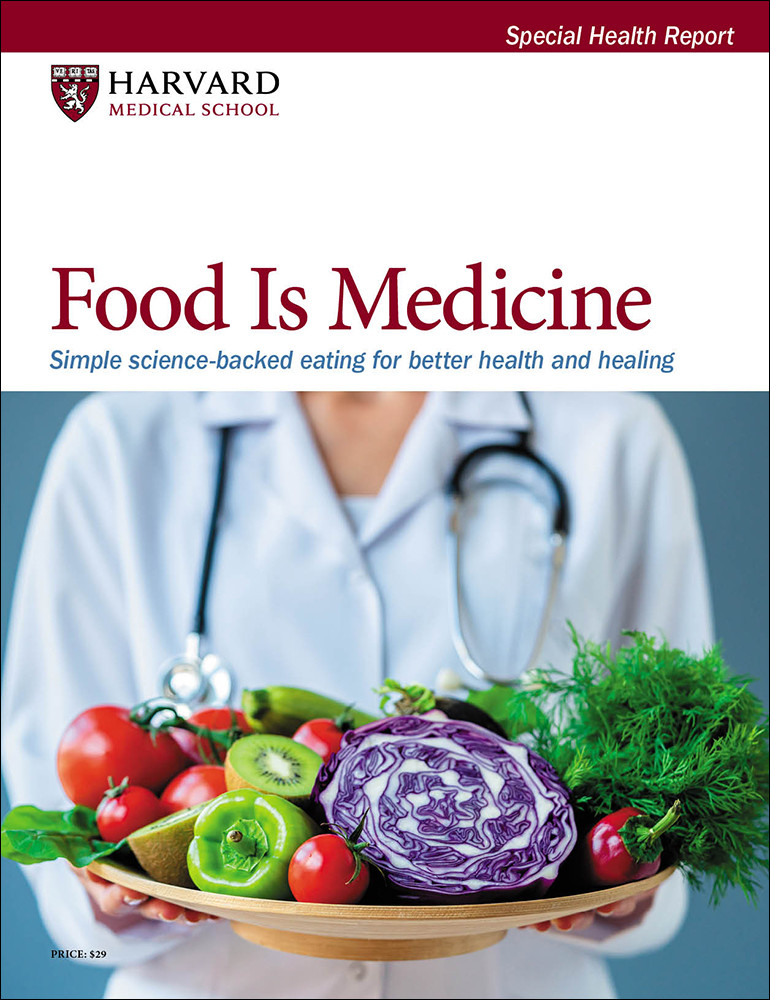
Stroll through your local supermarket and you’ll see at least one reason why hypertension is so common in modern America. When you venture away from the fresh meat, dairy, and produce sections, you’ll see shelf upon shelf stacked with salty, fatty, high-calorie foods. Among these items lie some of the prime offenders when it comes to excess sodium content. Even seemingly innocuous choices such as prepared spaghetti sauce or cream of chicken soup can cost you nearly half of your recommended daily sodium intake. After decades of research, scientists have concluded that the typical American diet is a recipe for hypertension and cardiovascular disease. But the good news is that relatively simple changes in your eating style—less salt and saturated fat, more fruits and vegetables—can make a pronounced difference in your heart health.
How the DASH diet helps
The first full-scale examination of the effects of diet on blood pressure occurred in the landmark Dietary Approaches to Stop Hypertension (DASH) study, published in The New England Journal of Medicine in 1997. This research offered the encouraging news that diet can help control blood pressure. In fact, the results were so promising that the federal guidelines recommend that all Americans—not just those with hypertension—follow the DASH diet. Subsequent research—in particular, the 2005 OmniHeart study—has elaborated on the DASH eating plan, but a low-fat diet rich in fruits, vegetables, whole grains, and low-fat dairy products remains a centerpiece for blood pressure control.
In the DASH study, 459 volunteers were randomly assigned one of three diets. One was based on what most Americans eat, with 37% of calories from fat. The second was a similar regimen with fruits and vegetables added. The third was a “combination” diet (the DASH diet), containing 27% of calories from fat, plus plenty of fruits and vegetables, whole grains, low-fat or nonfat dairy products, and small amounts of meat, fish, poultry, and nuts.
After following the DASH plan for eight weeks, participants with hypertension enjoyed average reductions of 11.4 mm Hg in systolic pressure and 5.5 mm Hg in diastolic pressure. These results are comparable to the effects of some antihypertensive drugs. Participants with borderline high blood pressure experienced improvements as well, suggesting that the DASH diet may keep some people from developing hypertension in the first place. The second diet, which was higher in fats but also rich in fruits and vegetables, also lowered blood pressure, although not as much as the DASH plan. All reductions occurred without people changing their salt intake, alcohol consumption, or weight—factors known to influence blood pressure.
A follow-up analysis of the trial’s results found that the DASH diet reduced blood pressures in virtually all groups tested regardless of such factors as age, sex, race, and hypertension status. Its effects were most pronounced, though, in African Americans and people with hypertension.
Researchers do not attribute the blood pressure reductions of the DASH trial to any single nutrient. Compared with the typical American diet, the DASH eating plan had a relatively higher calcium content and less salt, total fat, saturated fat, and cholesterol. It also had 173% more magnesium, 150% more potassium, 240% more fiber, and 30% more protein.