
Sacroiliac joint pain: Causes, symptoms, and exercises that help

What causes knee pain: How doctors make a diagnosis

Study: At-home colorectal cancer screening may significantly cut colon cancer deaths

Where you carry excess weight matters in predicting heart disease risk

Tai chi walking: What is it and does it work?

Fatty liver disease: Should you be tested?

Weight-loss drug may lower risk of heart attacks and infections

Testosterone therapy without evidence of deficiency may boost heart risk

Even a little exercise linked with lower stroke risk in people with afib

FDA approves first mRNA-based flu vaccine
Strength training Archive
Articles

Don't take back pain sitting down
Pain when sitting can be caused by a number of common problems, including problems with the discs that cushion the vertebrae in the back. Lying down can help the pain temporarily, but the goal should be to get up and move as soon as possible. People should see a doctor if your pain is extremely severe, if it comes back after getting better, or if it occurred after an injury.

Step up your walking game
Most people typically get around 3,000 to 4,000 steps per day doing things such as household chores, going to the mailbox, or grocery shopping. But people who walk 8,000 steps per day (about 4 miles in total) may live longer than those who walk just 4,000 steps per day—and walking speed doesn't seem to matter. People who walk 12,000 steps per day may live even longer than those who take 8,000 steps. But the added benefit was small, and walking even more may not make a difference.
Why you should move — even just a little — throughout the day
People who sit for long, uninterrupted periods of time may increase their risk of cardiovascular disease, even if they get the recommended 30 minutes of daily exercise. Sedentary behavior appears to make people more prone to developing insulin resistance and inflammation, which are key players in the buildup of fatty plaque inside arteries. Experts say people should add short bursts of movement to their daily routine to break up long periods of sitting.

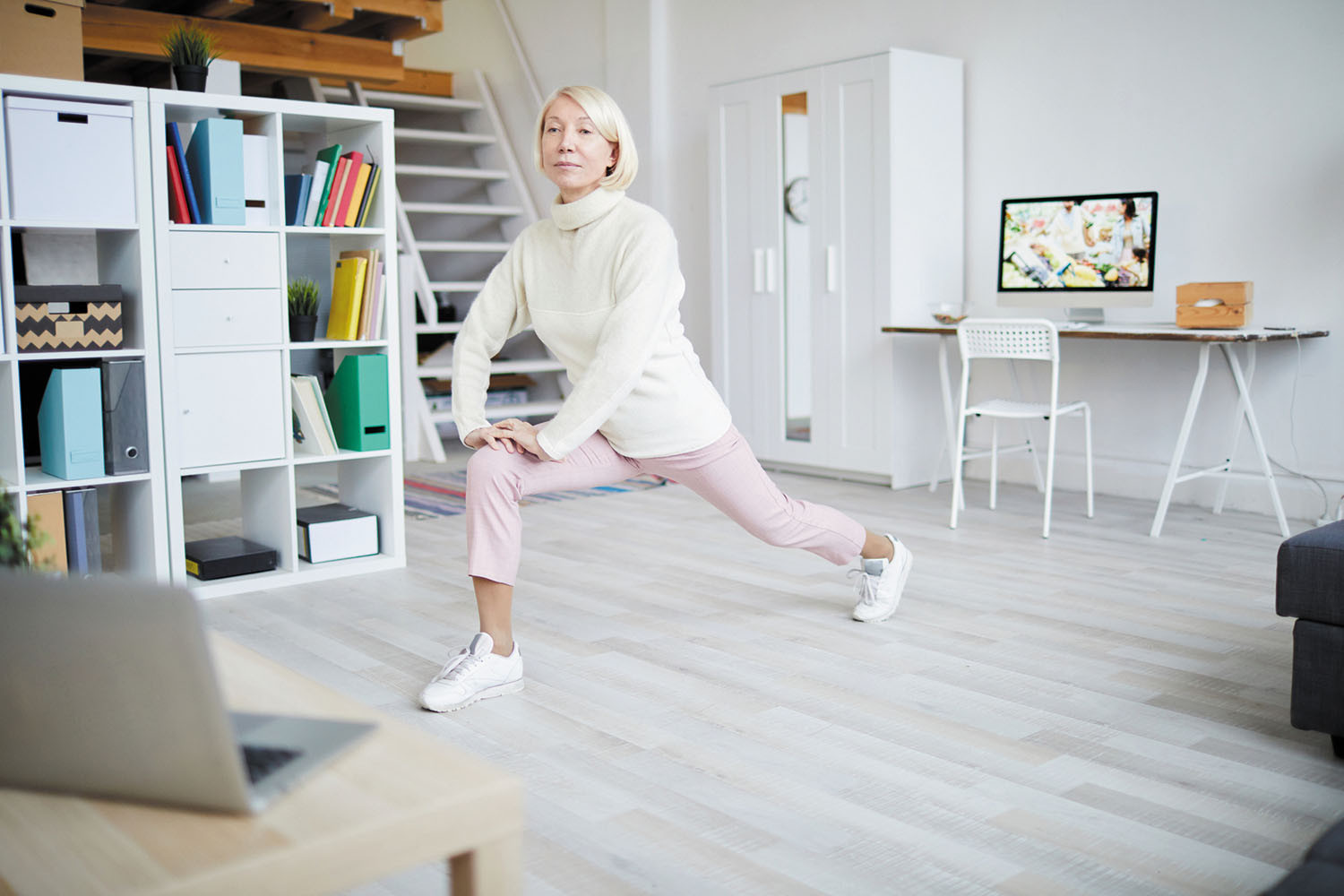
Move of the month: Stationary lunge
Lunges, which strengthen the entire lower body, are a good example of a functional exercise. These exercises mimic everyday actions (such as picking something up off the floor), thereby improving physical functioning throughout the day.

Try this: Take a step back
Performing reverse lunges helps develop key hip muscles for better stability and teaches how to better control backward movement and coordination.

Exercise may improve atrial fibrillation
A 2023 study found that for people with atrial fibrillation, a program of supervised and home-based exercise may reduce the severity and frequency of their symptoms.

Power up your walking routine
Walking has long been the most popular form of aerobic exercise among American adults. Though it offers cardiovascular benefits, walking can fall short because it doesn't incorporate other body areas besides the legs. People can power up their walking regimen by using walking poles, alternating walking with high-intensity intervals or resistance exercises, or strapping on a weighted backpack. Listening to music, podcasts, or books on tape can make exercise seem easier.

Exercises to try in the pool right now
Exercising in a pool provides an effective workout that is easy on the joints. Exercises can be made easier if they're done in slightly deeper water, where there's more buoyancy and support. They can be made harder by moving faster and holding fingers together like paddles. When starting a water workout, experts advise taking it easy at first. People should start with easier exercises and shorter durations, or do less than they feel up to. If they're not sore the next day, they'll know they did the right amount of exercise. From there, they can gradually increase the intensity.

Mud runs: Dirty, challenging, next-level fun
Mud runs are outdoor team events that take the form of an obstacle-course competition and promise plenty of good, clean (dirt-covered) fun for participants. Competing in a mud race is physically challenging, but can deliver many health benefits for those who train for them.

Health warnings on exercise equipment: Should you worry?
If you work out at a gym, you may notice warnings on the exercise equipment. For most of us, these warnings should not be cause for alarm, although people with certain health conditions should be cautious about exercising.
Sacroiliac joint pain: Causes, symptoms, and exercises that help
What causes knee pain: How doctors make a diagnosis
Study: At-home colorectal cancer screening may significantly cut colon cancer deaths
Where you carry excess weight matters in predicting heart disease risk
Tai chi walking: What is it and does it work?
Fatty liver disease: Should you be tested?
Weight-loss drug may lower risk of heart attacks and infections
Testosterone therapy without evidence of deficiency may boost heart risk
Even a little exercise linked with lower stroke risk in people with afib
FDA approves first mRNA-based flu vaccine
Free Healthbeat Signup
Get the latest in health news delivered to your inbox!
Sign Up
