

Fatty liver disease: Should you be tested?

Weight-loss drug may lower risk of heart attacks and infections

Testosterone therapy without evidence of deficiency may boost heart risk

Even a little exercise linked with lower stroke risk in people with afib

Antihistamines may not offer meaningful relief from eczema symptoms

What to eat on the DASH diet

Tricep workouts you can do at home

FDA approves first mRNA-based flu vaccine

Migraine: How it's diagnosed and what that means

Mindfulness practices to reduce stress and improve focus
Headache and migraine Archive
Articles

Brain-based devices: How well do they work?
Brain-based devices claim to offer all kinds of enhancements and improvements, but how can consumers interested in such a device separate legitimate science from mere hype?

Is fibromyalgia hereditary?
Ask the doctors
Q. My mother has fibromyalgia, and I think I'm starting to experience similar symptoms. Is fibromyalgia hereditary?
A. Yes. Fibromyalgia, a chronic pain condition that affects some six million or more Americans, can run in families. In fact, one of the most important risk factors for fibromyalgia is a family history of the disorder. Fibromyalgia is sometimes known to affect multiple members of the same family. Your risk rises if you have a first-degree relative — a parent, a brother, sister, or child — with the condition.

Is exercise good for arthritis?
Ask the doctors
Q. I have arthritis and my doctor recommended I start exercising, but I'm worried it will make my pain worse. Should I follow her advice?
A. Yes, your doctor is right. Although it may seem counterintuitive to move more when your joints hurt, studies have shown that exercise can reduce arthritis-related pain, fatigue, and stiffness. Exercise is also important for your overall health and can help reduce your risk of heart disease, obesity, and diabetes.

4 stretches to keep your shoulders in shape
Keeping your shoulder muscles flexible will help prevent injury.
The shoulder is the body's most complicated joint. It's where the ends of the collarbone, upper arm bone, and shoulder blade meet. And it's prone to arthritis (a wearing away of the cartilage between the bones), as well as tears or tendinitis (inflammation) in the rotator cuff — the group of tendons that helps you raise and rotate your arm. Shoulder pain can keep you from being able to raise your arms to get dressed, or reach up to a cupboard or out to a door.
But an easy way to stave off shoulder problems is to regularly stretch the muscles that support the joints. "The muscles need to be long and flexible to stay healthy. You're more vulnerable to injury when your shoulder muscles are tight and restricted," explains Clare Safran-Norton, clinical supervisor of rehabilitation services at Harvard-affiliated Brigham and Women's Hospital.
Chest pain that's not a heart attack
Ask the doctor
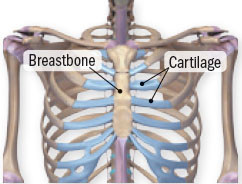
Q. My brother went to the emergency room because he thought he was having a heart attack. Instead, he was diagnosed with costochondritis. What is that?
A. Costochondritis is caused by inflammation of the cartilage between the ribs and the breastbone, called the costosternal joints (see illustration). This uncommon condition can trigger a stabbing, aching pain that's often mistaken for a heart attack.

Taming carpal tunnel syndrome
Inside your wrist, a slick tunnel passes through the carpal bones. The nerves and tendons of the wrist pass through this space, called the carpal tunnel. One of these nerves, the median nerve, controls sensations in the palm side of the thumb, the index and middle fingers, and half of the ring finger. It also transmits the impulses to certain hand muscles that allow the fingers and thumb to move. Carpal tunnel syndrome occurs when this nerve becomes irritated or squeezed. Symptoms include numbness, tingling, pain, or weakness in the hand of the affected wrist.
Because the carpal tunnel starts out narrow, it doesn't take much to aggravate or compress the median nerve. A number of conditions can make a person more prone to carpal tunnel syndrome. These include:

Great exercise that's easier on the joints
Aquatic therapy can reduce pain and pressure while providing an effective workout.
When you're struggling with joint pain, gravity can make exercise an unpleasant experience. But exercising in water, also known as aquatic therapy, can change all that. "It enables you to do many of the same exercises you'd do on land without applying the same force on your joints," says Gayle Olson, a certified athletic trainer at the Sports Performance Center at Harvard-affiliated Massachusetts General Hospital.

Thunderclap headache: The “worst headache of my life”
A thunderclap headache is a sudden, extremely severe headache associated with several possible causes. It’s considered a medical emergency and should be treated as soon as possible.


Fatty liver disease: Should you be tested?
Weight-loss drug may lower risk of heart attacks and infections
Testosterone therapy without evidence of deficiency may boost heart risk
Even a little exercise linked with lower stroke risk in people with afib
Antihistamines may not offer meaningful relief from eczema symptoms
What to eat on the DASH diet
Tricep workouts you can do at home
FDA approves first mRNA-based flu vaccine
Migraine: How it's diagnosed and what that means
Mindfulness practices to reduce stress and improve focus
Free Healthbeat Signup
Get the latest in health news delivered to your inbox!
Sign Up
