

Healing after food poisoning

What is tempeh? Benefits, nutrition, and how to use it

Light exposure at night may raise risk for heart disease

Whole grains may improve several heart risk factors at once

A lumbar belt may help ease low back pain

Children of centenarians may stay healthier and live longer too, study finds

Signs of pneumonia: Sometimes vague and unexpected

The surprising link between ovarian cancer and the fallopian tubes

Using a vibration plate: What it can — and can't — do for your body

People who walk more or walk faster live longer, study finds
Healthy eating, diets & weight loss
- Reviewed by Nancy Oliveira, MS, RD, LDN, CDCES, Contributor; Editorial Advisory Board Member, Harvard Health Publishing
It’s no secret that America has a weight problem. According to the CDC, about 72% of U.S. adults ages 20 and older are either overweight or have obesity. Americans spend approximately $2.1 billion each year on weight-loss dietary supplements alone. That suggests that losing weight is not easy and can be a complex condition that needs better understanding.
The most basic theory is that creating a calorie deficit by consuming fewer calories, increasing physical activity, or both will produce weight loss. It’s true that what you eat and how you move matters, but other key factors like genes, age, other medical conditions, stress, and sleep quality also directly affect your ability to lose weight.
A successful weight management plan includes a healthy eating pattern, daily physical activity in some form, stress management, good sleep hygiene, and realistic expectations that can be maintained over time.
There are two keys to success when it comes to weight loss:
- Find an approach that works for you, specifically one that makes you feel good and keeps you motivated.
- Take your time, as sustainable weight loss happens slowly but steadily.
Before getting started, make sure you know exactly what you’re trying to achieve. Ask yourself, “Why do I want to lose weight?” and “How much weight do I need to lose to feel better?” Body mass index (BMI), which is calculated using your height and weight, may provide some context. However, BMI is only a general screening tool and should be considered alongside factors such as waist circumference, overall health, and lifestyle. You may wish to discuss these questions with your doctor. Often people say they want to return to their college weight, for example, which may not be realistic (or even necessary) 20 to 30 years later.
From there:
- Set achievable goals in increments.
- Introduce gradual lifestyle changes.
- Track your progress so you can make adjustments as needed.
Reaching weight loss goals isn’t just about eating less, it’s also about eating smarter and putting together an eating plan that works for you.
What's the healthiest diet?
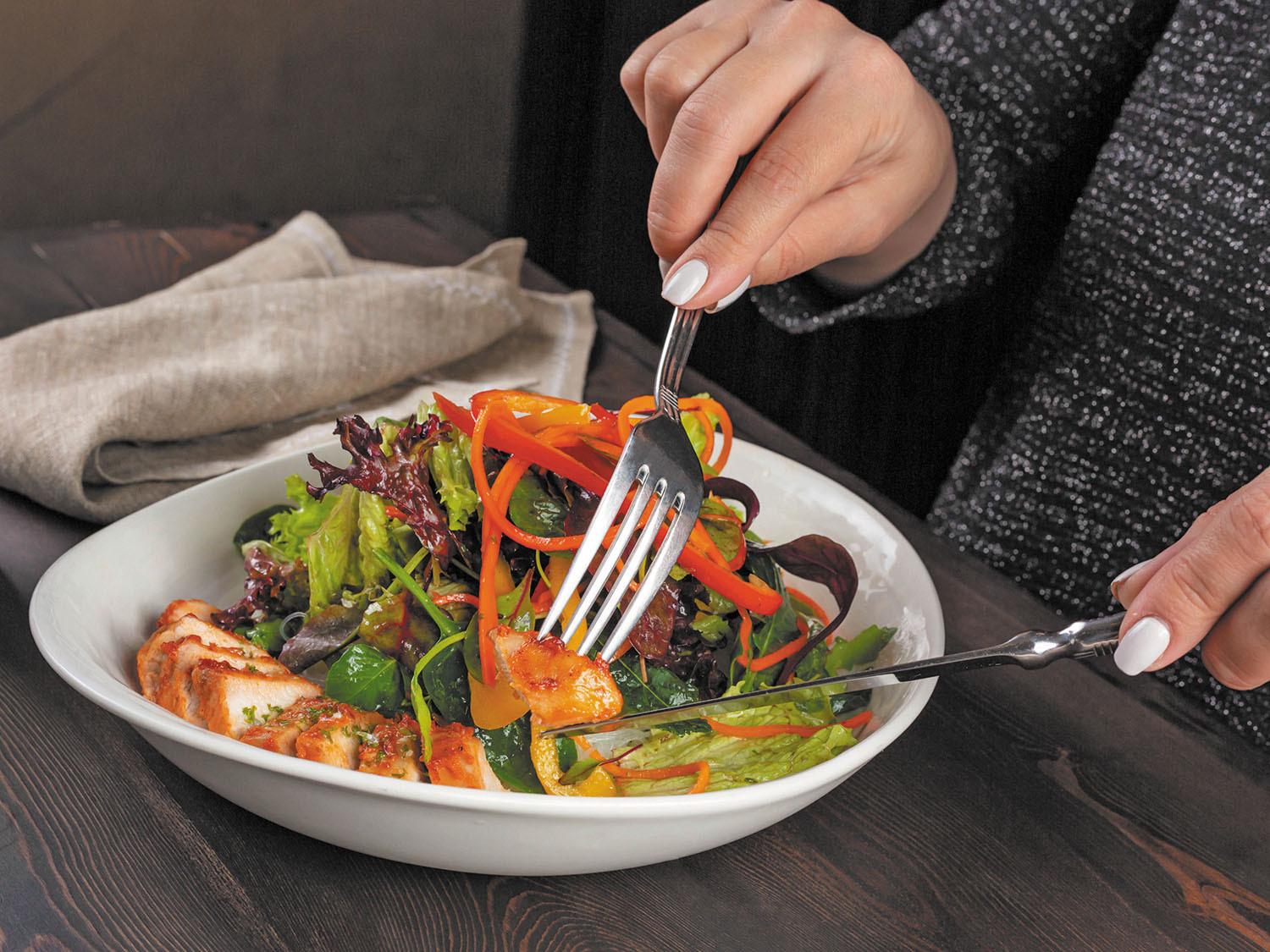
There is no single diet that nutritionists have deemed “the healthiest.” However, there are several styles of eating that experts either have designed for optimal health or have observed to be healthy when consumed traditionally by different people around the world. Such styles of eating tend to have a few things in common: they tend to be plant-based diets; they also emphasize healthy fats, lean proteins, fiber-rich foods, minimal simple sugars, and low sodium; and they favor natural foods over the highly processed fare typical of much of the Western diet.
For example, the Mediterranean diet gets its name from the foods available to various cultures located around the Mediterranean Sea. It heavily emphasizes minimally processed fruits, vegetables, legumes, nuts, and whole grains. It contains moderate amounts of yogurt, cheese, poultry, and fish. Olive oil is used as the primary cooking fat. Red meat and foods with added sugars are eaten only sparingly. Besides being an effective weight loss method, eating a Mediterranean-style diet is linked to a lower risk of heart disease, diabetes, depression, and some forms of cancer.
Experts developed the DASH diet (Dietary Approaches to Stop Hypertension) specifically as a heart-healthy regimen. The combination of food types in the diet seem to work especially well together to lower blood pressure and decrease heart failure risk. The key features of DASH are low cholesterol and saturated fats; lots of magnesium, calcium, fiber, and potassium; and little to no red meat and sugar. Unsurprisingly, that equates to a list of foods similar to those of the Mediterranean diet: whole grains, vegetables, fruits, fish, poultry, nuts, and olive oil.
As its name implies, the MIND diet (Mediterranean-DASH diet Intervention for Neurodegenerative Delay) was designed by doctors to take elements from the Mediterranean and DASH diets that seemed to provide benefits to brain health and stave off dementia and cognitive decline. In practice, it is very similar to both the Mediterranean and DASH diets, but it puts stronger emphasis on leafy green vegetables and berries, and less emphasis on fruit and dairy.
Traditional dietary patterns from other parts of Europe — most notably the Nordic diet and Atlantic diet — have also emerged as both a weight-loss and health-maintenance diet. Based on Scandinavian eating patterns, the Nordic diet is heavy on fish, apples, pears, whole grains such as rye and oats, and cold-climate vegetables including cabbage, carrots, and cauliflower while limiting red meat, saturated fats, and highly processed foods. The Atlantic diet, typical of northwestern Spain and Portugal, also emphasizes fish and vegetables but includes more legumes, potatoes, and fresh dairy products, and makes greater use of olive oil and moderate wine consumption.
What do all of these diets have in common? They are all:
- good for your heart
- consist of minimally processed foods
- contain plenty of plant-based dishes.
Eating for your health — especially your heart health — by adopting elements from these diets is a smart way to lose weight. All of these diets emphasize nutrient-dense meals and infrequent between-meal snacking, especially low-nutrient, highly processed snacks that are readily available in the Western world.
What's the best diet for weight loss?
People who have lost weight — and kept it off — usually have made a permanent shift toward healthier eating habits and consistent portion control. Simply replacing unhealthy foods with healthy ones — not for a few weeks, but forever — will help you achieve weight loss while also offering numerous other benefits. So a better question might be, “What is a healthy eating pattern and what does it look like?”
A healthy diet favors minimally processed foods over prepackaged meals and snacks. It is balanced, meaning that it provides your body with all the nutrients and minerals it needs to function best. Basic guidelines to follow:
- Emphasize plant-based foods, especially fruits and vegetables, with most meals and snacks. Unseasoned frozen fruits and vegetables are good choices if fresh are not available or in season.
- Include lean protein with each meal.
- Limit added sugars and salt.
- Incorporate healthy fats including oily fish, olive oil and other plant oils, nuts, and seeds.
Examples of nutrient-dense meals for weight loss include:
- Breakfast: A small bowl of steel-cut oats with sliced strawberries and walnuts with nonfat milk.
- Lunch: A turkey sandwich on whole-grain bread or wrap with vegetables and an olive oil and vinegar dressing.
- Dinner: Salmon steak on a bed of spinach.
You don’t have to cut out snacks, either. Nutritious snacks for weight loss include plain roasted almonds or pistachios, string cheese with an apple, plain Greek yogurt, or a banana with peanut butter. If you’re craving dessert after dinner, keep portions small, remembering it is a special treat to be savored slowly.
Before you begin your weight-loss journey, do some brainstorming about the kinds of healthy foods you enjoy so that you can have lots of choices as you plan your meals and snacks. Remember that the best diet is the one you’ll stick to, so don’t rush out and buy a bunch of “health foods” that you know you’ll never eat.
If you continue to have difficulty losing weight, speak with your health care provider about additional weight management options based on your medical history and unique needs.
What is intermittent fasting?
You’ve probably heard some inspiring success stories about intermittent fasting. But is fasting healthy, and does intermittent fasting work?
Fasting — abstaining from eating for some period of time — is an ancient practice that is safe when not taken to extremes. Traditionally, the benefits of fasting have been both spiritual and physical. People who fast for religious reasons often report a stronger focus on spiritual matters during the fast. Physically, a simple fast lowers blood sugar, reduces inflammation, improves metabolism, clears out toxins from damaged cells, and has been linked to lower risk of cancer, reduced pain from arthritis, and enhanced brain function.
One type of intermittent fasting is called time-restricted eating (TRE), which divides one’s time between “eating windows” and periods of abstention on a regular basis. A common TRE schedule might restrict eating to between 7:00 a.m. to 3:00 p.m., with the remaining 16 hours of the day spent fasting. But there is no specific, prescribed schedule. Some people have more or less generous eating windows, setting the rule that they will not eat after, say, 8:00 p.m. — or, on the considerably less generous side, only allowing themselves to eat every other day. There is minimal, if any, evidence showing benefits of long-term full fasting (less than 400 calories every other day), and it carries risk of nutrient deficiencies.
The science behind intermittent fasting is based on altering the body’s metabolism. During a period without eating, insulin levels drop to the point that the body begins burning fat for fuel. Additionally, the thinking goes, by slowing the body’s metabolism, you cause your appetite to drop off and thus will consume fewer calories when you resume eating.
Some studies have demonstrated short-term benefits of intermittent fasting for weight loss. However, it’s not clear that it is any more effective than simply restricting calories and following a normal eating schedule. One possible reason for the success of intermittent fasting is that most practitioners have quit the habit of eating during the late evening and night hours. Restricting eating to earlier in the day aligns better with our bodies’ circadian rhythms and is less likely to cause us to store our food in fat cells. Since intermittent fasting can be difficult for some people to adhere to, a wise alternative might be to consume a portion-controlled Mediterranean diet and to wind down the day’s eating by early evening.
There are certain people who should not try intermittent fasting without first checking with their doctor, such those with diabetes or heart disease.
Intermittent fasting can be a lifestyle-intensive diet, making it challenging to maintain in the context of shared meals and eating occasions. If the rest of your family is eating while you’re fasting, you might be tempted to indulge or follow the family-meal ritual. If your job requires you to dine with clients or colleagues, you’ll find an intermittent fasting schedule difficult to maintain. Remember that the best healthy eating plan considers what is realistic for your lifestyle so you can stick with it.
What's a high-fat weight loss diet?
It sounds counterintuitive, but many people find success losing weight, at least initially, by eating more fat, not less. Called a ketogenic or Keto diet, this method requires shifting the main source of calories over to fatty foods — between 75% and 90% of what you eat, with only 10% to 20% of your calories coming from protein and a mere 5% from carbohydrates. The theory is that by eating so many healthy fats and restricting carbohydrates, you enter an altered metabolic state in which you force your body to begin relying on fat for energy, burning away your fat stores instead of sugar for fuel.
Research does show that keto is an effective way to jump-start weight loss and improve blood-sugar levels. However, it is hard to maintain, and to date we are lacking long-term studies that show it to be a sustainable eating pattern for keeping weight off.
What does a Healthy Eating Plate look like?
Because both weight loss and overall health are tied to some basic eating patterns, the Harvard Healthy Eating Plate was developed as a model for meal planning and an overall balanced diet.
Imagine a round dinner plate with a line running vertically down its center dividing it evenly in two. One half of the plate should be taken up by equal portions of whole grains (not refined grains like white bread and white rice) and healthy proteins such as fish, nuts, beans, and poultry (not red meat or processed meats). Two-thirds of the other half should be filled with vegetables, with the remaining portion consisting of fruit. Try to inject a lot of variety into this half of your plate (or half of your diet): eat fruits in a variety of colors and vegetables of all types (but don’t count potatoes or French fries as vegetables).
To one side of the plate, picture a glass of water, since that’s the best drink for weight loss and for overall health (at some meals you can substitute coffee or tea with little to no sugar). Don’t drink more than a serving or two of milk each day.
To the other side of the plate, imagine a vessel containing healthy oils such as olive oil or other plant oil. Use it for cooking or at the table instead of butter.
Remember the Harvard Healthy Eating Plate when you’re contemplating what to eat for a specific meal, grocery shopping, or strategizing about how to lose weight and keep it off. Adhering to its guidelines will optimize your health and support maintaining a desirable body weight.
Healing after food poisoning
What is tempeh? Benefits, nutrition, and how to use it
Light exposure at night may raise risk for heart disease
Whole grains may improve several heart risk factors at once
A lumbar belt may help ease low back pain
Children of centenarians may stay healthier and live longer too, study finds
Signs of pneumonia: Sometimes vague and unexpected
The surprising link between ovarian cancer and the fallopian tubes
Using a vibration plate: What it can — and can't — do for your body
People who walk more or walk faster live longer, study finds
Free Healthbeat Signup
Get the latest in health news delivered to your inbox!
Sign Up
