

CoQ10: Should you take this popular supplement if you're on a statin?

Microplastics: A hidden health threat?

Oat vs. dairy milk: Nutrition, benefits, and downsides

What is tempeh? Benefits, nutrition, and how to use it

Healing after food poisoning

Children of centenarians may stay healthier and live longer too, study finds

Light exposure at night may raise risk for heart disease

A lumbar belt may help ease low back pain

Whole grains may improve several heart risk factors at once

Signs of pneumonia: Sometimes vague and unexpected
Caregiving Archive
Articles

Two options for replacing lost teeth
Missing teeth can lead to additional dental woes, but implants and bridges can restore your smile and improve your dental—and overall—health.
Few of us will make it through life with a full set of 32 teeth. By age 50, the average American has lost 12 permanent teeth to decay, gum disease, or injury. Losing teeth not only affects your smile, but can also alter your bite and weaken your jawbone as well.
There is little reason to let that happen. Advances in prosthetic dentistry have made it possible to fill the spaces with bridges and implants that are more functional and attractive than the teeth they have replaced. "Your mouth is the first organ of your digestive system. Missing teeth affect not just your appearance but your overall health," says Dr. German Gallucci, executive director of the Harvard Dental Center. "We view dentistry as an integral part of comprehensive health care."

Getting through grief
At a time of loss, it's important to focus on maintaining your health and getting the support you need.
Image: natalie_broad/iStock
Losing a family member, a close friend, or even a beloved pet can be devastating. All the small details of daily life—getting out of bed, making meals, going to appointments, taking care of children, handling responsibilities at work—may seem monumentally hard or inconsequential. Yet, even as you grieve, you've probably been reminded that life must go on. But working through the emotional pain can be difficult, particularly during the holidays, when you may feel you are supposed to be celebrating.
The normal process of grieving
Help with coping
If you're grieving, it may help to do the following:
Take care of yourself. This means eating well, exercising, and getting enough sleep. It also means asking yourself, "What would help me most today?" and taking care of the need, be it having a good cry, talking to a friend, or going to the movies.
Let people know what helps. Often, people aren't sure how to act around you when you are grieving. They will be relieved if you tell them how they can help you, whether you want someone to pitch in with the laundry, sit quietly by, or share stories about your loved one. It's also fine to let people know if you'd like to be left alone.
Accept mixed feelings. It is entirely normal to have mixed emotions about the loss and about your loved one. It helps to express these so that other people understand what you are going through. Chances are, they've been there themselves.
Find others who understand. People who have also lost a loved one are likely to be more understanding. Many hospitals, religious organizations, and community groups have support groups for mourners, in which participants offer comfort and share coping strategies. When friends and family can't help in these ways, support groups often can.
Seek professional help. Grief and depression are hard to tell apart. The symptoms are similar, and so are the therapies. If you are finding yourself overwhelmed by grief, you may want to seek help from a professional. Psychiatrists, psychologists, and spiritual leaders are trained to help people through the grieving process. "We all want to help you to feel better and move through the world more easily," Dr. Miller says.

Holiday weight gain is a worldwide phenomenon, study suggests
A study of people in the United States, Germany, and Japan found that holiday weight gain was common.


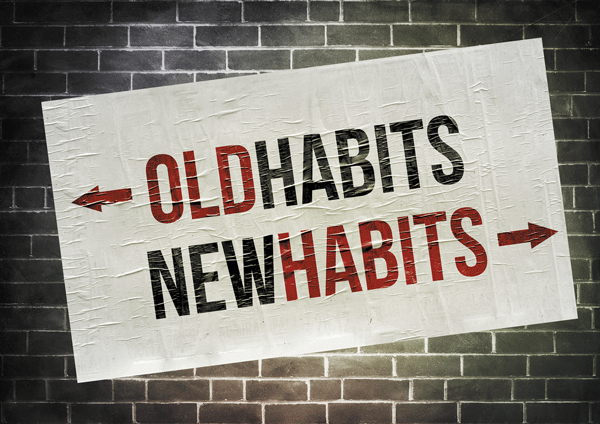
Trade bad habits for good ones
Understanding the three Rs —reminder, routine, and reward—can help you create healthful habits.
Image: gguy44/ThinkStock
Everyone has bad habits they want to break, but instead of scorning yourself for being helpless to break them, use the fundamentals of forming habits to your advantage.
Habits, good or bad, follow a typical three-step pattern. One way to describe this is as three Rs: reminder, routine, and reward. By breaking down the cycle of a bad habit, you can identify what triggers the routine and begin to address what really needs to change. This way you can establish a pattern for new and healthier habits.

Ask the doctor: Best protein: animals or plants?
Men need about 0.36 grams of protein per pound of body weight every day. Animal products contain some of the highest amounts, but many sources also include high levels of saturated fat and cholesterol. Plant proteins might be a healthier choice since they also include essential vitamins, minerals, and other micronutrients.

Give grip strength a hand
Your ability to grab, hold, twist , and squeeze is essential for many everyday functions.
Image: JannHuizenga/Thinkstock
Think how much you rely on a strong grip every day. It helps you open cans, grip a golf club, hold a steering wheel, brush your teeth, and pick up a grandchild. "The ability to stay active and independent often begins with our hands," says Maria Cole, a physical therapist with Harvard-affiliated Spaulding Outpatient Center. "Weak grip strength can limit your enjoyment of many life pleasures, so you need to ensure your hand and grip strength always are up to the task."
A measure of health
A grip on mobility
Grip strength also may predict your future loss of mobility. A May 2014 study in The Journal of Gerontology Series A: Biological Sciences and Medical Sciences analyzed data from more than 20,000 adults ages 65 and older to evaluate the link between weak grip strength and lack of mobility, in this case slow walking speed.
Among the men in the group, those with a weak grip—less than 26 kg using a dynamometer—were seven times more likely to be facing mobility issues compared with men who had normal grip strength.
You can take steps to improve grip strength and possibly avoid problems down the road. "You need to exercise your hands and wrists just like every other part of your body to keep them strong and supple," says Cole.
Exercise your hands

Study links busy schedules to better cognitive function
Older adults who stay busy scored higher on cognitive function scores compared with more idle people. The greatest effect is with episodic memory, which is the memory of past events like times and places.

The year in health and medicine
Changes to food labels and health guidelines, and the arrival of another mosquito -borne illness, topped health news in 2016.
Image: sultancicekgil/iStock
The new year is approaching fast, and with it, the promise of better health. Before we bid farewell to 2016, we'd like to reflect on the news that got our attention this year.
The Zika virus
Guideline changes
Some new health guidelines made their entrance in 2016, and others underwent updates. The CDC announced its first-ever guidelines for prescription painkillers, encouraging doctors to stop treating chronic pain by prescribing opioids, such as oxycodone (OxyContin) and hydrocodone (Vicodin). Long-term use of the drugs carries risks for dependence, addiction, overdose, and death.
The U.S. Department of Health and Human Services (HHS) strengthened its guidelines granting access to one's own medical records. Among the rules: you do not have to give a reason for a records request, you can ask for the records by mail or email, and most requests should be granted within 30 days.
Also of note, the U.S. Preventive Services Task Force updated its guidelines to screen for depression, now recommending screening in all people 18 or older, including older adults, when there are systems in place to ensure accurate diagnosis (as opposed to selective screening based on judgment and patient preference).
Healthier food
New medications
This year also brought the news that we'll have to wait for an antidote to stop rare uncontrolled bleeding episodes linked to some newer types of blood thinners, such as apixaban (Eliquis) and rivaroxaban (Xarelto). In August 2016, the FDA rejected the potential antidote AndexXa (andexanet alfa), saying it wanted more information before it could grant approval. Another of the newer blood thinners—dabigatran (Pradaxa)—already has an approved antidote called idarucizumab (Praxbind).
The newer blood thinners are alternatives to warfarin (Coumadin). People who use warfarin require frequent blood tests to see if the dose needs to be adjusted, but if dangerous bleeding does occur, there's a treatment to reverse it. The newer blood thinners don't require lab monitoring. Apixaban and rivaroxaban do not yet have approved treatments to reverse bleeding.
CoQ10: Should you take this popular supplement if you're on a statin?
Microplastics: A hidden health threat?
Oat vs. dairy milk: Nutrition, benefits, and downsides
What is tempeh? Benefits, nutrition, and how to use it
Healing after food poisoning
Children of centenarians may stay healthier and live longer too, study finds
Light exposure at night may raise risk for heart disease
A lumbar belt may help ease low back pain
Whole grains may improve several heart risk factors at once
Signs of pneumonia: Sometimes vague and unexpected
Free Healthbeat Signup
Get the latest in health news delivered to your inbox!
Sign Up
