

Fatty liver disease: Should you be tested?

Even a little exercise linked with lower stroke risk in people with afib

Testosterone therapy without evidence of deficiency may boost heart risk

Weight-loss drug may lower risk of heart attacks and infections

Migraine: How it's diagnosed and what that means

Tricep workouts you can do at home

Mindfulness practices to reduce stress and improve focus

Antihistamines may not offer meaningful relief from eczema symptoms

Overweight and taking blood pressure medications: Study finds it's a trend that's working

FDA approves first mRNA-based flu vaccine
Caregiving Archive
Articles


Does a virus cause Alzheimer’s?
Ask the doctor
Image: © Dr_Microbe/Getty Images
Q. I know that some viruses live permanently inside us, but only make trouble now and then. I even heard recently that they might be a cause of Alzheimer's disease. Why do they sometimes cause disease, and can we keep that from happening?
A. We live all of our lives with various microorganisms on us and inside us. One example is the herpes family of viruses. Out of more than a hundred herpesviruses, there are nine that infect humans. Once we get infected with these viruses — usually early in life — they remain with us, "asleep" inside some of our cells. But periodically, they "wake up" (reactivate), start producing multiple copies of themselves, and infect other cells. That's what's happening when a cold sore suddenly forms on your lip.

Tips for success when your kids are on your health care team
Be upfront about your needs, and set your own ground rules.
Image: © SelectStock/Getty Images
Allowing your kids to be involved in your health care can have many benefits. The arrangement provides advocates who can help you follow your treatment plan, talk to your doctors, and maybe even make appointments and take you to them. As an added bonus, you get to spend more time with your adult children.
But the arrangement isn't always easy. "There's a tendency for roles to reverse. The child becomes the parent. The parent may not be comfortable with that. Or the parent doesn't want to burden the child, and lets health issues go until they're too far gone," says Dr. Suzanne Salamon, associate chief of gerontology at Harvard-affiliated Beth Israel Deaconess Medical Center. Consider the following tips to navigate the relationship.

Do urgent care clinics overprescribe antibiotics?
News briefs
Image: © AlexRaths/Getty Images
Urgent care clinics are convenient when you don't feel well and can't see your doctor right away. But a study published online July 16, 2018, by JAMA Internal Medicine found that people who go to such clinics may be more likely to be given prescriptions for unnecessary antibiotics. Researchers analyzed 156 million insurance claims from 2014 and found that 46% of people treated at urgent care centers for viral conditions — like a bad cold, the flu, or viral bronchitis — were prescribed antibiotics. The problem: antibiotics kill only bacteria, not viruses. The study underscores the need to ask health care workers if you have a viral or a bacterial condition before you take antibiotics.

Scam targets people buying medicine online
News briefs
Image: © DNY59/Getty Images
If you've tried to buy medications by phone or on the Internet but received an FDA warning letter instead, beware. The FDA warns that criminals are forging these notes, possibly with the goal of later getting your money. The letters look official, like they're from the FDA or the Federal Trade Commission, and they claim that the FDA has identified drug violations based on a review of your parcel and social media accounts. Don't be fooled. The FDA doesn't send letters to consumers. So why are you getting one? The FDA says it may be because you're contacting an illegal online pharmacy. "Many of these illegal websites appear legitimate, and it can be hard to tell the difference," notes FDA Commissioner Scott Gottlieb. They may try to sell your personal information or charge you for products you never ordered. And scams aren't the only risks. Illegal pharmacies typically sell counterfeit — and unsafe — medicines. If you believe you've received a fake warning letter, email the FDA at FDAInternetPharmacyTaskForce-CDER@fda.hhs.gov. Send information about the letter or a scan or photo of the document.

Antidepressants tied to weight gain
News briefs
Image: © adamkaz/Getty Images
We're learning more about the link between weight gain and several major classes of antidepressants, such as selective serotonin reuptake inhibitors (SSRIs), like sertraline (Zoloft), and tricyclic antidepressants, such as amitriptyline (Elavil). Research has shown that putting on pounds is a possible short-term side effect of the medications. But a study published May 23, 2018, in The BMJ suggests that antidepressants are also associated with sustained weight gain. Researchers analyzed the health information of more than 300,000 people in the United Kingdom (average age 51) who'd had their weight and body mass index measured at doctor appointments between 2004 and 2014. About 18% had been prescribed antidepressants. During the study period, people who took antidepressants had a 21% higher risk for a 5% or greater weight gain, compared with people who didn't take antidepressants. The risk peaked in the second and third years. There was no evidence of weight gain after seven years. The study was observational and didn't prove that antidepressants cause weight gain. But researchers hope the findings will encourage people to talk to their doctors about weight gain as a possible side effect of antidepressants, and plan for potential and even delayed weight gain if they're using the medications.

Your heart’s desire: A daily practice to relieve stress
Every day, carve out a little time to release your worries and relax your mind. It may counteract the heart-damaging effects of stress.
Image: © Photodjo/Getty Images
Stress is an inevitable part of life. People often fret over day-to-day hassles such as traffic jams and unpaid bills, not to mention the relentless news about natural disasters and political crises. Many are also coping with the added anguish of divorce, illness, or death within their families.
All of these so-called psychosocial stresses first take hold in your mind. But the effects spread throughout your brain and body. Sometimes, you can even feel it: your heart pounds, you breathe faster, and your muscles tense. However, chronic stress also has more insidious physical effects that can harm your heart (see "Stress and your cardiovascular system").

Strengthen your mood with weight training
Performing resistance exercises could help ease symptoms of depression.
Pumping iron might inflate not only your muscles, but also your mood, says a study in published in the June issue of JAMA Psychiatry.
The study's authors came to this conclusion after examining the results of 33 randomized clinical trials involving more than 1,800 people. They found that people with mild to moderate depression who performed resistance training two or more days a week saw "significant" reductions in their symptoms, compared with people who did not. The findings also suggested that resistance exercises may be even more beneficial for those with more severe depressive symptoms.

City air won’t dampen workout benefits
Research we're watching
Image: © RoBeDeRo/Getty Images
Good news for urban dwellers: the heart benefits of your workout aren't canceled out by health risks caused by car exhaust fumes in the city air you breathe. A study in the Journal of the American Heart Association found that regular workouts still reduce the risk of heart attack even when people are regularly exposed to moderate to high levels of air pollution caused by traffic. Air pollution is known to raise risk for heart attacks as well as respiratory problems, including asthma and chronic obstructive pulmonary disease. Researchers studied data on more than 51,000 people ages 50 to 65, looking at how often the people exercised and other lifestyle factors, as well as their exposure to the traffic pollutant nitrogen dioxide. Over a period of nearly 18 years, nearly 3,000 of these people had a first heart attack, and 324 had a recurrent heart attack.
People who lived in areas with higher nitrogen dioxide levels had a 17% higher risk of having a first heart attack and a 39% higher risk of a recurrent heart attack, compared with those who had low exposure to traffic pollution. But regular exercise appeared to reduce that risk. Active participants had a 15% lower rate of initial heart attacks, regardless of air quality. So, even if the air you are breathing is less than ideal, regular workouts help protect your heart.
Blood pressure treatment might protect your brain
Research we're watching
Image: © mixetto/Getty Images
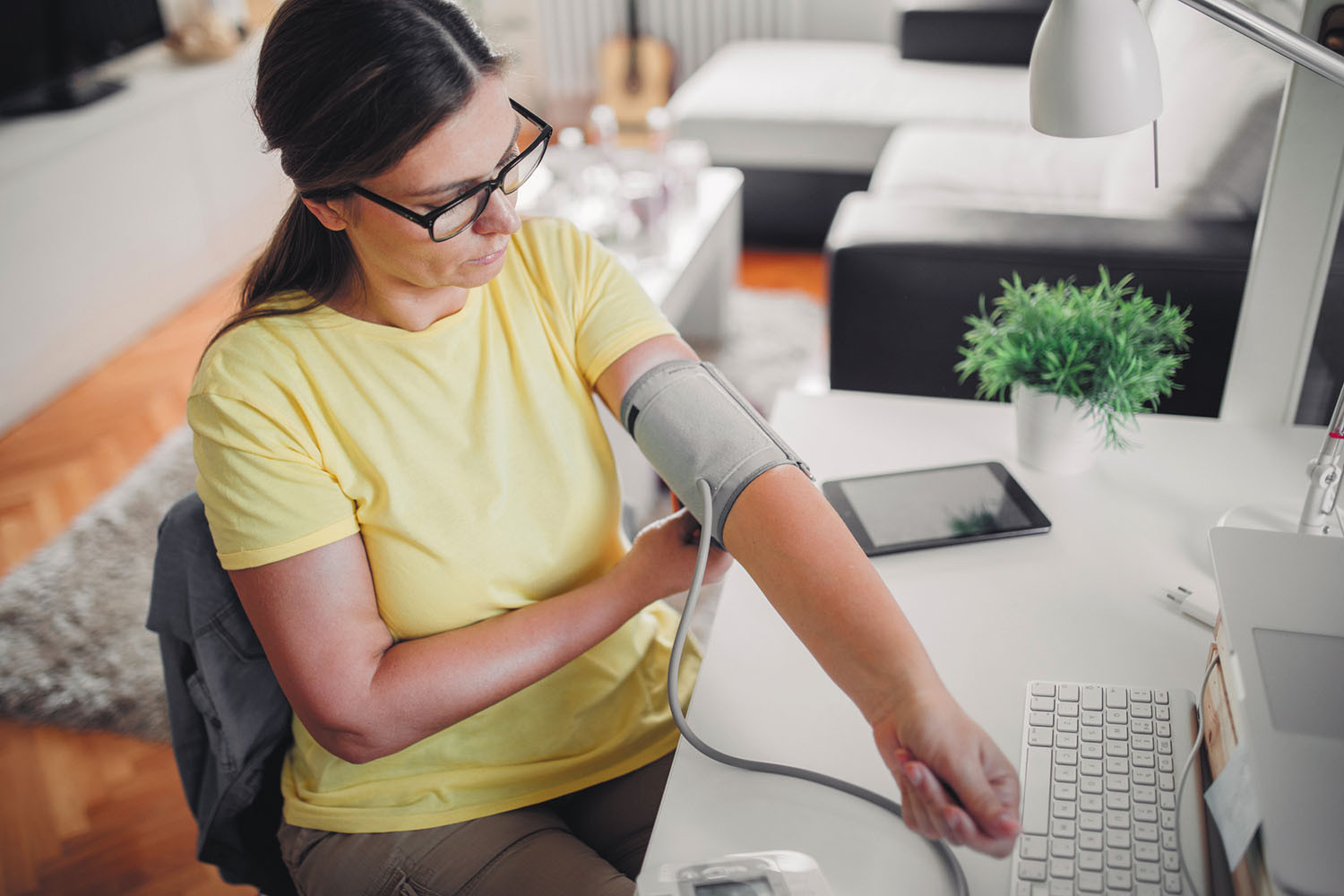
Aggressively treating high blood pressure might help ward off cognitive changes, according to findings presented at the Alzheimer's Association International Conference in July. Researchers from the Systolic Blood Pressure Intervention Trial compared two strategies to manage high blood pressure in more than 9,300 older adults (average age about 68). One strategy aims to achieve the standard treatment level for high systolic blood pressure (the first number in a blood pressure reading), keeping it under 140 mm Hg. The more aggressive strategy sets a goal of less than 120 mm Hg. The aggressive strategy reduced not only heart risks, but seemed to protect the brain.
People in the more aggressively controlled blood pressure group were 19% less likely than those in the standard treatment group to develop new cases of mild cognitive impairment (often a forerunner to dementia). They were also 15% less likely to develop any form of dementia or mild cognitive impairment. This study provides another reason to work with your doctor to reduce high blood pressure.
Fatty liver disease: Should you be tested?
Even a little exercise linked with lower stroke risk in people with afib
Testosterone therapy without evidence of deficiency may boost heart risk
Weight-loss drug may lower risk of heart attacks and infections
Migraine: How it's diagnosed and what that means
Tricep workouts you can do at home
Mindfulness practices to reduce stress and improve focus
Antihistamines may not offer meaningful relief from eczema symptoms
Overweight and taking blood pressure medications: Study finds it's a trend that's working
FDA approves first mRNA-based flu vaccine
Free Healthbeat Signup
Get the latest in health news delivered to your inbox!
Sign Up
