

CoQ10: Should you take this popular supplement if you're on a statin?

Microplastics: A hidden health threat?

Oat vs. dairy milk: Nutrition, benefits, and downsides

What is tempeh? Benefits, nutrition, and how to use it

Healing after food poisoning

Children of centenarians may stay healthier and live longer too, study finds

Light exposure at night may raise risk for heart disease

Whole grains may improve several heart risk factors at once

A lumbar belt may help ease low back pain

Signs of pneumonia: Sometimes vague and unexpected
Blood Pressure Archive
Articles

Should you worry if you have a fainting spell?
Drinking lots of liquids helps prevent fainting and is especially important in warm weather. Image: Thinkstock |
A fainting spell can be inconsequential, or it can signal a serious health issue. It's important to learn why you faint.

Add strength training to your fitness plan
Muscles at workDynamic resistance occurs when muscles and joints move, such as when you raise and lower a hand weight. Image: Thinkstock |
Boosting your muscle mass may trigger changes that enhance heart health.

Ask the doctor: Why does diabetes raise heart disease risk?
Q. I just got diagnosed with diabetes and my doctor said I am at risk for heart disease. Why?
A. Diabetes is considered to be an extremely strong risk factor for heart disease. One reason is that people with diabetes are also more likely to have other conditions that raise their odds of heart disease, such as obesity, high blood pressure, or elevated LDL cholesterol. Also, those factors seem to have more of a detrimental effect on people who have diabetes compared with those who don't.
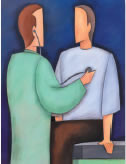
Ask the doctor: What can cause a heart murmur in an adult?
A heart murmur may indicate an aortic or mitral valve problem. Image: Thinkstock |
Q. When someone develops a heart murmur as an adult, what are the possible causes?

Lowering blood pressure: How low should you go?
Blood pressure that is Image: Thinkstock |
The dangers of hypertension are well documented, but low blood pressure levels can cause problems, too.

Get cracking: Why you should eat more nuts
Nuts are rich in unsaturated fats, fiber, and other nutrients with possible cardiovascular benefits. Images: Thinkstock |
Munching a small handful every day may protect your heart.

Get a leg up on varicose veins
Leaky leg veins can cause painful skin changes. But safe, effective treatments can fix this common problem.
Varicose veins—those dark blue or purple leg veins that bulge just beneath the skin's surface—leave many sufferers feeling self-conscious. But beyond the cosmetic considerations, pooling of excess blood in the lower extremities can cause painful leg swelling and skin ulcers.
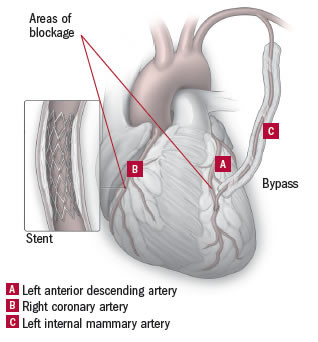
Bypass plus angioplasty: The best of both worlds?
In hybrid heart surgery, the blocked or narrowed left anterior descending artery is bypassed with the nearby left mammary artery, while another blocked artery (in this case, the right coronary artery) is opened with angioplasty plus a stent. Illustration by Scott Leighton |
Known as hybrid coronary revascularization, this technique may become more widely available in the future.

Listening to your favorite music may relax your arteries
Music has charms to soothe a savage breast, as the 17th-century poet William Congreve wrote. In fact, music might soothe your heart by relaxing your arteries, a small study hints.
Researchers measured arterial stiffness in 20 healthy young adults before and after they listened to 30 minutes of classical music, rock music, or nothing (as a control). They used a technique called carotid-femoral pulse wave velocity (PWV). This measures the time it takes for the pulse to travel to the carotid artery in the neck versus the femoral artery in the leg. Longer pulse times suggest stiffer arteries, which translates to a higher risk of cardiovascular problems. Higher "wave reflections" (another measure of artery health) are also linked to heart disease risk.

Acetaminophen seems safe for the heart
After a small study hinted that taking acetaminophen (Tylenol) might increase blood pressure, some doctors worried that this popular painkiller might not be as safe as once assumed, particularly for people with heart disease. But those fears now appear unfounded, according to a March 2015 report in Hypertension.
Using records from a U.K. health database, researchers identified nearly 25,000 people ages 65 and older with high blood pressure. They then compared people who took acetaminophen with people who didn't take the drug over a 10-year period. After adjusting for possible confounding factors, they found no elevated risk of heart attack, stroke, or any cardiovascular events among people who used acetaminophen—even among those who took the painkiller frequently. Despite this reassurance, be aware that high doses of acetaminophen can damage your liver. Don't take more than 3,000 milligrams (mg) a day. Over-the-counter pills (including some cold and flu drugs) may contain up to 650 mg of the drug, so check labels carefully.
CoQ10: Should you take this popular supplement if you're on a statin?
Microplastics: A hidden health threat?
Oat vs. dairy milk: Nutrition, benefits, and downsides
What is tempeh? Benefits, nutrition, and how to use it
Healing after food poisoning
Children of centenarians may stay healthier and live longer too, study finds
Light exposure at night may raise risk for heart disease
Whole grains may improve several heart risk factors at once
A lumbar belt may help ease low back pain
Signs of pneumonia: Sometimes vague and unexpected
Free Healthbeat Signup
Get the latest in health news delivered to your inbox!
Sign Up
