

CoQ10: Should you take this popular supplement if you're on a statin?

Microplastics: A hidden health threat?

Oat vs. dairy milk: Nutrition, benefits, and downsides

What is tempeh? Benefits, nutrition, and how to use it

Healing after food poisoning

Children of centenarians may stay healthier and live longer too, study finds

Light exposure at night may raise risk for heart disease

A lumbar belt may help ease low back pain

Whole grains may improve several heart risk factors at once

Signs of pneumonia: Sometimes vague and unexpected
Blood Pressure Archive
Articles

In defense of the salt shaker
Most people know that too much salt is bad for them and they should try to cut back, but many don’t realize it’s also possible to consume too little salt. It’s not a common problem, but it does happen and it can be harmful.

Were the old aspirin studies wrong?
Ask the doctor
Q. For 25 years, my doctor has recommended low-dose aspirin to reduce my risk of a heart attack. Recently, he told me that new studies indicate that I can stop. What's changed?
A. Millions of people are asking the same question. I'm afraid some of them think that, when doctors change their recommendations, it means we really don't know what we're doing. To the contrary, the recommendation you got 25 years ago was based on sound scientific evidence, and so is the recommendation you received recently.
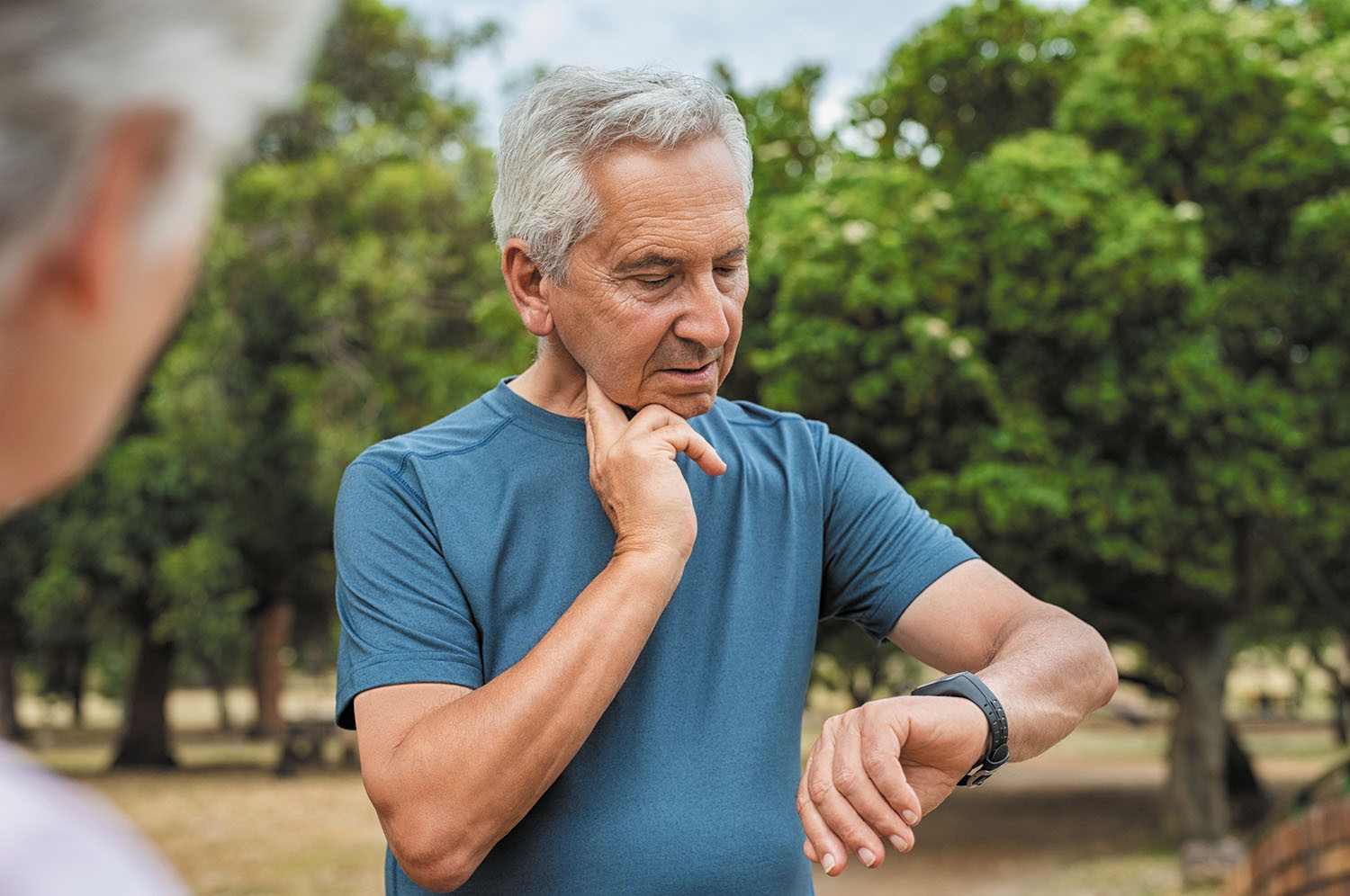
Target heart rate on a beta blocker
Ask the doctor
Q. Your article about interval training in the September issue suggests a target heart rate of at least 80% of your maximum heart rate during the high-intensity intervals. But what about people like me who take drugs such as metoprolol, which lowers the heart rate? Should I adjust my target heart rate for exercise?
A. Metoprolol (Lopressor, Toprol) belongs to a class of drugs known as beta blockers. As you mentioned, these drugs reduce your heart rate; they also lower blood pressure. They work by blocking the effects of the hormone epinephrine (also known as adrenaline), causing your heart to beat more slowly and with less force. These drugs are often prescribed for people who have had a heart attack, as well as those with heart failure, atrial fibrillation, or angina.

Winter weather warning
When the temperature drops, the risk of a heart attack rises. Here's how to stay safe in chilly weather.
Cold weather — especially when it's windy or snowy — can challenge your cardiovascular system. When you venture outside, the tiny blood vessels in your fingers and toes squeeze tight to shunt blood deeper into your body, keeping your vital organs nice and cozy.
To overcome the resistance from those narrowed vessels, your heart beats with extra force, causing your blood pressure and heart rate to rise. This normal physiological response usually isn't a problem, especially for healthy people.

Dealing with the discomfort of angina
Often described as "chest pain," angina may feel more like pressure or heaviness. Here's what you should know about the different types and treatments.
The word angina comes from the Latin word angere, meaning "to choke or strangle." To doctors, angina almost always means angina pectoris, or chest pain due to an inadequate supply of oxygen to the heart muscle (pectoris refers to the chest). But the neck, jaw, shoulders, and even the arm may also hurt during an angina attack.
In fact, many people who have angina don't describe the sensation as pain, says Dr. C. Michael Gibson, an interventional cardiologist at Harvard-affiliated Beth Israel Deaconess Medical Center. "Instead, they describe a sense of heaviness or pressure. Discomfort is probably a better word than pain," he says.

Take a breather
Simple breathing techniques may help you to better manage heart-related issues.
Maybe you're already in the habit of taking a deep breath to calm down when you're feeling fed up or frustrated. But a regular practice of focused breathing might offer even bigger rewards.
"Stress directly affects blood flow to the heart muscle, and any technique people can use to lower stress will benefit the heart," says Dr. Kimberly Parks, a cardiologist at Harvard-affiliated Massachusetts General Hospital. Some people turn to yoga, tai chi, or meditation for stress relief. But others aren't interested in trying those techniques. For them, a simple breathing practice may be more appealing, in part because it's easy, it's free, it takes just a few minutes, and it can be done anywhere at any time.

When the heart beats too slowly
Known as bradycardia, this heart rhythm disorder can cause fatigue, dizziness, and fainting.
The steady beat of your heart depends on a crescent-shaped cluster of cells in the upper right portion of your heart. Called the sinoatrial or sinus node, it emits a tiny jolt of electrical current that triggers the heart to contract and pump blood throughout the body (see illustration). Because the sinus node determines the heart's pace and rhythm, it is sometimes called the body's natural pacemaker.
Just as your skin, joints, and other parts of your body reveal signs of normal wear and tear as you age, so too can the structures inside your heart. "This age-related degeneration can affect the sinoatrial node and other parts of the heart's conduction system," says Dr. Peter Zimetbaum, director of clinical cardiology at Harvard-affiliated Beth Israel Deaconess Medical Center.

Legume of the month: Chickpeas
Also known as garbanzo beans, chickpeas are featured in an array of dishes throughout the world, including in Africa, India, the Middle East, and Europe. Chickpeas are rich in fiber, folate (vitamin B9), manganese, and other minerals. Several studies have found that eating chickpeas may improve cholesterol levels and reduce blood sugar.
Americans may be most familiar with hummus, a blend of chickpeas and sesame paste that's so popular you can even find it in small convenience stores. But chickpeas are also being used in a range of other products, including pasta and rice as well as snack foods such as chips, fries, and "puffs."

A blood pressure reading from a video selfie?
Research we're watching
With some smartphones, you can unlock the phone simply by showing your face. One day, a short video of your face may do far more — maybe even measure your blood pressure.
That's the premise of a novel smartphone-based technology described in the August issue of Circulation: Cardiovascular Imaging. For the study, researchers took two-minute videos of 1,328 Chinese and Canadian adults, using an iPhone equipped with transdermal optical imaging. The software measures blood pressure by detecting blood flow changes in a person's face. When compared with readings taken using a traditional blood pressure cuff, the video blood pressure readings were about 95% accurate.

The state of statin prescribing: Location matters
Research we're watching
If you've had a heart attack, national guidelines strongly recommend taking a high-intensity statin to prevent a second heart attack. But a study of Medicare recipients finds that where you live may affect your chances of receiving a statin prescription.
People living in New England were most likely to receive a high-intensity statin (74%), while those from the West South Central states (such as Arkansas, Oklahoma, and Louisiana) were the least likely (41%). The data came from nearly 140,000 people ages 66 and older who were hospitalized for a heart attack from 2011 to 2015. The findings were published online July 24 by JAMA Cardiology.
CoQ10: Should you take this popular supplement if you're on a statin?
Microplastics: A hidden health threat?
Oat vs. dairy milk: Nutrition, benefits, and downsides
What is tempeh? Benefits, nutrition, and how to use it
Healing after food poisoning
Children of centenarians may stay healthier and live longer too, study finds
Light exposure at night may raise risk for heart disease
A lumbar belt may help ease low back pain
Whole grains may improve several heart risk factors at once
Signs of pneumonia: Sometimes vague and unexpected
Free Healthbeat Signup
Get the latest in health news delivered to your inbox!
Sign Up
