










Special Health Reports

Plant-Based Eating

$18.00
pbe1225-plant-based-eating-cover

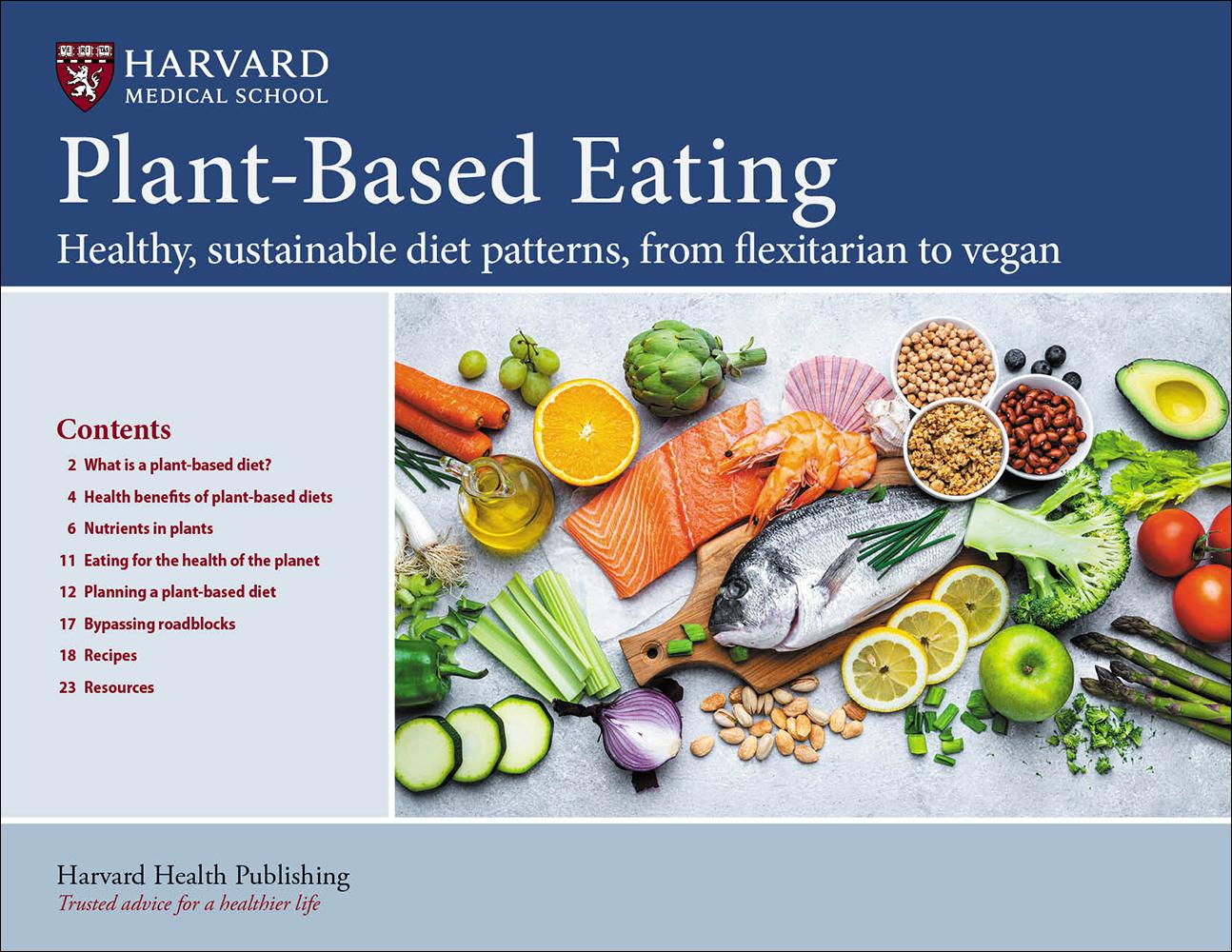
Plant-Based Eating: Healthy, sustainable diet patterns, from flexitarian to vegan

For a variety of reasons, many people are interested in cutting back on animal foods such as meat, poultry, fish, dairy products, and eggs. Some of them are motivated by the health benefits of eating more plants. Another main motivator for eating a plant-based diet is its environmental benefits. In addition, many people are interested in decreasing animal food intake because of concerns about animal welfare or for other moral or religious reasons. The bottom line: more and more people are lightening their intake of animal foods in pursuit of a more sustainable, plant-based lifestyle.

Other Product Information

There is more than one way to eat a plant-based diet. This eating style can include a spectrum of plantcentric diet patterns:
  • vegan diets that exclude all animal foods
  • vegetarian diets that avoid animal flesh
  • semi-vegetarian (or flexitarian) diets that significantly reduce animal foods
  • pescatarian diets that eliminate red meat and poultry.

Traditional diets, such as the Mediterranean diet, tend to focus on more whole, minimally processed plant foods. Known for its well-documented health benefits, the Mediterranean diet is essentially a form of plant-based eating. Most of the diet consists of whole grains, vegetables, fruits, nuts, seeds, and pulses (the edible seeds of legumes such as lentils, beans, and peas). Fish is the primary source of animal protein for those living near a coastline.

Many people choose flexible diet patterns that fall somewhere in between these classifications. For example, some vegetarians may eat very few dairy products; some pescatarians may eat no other animal products, such as dairy products; and some semi-vegetarians are almost entirely vegetarian except when they dine out.

What do these diets have in common? They certainly reduce animal food consumption, particularly red and processed meats. But these ways of eating also focus on what you do eat when you live the plant-based lifestyle: a wide array of whole plant foods that are rich in fiber, slow-digesting carbohydrates, healthy fats, vitamins, minerals, and phytochemicals.

In this report, we will describe the benefits of plant-based eating patterns for health and for the environment. We’ll also offer advice for how to increase plant-based foods in your diet, whether you want to adopt a vegetarian or vegan lifestyle or simply to consume less meat or more vegetables.

Prepared by the editors of Harvard Health Publishing in conjunction with Teresa Fung, Sc.D., R.D., L.D.N., Adjunct Professor of Nutrition, Harvard T.H. Chan School of Public Health. [2025]

About Harvard Medical School Guides

Harvard Medical School Guides delivers compact, practical information on important health concerns. These publications are smaller in scope than our Special Health Reports, but they are written in the same clear, easy-to-understand language, and they provide the authoritative health advice you expect from Harvard Health Publishing.

Focusing on quality 

Keep in mind that for a plant-based diet to have these benefits, it has to be a healthy diet. Whole and minimally processed plant foods—such as vegetables, fruits, whole grains, and nuts—provide plenty of fiber, unsaturated fats, vitamins, minerals, and phytochemicals. Ultraprocessed plant foods are made from ingredients that have been substantially altered from their original form. They are unlikely to have the same health benefits as whole or minimally processed plant foods. Additionally, ultraprocessed foods may contain unhealthy levels of sugar, salt, and other additives. In fact, many ultraprocessed foods that fit the rules of a vegetarian diet (like cakes, cookies, potato chips, and sugar-sweetened beverages) may even carry health risks

In a 2023 study that analyzed the reported dietary intake of over 126,000 participants, those who followed a plant-based dietary pattern that emphasized whole and minimally processed plant foods had lower risks of cancer, cardiovascular disease, and death during the study period than those who ate less healthy plant foods. An unhealthy plant-based diet in this study included higher intakes of sugary drinks, snacks, and desserts; refined grains; potatoes; and fruit juices.

A healthy plant-based diet gives your body the nutrients it needs, without too many nutrients it doesn’t need (such as added sugars, sodium, and saturated fat). 

  • What is a plant-based diet?
  • Health benefits of plant-based diets
  • Nutrients in plants
  • Sustainability of plant-based eating
  • Planning a plant-based diet
  • How to get started
  • Recipes
  • Resources

Reviews

No reviews have been left for this newsletter. Log in and leave a review of your own.

Free Healthbeat Signup

Get the latest in health news delivered to your inbox!

Sign Up