What does carotid artery dissection mean?
Ask the doctor
Q. What is a dissected carotid artery?
A. The carotid artery is a major blood vessel that travels from the aorta, just above the heart, into the neck alongside the windpipe (trachea). There are actually four carotid arteries: An external and internal carotid artery on the right and a similar pair on the left. They carry oxygen-rich blood from the heart to the brain, eye, facial muscles, and other structures in the head.
A dissection of the carotid artery is a tear in the lining of one of these blood vessels. It may be from an injury, a genetic disease that weakens the arteries (such as Ehlers-Danlos syndrome), or hardening of the arteries (atherosclerosis). In many cases there is no clear cause, and the condition is considered "spontaneous." When a dissection occurs, a blood clot usually develops within the wall of the artery. This causes a narrowing or ballooning out of the artery (an aneurysm). Either way, blood flow may be blocked, which can cause a stroke.
Common symptoms of carotid dissection include:
- neck pain
- headache
- facial pain
- eye problems (such as reduced vision, an abnormally small pupil on one side, and drooping of the eyelid)
- reduced ability to taste.
Occasionally, the first sign of this condition is a stroke with weakness on one side of the body. Although spontaneous carotid dissections are rare, they are among the most common causes of stroke in adults under age 50.
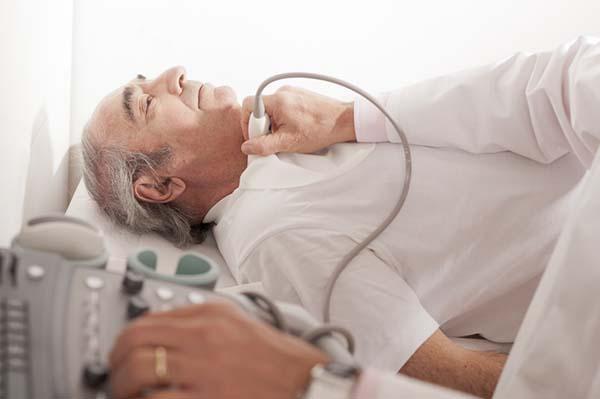
The diagnosis requires tests that allow doctors to see the flow of blood through the carotid artery. This can be achieved through angiography (in which dye is injected into the artery and X-rays are taken) or similar tests using MRI or CT scanning. Ultrasound can also be helpful in the diagnosis of carotid dissection.
The primary medical treatment of carotid artery dissection is blood thinners to prevent or dissolve blood clots. A variety of surgical procedures are performed to remove a clot, to re-establish blood flow that has been blocked, or to repair a dissection.
Image: © Westend61/Getty Images
About the Author

Robert H. Shmerling, MD, Senior Faculty Editor, Harvard Health Publishing; Editorial Advisory Board Member, Harvard Health Publishing
Disclaimer:
As a service to our readers, Harvard Health Publishing provides access to our library of archived content. Please note the date of last review or update on all articles.
No content on this site, regardless of date, should ever be used as a substitute for direct medical advice from your doctor or other qualified clinician.